
Estate Diamond Earrings: Timeless Style With a Story Behind Every Pair
Estate diamond earrings are pre-owned diamond earrings that have had at least one previous owner — and they're one of the most rewarding ways to find exceptional jewelry at a range of price points.
Here's a quick overview of the most popular estate diamond earring styles buyers look for:
| Style | Era | What Makes It Special |
|---|---|---|
| Diamond studs | Any era | Versatile, wearable every day |
| Drop earrings | Victorian, Edwardian | Elegant movement, often with old mine cuts |
| Chandelier / dangle | Art Deco, Mid-Century | Bold geometry, intricate metalwork |
| Huggie hoops | Retro, Contemporary | Comfortable fit, diamond-set frames |
| Cluster earrings | Victorian | Multiple stones, floral or starburst designs |
Prices range widely — from around $1,475 for a single estate pair all the way to $55,000 or more for rare designer pieces with significant carat weight.
Whether you're drawn to the delicate filigree of an Edwardian piece, the bold geometry of Art Deco design, or the clean lines of a Mid-Century pair, estate earrings offer something you simply can't find in a modern jewelry case: genuine history and one-of-a-kind character.
They're also a smart choice for buyers who care about sustainability. Every estate piece represents a diamond that's already been mined — no new environmental impact required.
In this guide, we'll walk you through everything you need to know — from identifying eras and styles, to assessing quality, understanding pricing, and caring for your piece for decades to come.
Defining Estate, Vintage, and Antique Jewelry
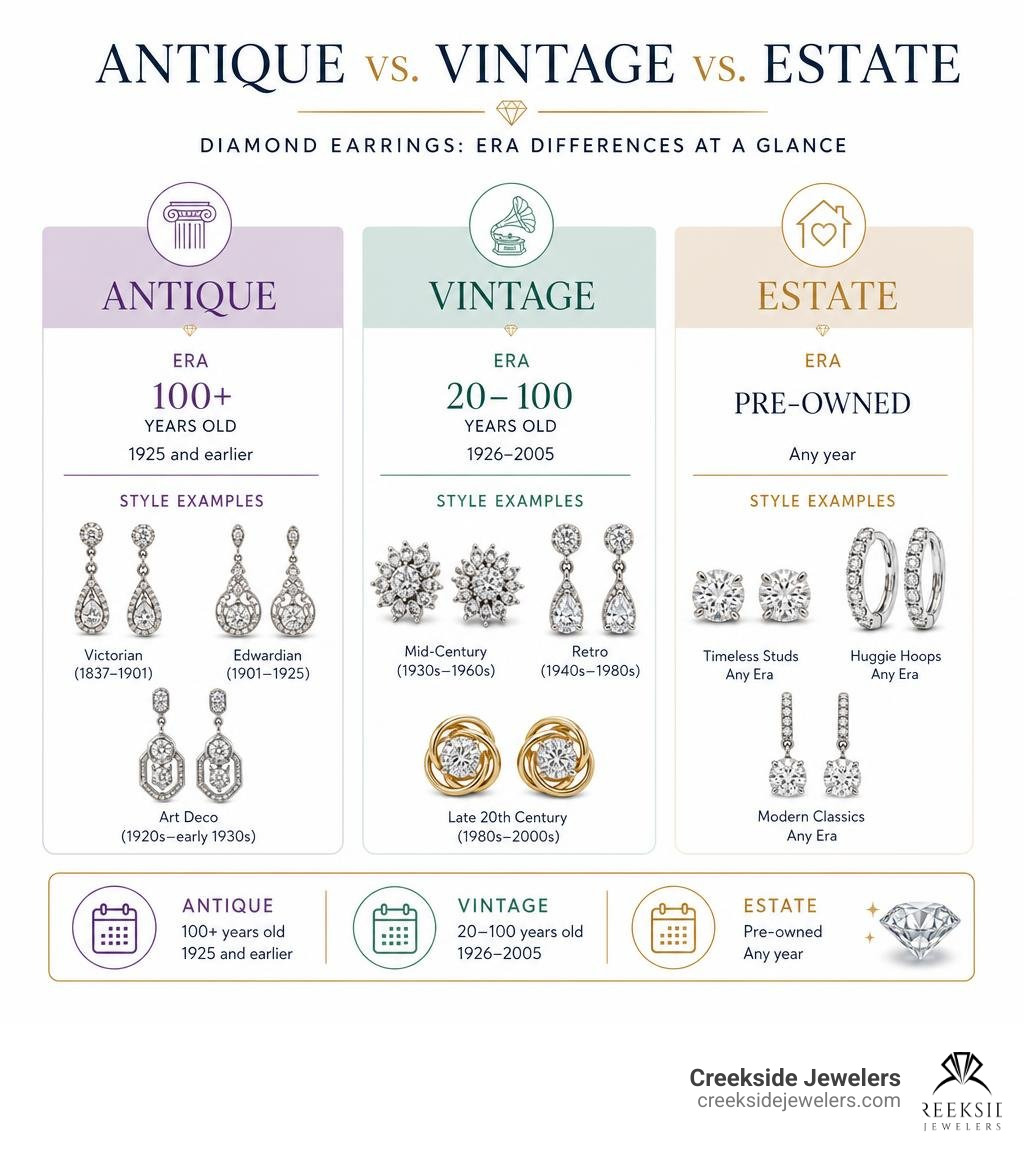
To the untrained eye, the terms "estate," "vintage," and "antique" are often used interchangeably. However, in the fine jewelry industry, these words have precise definitions that directly impact both the rarity and value of estate diamond earrings.
- Estate Jewelry: Simply put, "estate" refers to any piece of jewelry that has been previously owned. It does not matter if the earrings were crafted in 1890 or 2025; if they are pre-owned, they fall under the estate umbrella. This category includes contemporary estate items that might only be a few years old but are looking for a second home.
- Vintage Jewelry: To be classified as vintage, a piece must be at least 20 years old but less than 100 years old. In July 2026, this means any earrings created between 1926 and 2006 are officially considered vintage. This covers everything from late Art Deco pieces to the bold gold jewelry of the 1980s.
- Antique Jewelry: An antique is any piece of jewelry that is 100 years old or older. As of July 2026, any earrings crafted in or before 1926 fall into this category. This includes Victorian, Edwardian, and the earliest Art Deco designs.
When searching for the perfect pair of earrings, you will often see these terms overlap. For instance, you might fall in love with a pair of antique Estate Pearl Earrings that also happen to feature delicate diamond accents. Because they are pre-owned and over a century old, they are simultaneously estate, antique, and pearl earrings!
If you're exploring older rings to match your new earrings, you might also find our Estate Pearl Engagement Ring Guide 2026 helpful for understanding how these eras translate across different jewelry types.
To make these classifications easy to remember, here is a quick reference table:
| Classification | Age Requirement (As of July 2026) | Era Examples | Typical Characteristics |
|---|---|---|---|
| Estate | Any age (must be pre-owned) | Modern to Victorian | Diverse, wide price range, sustainable |
| Vintage | 20 to 99 years old (1926–2006) | Retro, Mid-Century, Modernist | Bold yellow gold, geometric patterns, platinum |
| Antique | 100+ years old (1926 and earlier) | Victorian, Edwardian, Early Art Deco | Old mine cuts, filigree, handmade settings |
When looking for the perfect pair, browsing curated collections can give you an excellent sense of how these age categories look in real-world inventories.
The History and Eras of Estate Diamond Earrings
The true magic of wearing estate diamond earrings lies in their connection to the past. Each historical era brought its own unique cultural influences, metalworking techniques, and artistic philosophies to jewelry design.
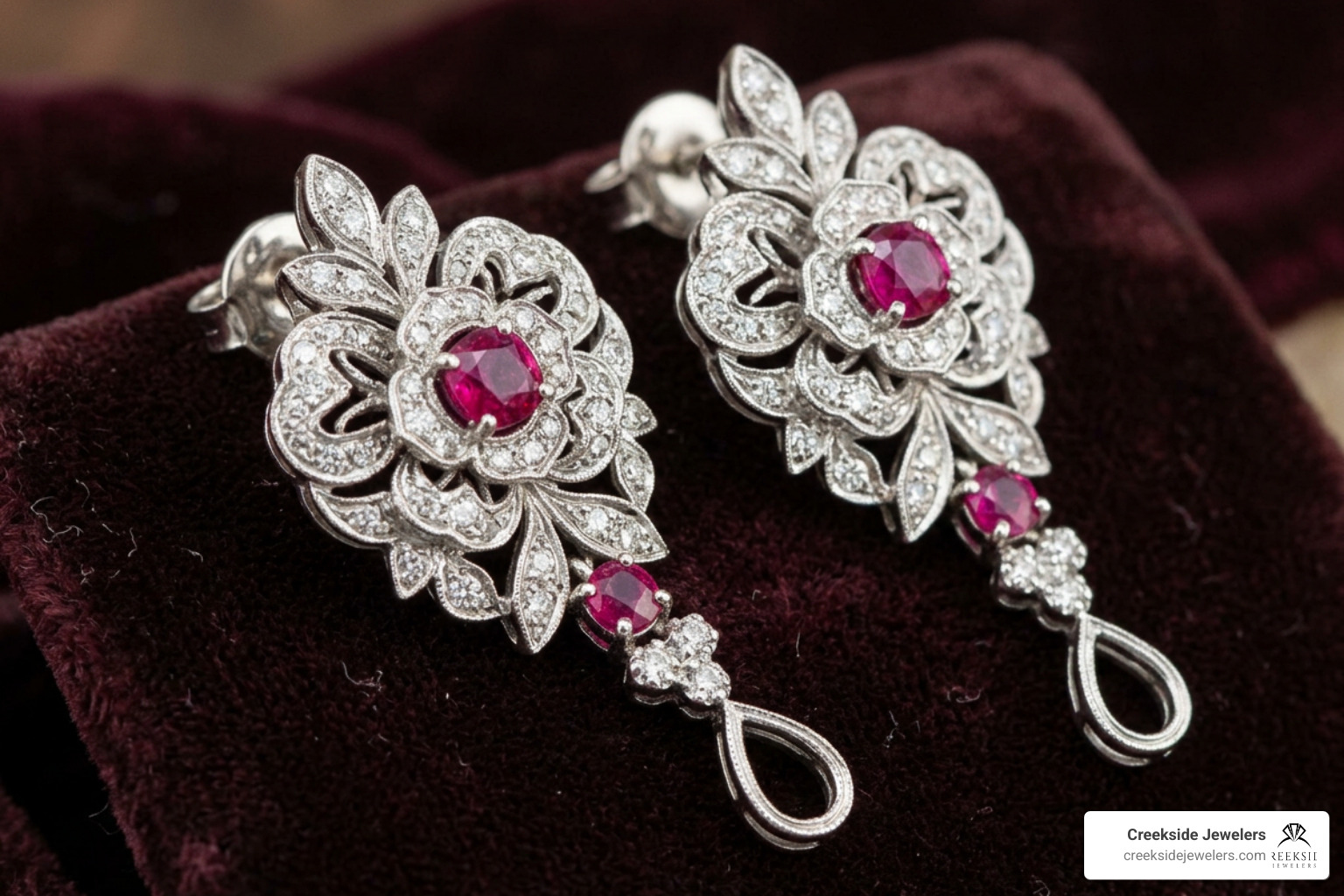
For instance, a stunning pair of floral dome earrings featuring a mix of diamonds and rubies showcases how jewelry designers historically paired brilliant white diamonds with rich, colorful gemstones to create striking visual contrasts. You can see this spectacular design style in action by viewing this historic Estate 16.64ct Diamond Ruby 18k White Gold Floral Earrings Auction .
Let's explore the most prominent historical eras represented in estate jewelry collections.
Victorian and Edwardian Estate Diamond Earrings
- The Victorian Era (1837–1901): Named after Queen Victoria, this long era is divided into early, mid, and late periods. Early Victorian jewelry was highly romantic, featuring floral motifs, hearts, and nature-inspired themes. Following the death of Prince Albert, "mourning jewelry" became highly popular, characterized by darker stones like onyx paired with diamonds. Victorian earrings often feature old mine cuts and rose-cut diamonds set in silver-topped gold, as artisans believed silver best showcased the white sparkle of a diamond.
- The Edwardian Era (1901–1915): King Edward VII's brief reign was defined by elegance, luxury, and the widespread introduction of platinum. Because platinum is incredibly strong, jewelers could create gossamer-thin, lace-like settings. Edwardian estate diamond earrings frequently showcase delicate filigree work, milgrain detailing (tiny metal beads along the edges), and motifs like bows, garlands, and fleur-de-lys. This era represents the pinnacle of delicate, feminine craftsmanship.
Art Deco and Mid-Century Retro Styles
- The Art Deco Era (1915–1935): A complete departure from the soft curves of the Edwardian period, Art Deco was influenced by the industrial revolution, cubism, and Egyptian archaeology. This era is famous for its bold geometric shapes, strict symmetry, and high-contrast color combinations. Art Deco earrings often pair diamonds with caliber-cut sapphires, emeralds, rubies, or black onyx. Long, dramatic drop earrings and geometric shield designs are hallmarks of this highly sought-after era.
- The Mid-Century Retro Era (1940s–1950s): Due to wartime shortages, platinum was reserved for military use, leading to a massive resurgence of yellow and rose gold. Retro jewelry is characterized by bold, sculptural, and highly polished metalwork. Earrings from this period often mimic folded ribbons, scrolls, and stylized floral sprays, featuring clusters of diamonds alongside colorful gemstones. It was an era of Hollywood glamour and expressive, oversized designs.
Popular Styles, Settings, and Diamond Cuts
Understanding the anatomy of estate diamond earrings requires looking closely at the cuts of the diamonds and the metalwork holding them in place. Many older pieces were entirely handmade, meaning no two diamonds are cut exactly alike.

Before choosing a style, it is incredibly helpful to familiarize yourself with how diamonds have evolved over time. You can learn all about the history of diamond production in our Diamonds Complete Guide 2026.
Classic Cuts and Settings in Estate Diamond Earrings
- Old Mine Cut: Dating back to the 1700s and popular through the Victorian era, these diamonds have a squarish shape with rounded corners, a high crown, a deep pavilion, and a large flat facet at the bottom called a culet. They were cut by hand to sparkle under warm candlelight.
- Old European Cut: The predecessor to the modern round brilliant cut, the Old European cut was popular from the late 1800s to the 1930s. It features a perfectly round outline but retains the high crown and deep proportions of older cuts. These diamonds have a unique, fiery "blocky" pattern of light reflection.
- Bezel Setting: A metal collar that completely surrounds the perimeter of the diamond. This setting was highly popular in Art Deco and older antique earrings because it offers maximum protection for the stone while creating clean, defined lines.
- Prong Setting: Small metal claws that hold the diamond in place. Antique prong settings are often highly decorative, sometimes shaped like tiny crowns or buttercup flowers.
- Halo Design: A central diamond surrounded by a border of smaller accent diamonds. Halo settings have been beloved since the Victorian era for their ability to make a modest center stone look significantly larger.
Unique Earring Styles: From Studs to Chandelier Drops
- Diamond Studs: The ultimate jewelry staple. Estate stud earrings are highly popular because they offer incredible value. You can often find stunning vintage studs featuring unique older cuts that possess far more personality than modern, mass-produced studs.
- Huggie Hoops: Small, thick hoops that sit close to the earlobe. Vintage and contemporary estate huggies often feature channel-set baguette diamonds or pavé settings that provide a seamless shimmer.
- Drop and Dangle Earrings: Designed to hang just below the earlobe, these earrings offer beautiful movement. Edwardian drop earrings often feature delicate articulated links that sway gracefully as you walk.
- Chandelier Style: Large, dramatic earrings with multiple tiers of dangling gemstones. These are perfect for special occasions and look spectacular in Art Deco designs.
If you want to browse a massive variety of these styles across different eras, exploring curated vintage and estate collections is a fantastic place to start.
How to Assess Quality, Authenticity, and Value
Buying estate diamond earrings requires a bit of detective work. Because these pieces are pre-owned, they do not come off a modern assembly line with a standard retail tag.
Evaluating the Four Cs and Condition
When assessing estate jewelry, we always look to the classic gemological standards, which you can read about in detail in our guide to the Four Cs of Diamonds. However, evaluating estate pieces involves a few extra considerations:
- Carat Weight: That older diamond cuts often carry their weight differently than modern cuts. A deep Old European cut diamond might look slightly smaller from the top view than a modern round brilliant of the exact same carat weight because more of its mass is hidden in the bottom of the stone.
- Clarity and Color: Older diamonds were graded under different historical standards. Many antique diamonds have a warmer, slightly yellow or champagne tint, which looks incredibly beautiful when paired with yellow gold or silver-topped settings.
- Wear and Tear: Carefully inspect the earrings for signs of age. Look for chipped diamond girdles, worn-down prongs, or bent posts. A professional jeweler can easily repair most minor wear, but significant structural damage can impact the piece's long-term durability.
Pricing Factors and Market Value
Several factors influence the price of estate earrings, which can range from under $1,000 for simple vintage gold hoops to tens of thousands of dollars for rare, high-carat masterpieces.
- Metal Purity: Most estate earrings are crafted in 14K gold, 18K gold, or platinum. The metal weight and purity establish a baseline value for the piece.
- Designer Signatures: Pieces stamped with famous maker's marks — such as Cartier, Tiffany & Co., or Boucheron — command a significant premium due to their collectibility and guaranteed craftsmanship.
- Rarity and Provenance: If a pair of earrings has a documented history or belongs to a highly specific, rare design era, its value will be much higher.
For regional reference, buyers in Colorado often look to local estate collections to compare pricing and find verified local treasures. Exploring regional selections and consulting with trusted local jewelers can help you gauge the local market and see what styles are highly coveted in our beautiful state.
Caring for and Maintaining Your Estate Jewelry
Once you have found your perfect pair of estate diamond earrings, proper care is essential to preserve both their beauty and their physical integrity.
- Gentle Cleaning: Avoid harsh ultrasonic jewelry cleaning machines, especially for antique earrings. The intense vibrations can loosen old prongs or damage delicate accent stones. Instead, clean your earrings using a soft-bristled toothbrush, warm water, and a drop of mild dish soap. Gently scrub away dirt from behind the settings, rinse thoroughly, and dry with a soft lint-free cloth.
- Safe Storage: Store your estate earrings in a dedicated, fabric-lined compartment of your jewelry box. Diamonds are the hardest natural substance on earth, meaning they can easily scratch your gold settings or other gemstones if left loose in a jewelry dish.
- Professional Checkups: We highly recommend bringing your estate jewelry to a trusted jeweler at least once a year. A professional can inspect the prongs under a microscope to ensure your diamonds are completely secure.
If you ever decide to refresh your personal collection, you can also learn about how the resale market works by reading our guide on Estate Jewelry Consignment.
Frequently Asked Questions About Estate Earrings
What is the difference between estate and vintage earrings?
"Estate" simply means the earrings are pre-owned, regardless of how old they are. "Vintage" refers specifically to earrings that are between 20 and 99 years old. Therefore, all vintage earrings are estate earrings, but not all estate earrings are old enough to be considered vintage!
Are estate diamonds conflict-free and sustainable?
Yes! Buying estate jewelry is one of the most eco-friendly choices you can make. Because these diamonds were mined decades or even a century ago, purchasing them does not contribute to modern mining practices. They are the ultimate form of recycled luxury.
Can estate earrings be resized or modified?
Absolutely. While we always try to preserve the original integrity of historical pieces, modern posts can easily be added to older clip-on earrings, or worn-out screw-backs can be converted to comfortable friction posts. For more on how jewelry can be altered or custom-tailored to your style, read our Custom Jewelry Guide 2026.
Conclusion
Finding the perfect pair of estate diamond earrings is an adventure. Whether you are searching for everyday vintage studs or a dramatic pair of Art Deco drop earrings, these pre-owned treasures offer unmatched character, superior craftsmanship, and a sustainable way to enjoy fine luxury.
At Creekside Jewelers, we have been helping jewelry lovers find and care for their dream pieces since 1902. As the oldest continuously run watch and jewelry store in Colorado, our family-owned shop in historic Golden, CO, is proud to offer expert jewelry restoration, custom design, and on-site repairs.
If you're ready to learn more about fine jewelry, head over to the Creekside Jewelers Education Blog to explore our latest guides, or stop by our Golden showroom to see our collection in person!