

The Timeless Appeal of Estate Pearl Engagement Rings
An estate pearl engagement ring is one of the most romantic and distinctive choices you can make for a proposal — and it's no wonder more couples are seeking them out.
Quick Answer: What Is an Estate Pearl Engagement Ring?
- An estate pearl engagement ring is a previously owned ring featuring a pearl as the center stone
- "Estate" simply means the ring had a prior owner — it does not have to be antique, though many are
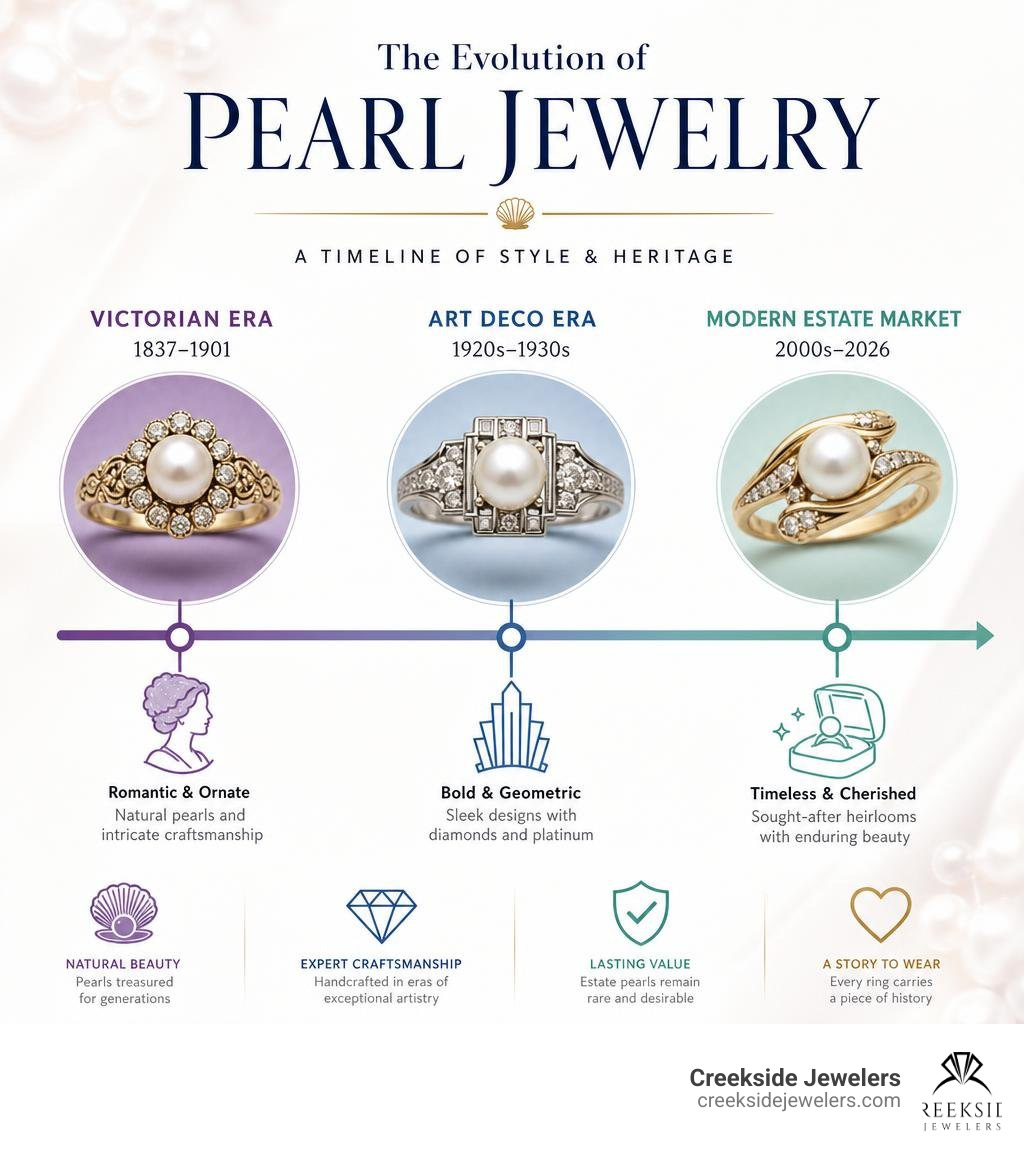
- These rings often date from the Victorian, Edwardian, or Art Deco eras (roughly 1837–1940)
- They typically feature natural or cultured pearls paired with diamond accents in gold or platinum settings
- Natural pearls in estate rings are increasingly rare, which drives both their value and their appeal
Pearl engagement rings account for roughly 5–7% of all vintage and estate engagement ring sales in the U.S. — a small share, but a passionate and growing one. Many estate pearl rings have appreciated 15–25% in value over five years, driven by the scarcity of naturally formed pearls.
What makes these rings so special? They carry real history. Each one was crafted by hand in an era before mass production, often using techniques and materials that simply aren't replicated today. For someone who wants a ring that feels genuinely one-of-a-kind — not just unique-looking — an estate pearl ring delivers something no new ring can: a story already written.
Why Choose an Estate Pearl Engagement Ring?
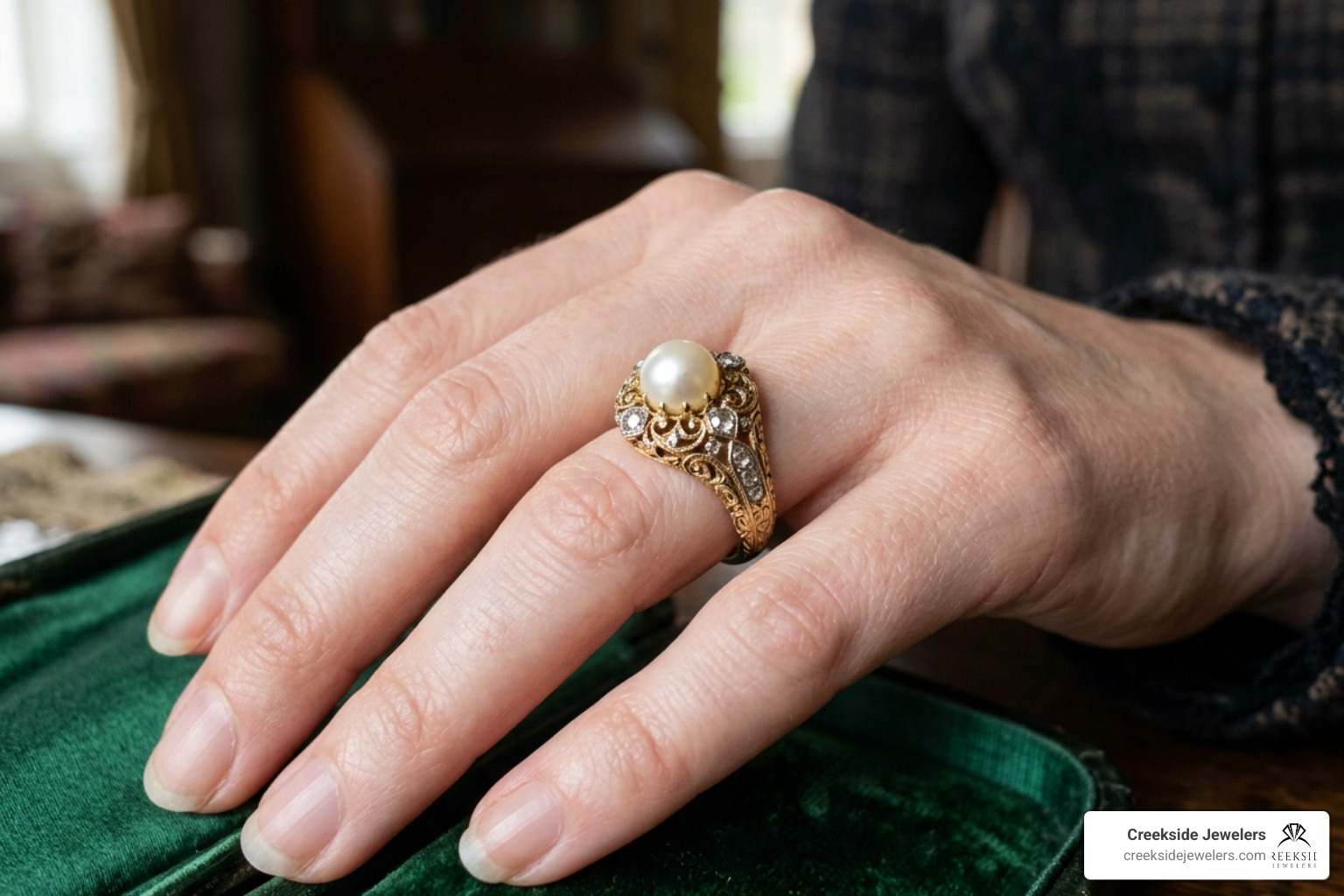
When shopping for an engagement ring, the default choice for decades has been the classic diamond solitaire. However, modern couples are increasingly looking for alternatives that express individual style, character, and ethical values. Choosing an estate pearl engagement ring offers a beautiful departure from the mainstream.
Historical Charm and Individuality
Unlike modern, mass-produced jewelry, estate rings were often handcrafted by master jewelers of the past. This means your ring will have subtle variations, unique settings, and a level of detail that cannot be replicated by modern 3D printing or casting. When you wear a piece of history, you are wearing a work of art.
Eco-Friendly and Ethical Jewelry
Opting for estate jewelry is one of the most sustainable choices a couple can make. Because these pieces already exist, choosing an estate ring requires no new mining for metals or gemstones, significantly reducing the environmental footprint of your engagement. If you love the look of historical eras but also want to explore newly crafted options with a classic feel, you can read our guide on vintage inspired engagement rings a timeless choice for colorado couples to see how past designs continue to inspire modern artisans.
Understanding Pearl Types and Value Factors
To appreciate the value of an estate pearl engagement ring, it helps to understand the difference between the pearls of yesteryear and those produced today.
Natural vs. Cultured Pearls
Before the early 20th century, all pearls were natural. They formed entirely by chance when an microscopic irritant entered a wild mollusk. Divers had to harvest thousands of oysters just to find a single high-quality pearl. Consequently, natural pearls were historically reserved for royalty and the ultra-wealthy.
In the early 1900s, culturing techniques were commercialized, allowing humans to carefully insert a nucleus into a mollusk to prompt pearl growth. Today, almost all new pearl jewelry features cultured pearls. In estate jewelry, however, you have a rare opportunity to find genuine, wild-born natural pearls.
Saltwater vs. Freshwater Pearls
- Saltwater Pearls: Grown in ocean mollusks (such as Akoya, South Sea, and Tahitian). They generally have a highly reflective, mirror-like luster and tend to be rounder and more expensive.
- Freshwater Pearls: Grown in rivers, lakes, and ponds. While historically more irregular in shape (baroque), modern freshwater cultivation produces beautiful round pearls that are highly durable due to their solid nacre composition.
Antique Diamond Accents
Estate pearl rings are rarely simple solitaires; they are almost always accented by diamonds that enhance the central pearl's soft glow. The cuts of these diamonds can help date the ring:
- Old Mine Cut: Dating from the 18th and 19th centuries, these diamonds are square-ish with high crowns and deep pavilions, designed to sparkle under warm candlelight.
- Old European Cut: Popular from the late 19th century to the 1930s, these are the predecessors to the modern round brilliant cut, featuring a round outline and a distinct open culet at the bottom.
To learn more about how antique diamonds and other precious stones are evaluated, explore our detailed guide on understanding gemstones.
Natural vs. Cultured Pearls in Estate Rings
| Feature | Natural Pearls | Cultured Pearls |
|---|---|---|
| Formation | 100% accidental in the wild | Assisted by human nucleation |
| Rarity | Extremely rare; highly collectible | Readily available |
| Nacre Thickness | Solid nacre throughout | Nacre layer grown over a bead nucleus |
| Value Trend | Appreciates significantly over time | Stable, highly accessible pricing |
| Common Eras | Georgian, Victorian, Edwardian | Retro, Mid-Century, Modern Estate |
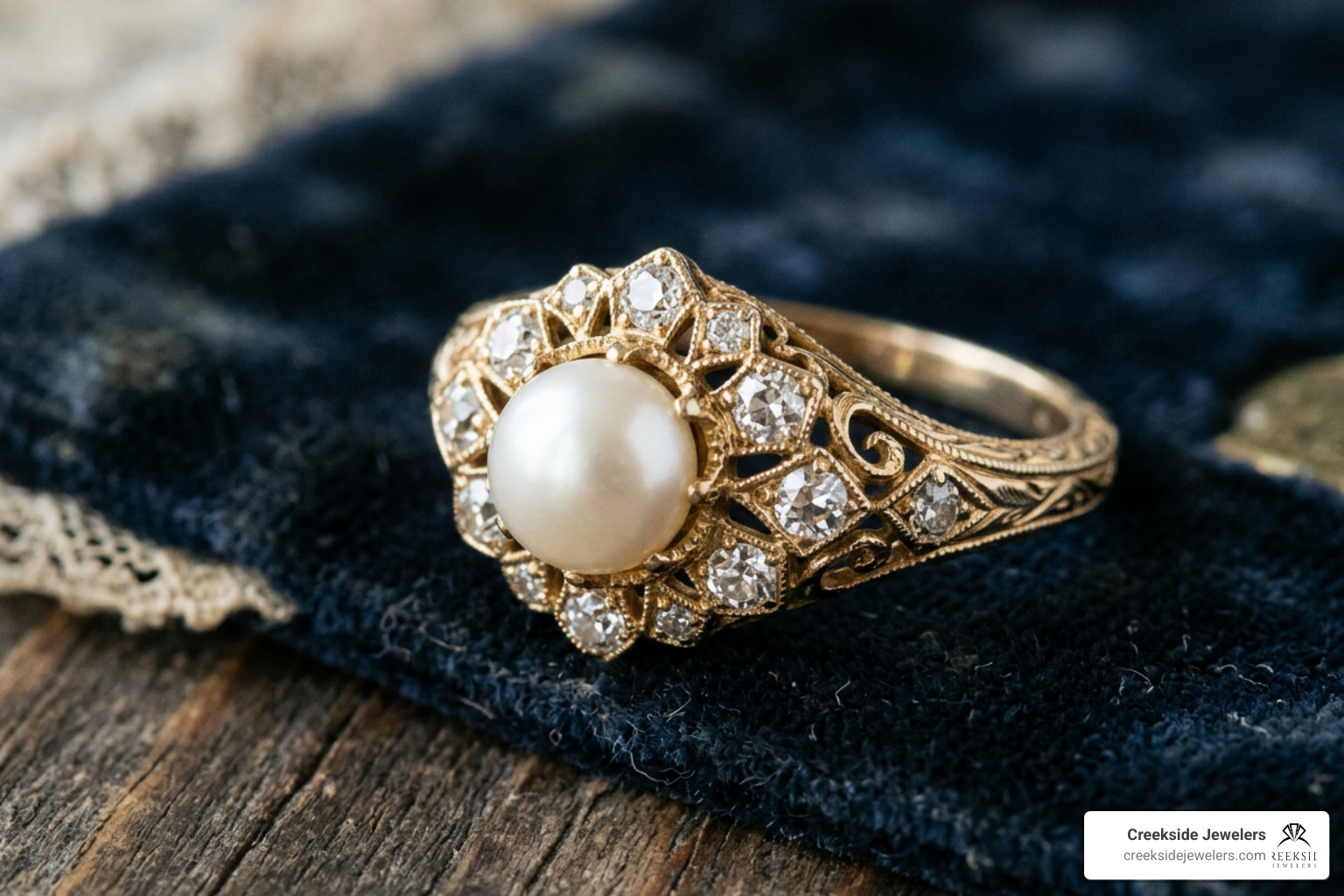
A classic example of an antique piece is a natural saltwater button pearl surrounded by a floral halo of old mine cut diamonds, which beautifully showcases the contrast between the soft pearl and the sparkling diamonds.
Evaluating the Quality of an Estate Pearl Engagement Ring
Unlike diamonds, which are graded using the strict "4 Cs," pearls are evaluated on a unique set of organic characteristics. When examining an estate pearl engagement ring, look for the following:
- Luster: This is the most important factor. Luster refers to the sharpness and intensity of the reflections on the pearl’s surface. A high-quality pearl should look bright and luminous, not dull or chalky.
- Surface Quality: Because pearls are grown inside living creatures, minor surface blemishes, tiny wrinkles, or pits are normal. However, deep cracks or chips can compromise the pearl's structural integrity.
- Nacre Thickness: Nacre is the natural pearlescent substance that makes up the pearl. In cultured estate pearls, a thick nacre layer ensures the pearl will retain its beauty and resist wear for decades.
- Size: Pearl size is measured in millimeters. Large estate pearls are highly prized. For instance, a large, luxurious saltwater pearl, such as a magnificent champagne-colored South Sea pearl framed by brilliant diamonds, makes a stunning statement.
Other exquisite variations in estate pearl designs include sleek modern craftsmanship or the dramatic, dark beauty of a Tahitian black pearl set in yellow gold with diamond accents.
Popular Styles and Historical Eras
The design of an estate pearl engagement ring is heavily influenced by the period in which it was created. Recognizing these styles can help you find a ring that matches your personal aesthetic:
Victorian Era (1837–1901)
Victorian jewelry is deeply romantic and symbolic. "Bypass" or Toi et Moi (You and Me) rings were incredibly popular during this time, often pairing a pearl with a diamond or sapphire to represent two souls coming together. Warm yellow gold and rose gold were the dominant metals.
Edwardian Era (1901–1915)
The Edwardian era was characterized by elegance, light, and femininity. With the introduction of oxyacetylene torches, jewelers could finally work with platinum to create incredibly delicate, lace-like filigree settings. Pearls were frequently paired with diamonds in monochromatic, all-white metal designs.
Art Deco Era (1920–1939)
Art Deco design turned away from delicate curves in favor of bold, geometric patterns and striking color contrasts. You will often find pearls set in platinum or white gold alongside geometric cuts of diamonds, sapphires, or black onyx to create eye-catching visual drama.
Practical Guide for Buyers and Collectors
If you are ready to begin your search for the perfect estate pearl engagement ring, keeping a few practical buying tips in mind will make your journey smooth and rewarding.
Pricing and Rarity
The price of an estate pearl ring can vary widely depending on the age, the metal, the accompanying diamonds, and—most importantly—whether the pearl is natural or cultured. Natural pearl rings from the Edwardian and Victorian eras typically range from $1,200 to over $11,000. Exceptional, museum-quality collector pieces featuring large, natural saltwater pearls can command prices upwards of $20,000.
Finding a Trusted Local Estate Jeweler
Because pearls are organic gemstones, buying estate pieces requires a high degree of trust. While you can browse online collections or regional inventories, there is no substitute for visiting a trusted local jeweler in person.
A local expert can let you view the pearl under a microscope, verify the condition of the setting, and help you answer the classic question, "which engagement ring should i get?" based on your lifestyle and personal taste.
Caring for Your Estate Pearl Engagement Ring
Pearls are organic gems, which means they require a bit more love and attention than hard gemstones like diamonds or sapphires.
- Mind the Mohs Scale: Diamonds sit at a 10 on the Mohs hardness scale, making them incredibly scratch-resistant. Pearls, however, sit between 2.5 and 4.5. They can be scratched by harder metals and gemstones, so wear your ring mindfully.
- The "Last On, First Off" Rule: Apply your perfume, hairspray, makeup, and lotions before putting on your pearl ring. The acids and chemicals in cosmetics can damage the delicate nacre of the pearl over time.
- Cleaning Best Practices: Never submerge an estate pearl ring in harsh jewelry cleaners or use ultrasonic cleaners. Instead, gently wipe the pearl with a soft, clean, damp cloth after wearing.
- Professional Maintenance: Have your estate ring checked by a professional jeweler at least once every six months to ensure the pearl is securely mounted and the metal prongs are intact.
- Safe Storage: Store your pearl ring in a soft cloth pouch away from other jewelry to prevent scratches. Avoid storing pearls in airtight plastic bags, as they need a tiny amount of moisture from the air to keep from drying out and cracking.
If you have an old family heirloom that you would like to sell or trade in for a different vintage style, you might also want to look into how estate jewelry consignment works to find a new home for your precious pieces. Additionally, if you are looking to repurpose heirloom gold or smaller accent gems, you can explore creative options like custom friendship necklaces to celebrate other meaningful relationships in your life.
Frequently Asked Questions About Estate Pearl Rings
Are estate pearl engagement rings durable enough for daily wear?
Pearls are softer than traditional bridal stones, but they can absolutely be worn daily with the right care. Opting for a protective vintage setting—such as a bezel setting or a halo of protective diamonds—helps shield the pearl from accidental bumps. We recommend removing your pearl ring before doing dishes, exercising, gardening, or cleaning.
How can I tell if an estate pearl is natural or cultured?
It is virtually impossible to distinguish a natural pearl from a high-quality cultured pearl with the naked eye. To be 100% certain, the pearl must be evaluated by a gemological laboratory using advanced X-ray testing. A natural pearl will show concentric growth rings throughout its core, whereas a cultured pearl will reveal a solid bead nucleus inside. Always ask if the estate ring comes with a gemological certificate.
What is the typical price range for an antique pearl ring?
Most beautiful estate and antique pearl rings with diamond accents fall between $1,200 and $5,000. Simple, mid-century cultured pearl rings can often be found for under $1,000, while highly rare, historically significant natural saltwater pearl rings can exceed $10,000 to $25,000 depending on their size, origin, and provenance.
Conclusion
An estate pearl engagement ring is more than just a piece of jewelry; it is a wearable piece of history, an eco-friendly choice, and a breathtakingly unique testament to your love story.
At Creekside Jewelers, we have been helping Colorado couples find and care for their most precious jewelry milestones since 1902. As the oldest continuously run watch and jewelry store in Colorado, our family-owned shop in the heart of Golden, CO, is proud to offer an exquisite selection of fine estate jewelry, professional on-site repairs, and custom design services to keep your heirlooms looking beautiful for generations to come.
Whether you are searching for a rare antique treasure or looking to design a custom piece, we invite you to explore our educational resources at https://creeksidejewelers.com/blogs/education or stop by our Golden location to find a ring that is as incredibly unique as your love.