

Why Custom Jewelry Is Worth Understanding Before You Buy
Custom jewelry is any piece designed and crafted to your exact specifications — your choice of metal, gemstones, dimensions, and meaning — rather than selected from a shelf.
Here's a quick overview of what you need to know:
- What it is: A one-of-a-kind piece built around your vision, not a manufacturer's catalog
- Who it's for: Anyone marking a milestone, preserving a family heirloom, or wanting something no one else owns
- How long it takes: Typically 2–12 weeks, depending on design complexity and material sourcing
- What it costs: Varies widely based on metal weight, gemstone choice, and labor — but often comparable to similar-quality ready-made pieces
- Key benefit: About 70% of buyers cite emotional value and uniqueness as their primary reason for choosing custom over mass-produced jewelry
There's something different about wearing a piece that was made for you — not for a display case. The global custom jewelry market reflects this shift. Valued at roughly $32.5 billion in 2023, it's projected to reach $52.8 billion by 2030. Online custom jewelry sales alone have jumped 45% since 2020.
But beyond the market numbers, the real reason people seek out custom pieces is simpler: they want to own something that means something.
Whether you're creating an engagement ring from scratch, repurposing a grandmother's diamonds, or marking a milestone with a one-of-a-kind necklace, this guide walks you through everything — from the first consultation to caring for your finished piece.
Defining Bespoke: What Sets Personalized Pieces Apart
To truly appreciate the value of custom jewelry, it helps to understand how it differs from the pieces you see in standard retail displays. Most jewelry sold today is mass-produced. This means a single design is created, turned into a mold, and cast thousands of times in a factory. While this process makes jewelry highly accessible, it lacks individuality. Every piece is identical, and there is no connection between the person wearing the jewelry and the hands that created it.
Bespoke jewelry, on the other hand, begins with a blank sheet of paper and a conversation. It is a collaborative journey where your personal story, aesthetic preferences, and lifestyle needs are translated into precious metal and stone.
When you choose to design a piece from scratch, you gain complete creative control. You are not limited by what is currently trending or what a manufacturer decided to stock. Instead, you can look to various regional styles and historical techniques for inspiration. For instance, you might admire organic, textured metalwork, delicate modern-vintage aesthetics, earthy hand-forged elements, or sleek, contemporary designs. By drawing inspiration from these diverse styles, you can work with a jeweler to create a piece that is entirely your own.
To make the distinction clear, let’s look at how custom-designed jewelry compares directly to mass-produced alternatives:
| Feature | Custom Jewelry | Mass-Produced Jewelry |
|---|---|---|
| Design Uniqueness | One-of-a-kind; tailored specifically to your vision. | Replicated thousands of times; identical to others. |
| Material Control | You select the exact metals, gemstone grades, and origins. | Pre-selected materials; often uses lower-grade accent stones. |
| Sizing & Fit | Tailored to your exact measurements for maximum comfort. | Standardized sizes; often requires post-purchase resizing. |
| Structural Integrity | Thicker bands, secure prongs, and hand-finished details. | Thinned-out metals to save on material costs; fragile prongs. |
| Sentimental Value | High emotional connection; ideal for repurposing family heirlooms. | Transactional purchase; lacks personal or historical meaning. |
Choosing a bespoke piece means investing in handmade artisan jewelry craftsmanship. Instead of relying on high-speed industrial assembly lines, master jewelers use a combination of time-honored goldsmithing techniques and modern technology to forge, assemble, and polish your piece by hand. This meticulous attention to detail ensures that the structural integrity of the jewelry is far superior to mass-produced items, making it durable enough to be passed down through generations.
The Benefits of Choosing Custom Jewelry
The advantages of choosing custom jewelry extend far beyond owning a pretty accessory. For most people, the primary driver is the sheer emotional value of the piece. Over 60% of consumers prefer personalized or custom jewelry for major life events like engagements, anniversaries, and milestone birthdays. Because you are involved in every step of the design, the finished piece becomes a physical anchor for your most cherished memories.
Furthermore, custom design is the ultimate vehicle for heirloom creation. It allows you to take loose stones or outdated jewelry that has been sitting in a drawer and transform them into modern, wearable art. You can preserve the sentimental value of your family history while creating a design that aligns perfectly with your personal style.
Another practical benefit is achieving the perfect fit. Standard rings, bracelets, and necklaces are made to average specifications, which do not always accommodate the unique contours of every body. A custom piece is measured and balanced specifically for you, ensuring that an engagement ring doesn't spin on your finger or a heavy pendant sits exactly where you want it to on your chest. Whether you are designing something deeply symbolic for yourself or creating meaningful gifts like Custom Friendship Necklaces for your closest companions, the personalization process guarantees a level of comfort and connection that ready-made options simply cannot match.
Types of Personalized Pieces You Can Commission
There are virtually no limits to the types of jewelry you can customize. Here are the most common commissions we work on:
- Custom Rings: From vintage-inspired engagement rings to highly personalized Wedding Rings, rings are the most popular custom projects. You can select the exact band width, profile, setting style, and gemstone layout.
- Personalized Necklaces: Whether you are looking for a classic Diamond Pendant with Chain or a bold statement piece featuring custom lettering, coordinates, or family birthstones, custom necklaces offer incredible versatility.
- Bespoke Bracelets: You can commission custom cuffs, tennis bracelets, or link bracelets tailored to your exact wrist size, featuring unique engravings or flush-set gemstones.
- Custom Earrings: From simple personalized studs to elaborate drop earrings designed to match a specific bridal gown, custom earrings can be engineered for comfort, weight distribution, and maximum sparkle.
The Step-by-Step Custom Jewelry Design Process
Commissioning a custom piece of jewelry is an exciting, collaborative journey. If you have never done it before, the process might seem intimidating, but a skilled jeweler will guide you seamlessly through each phase.
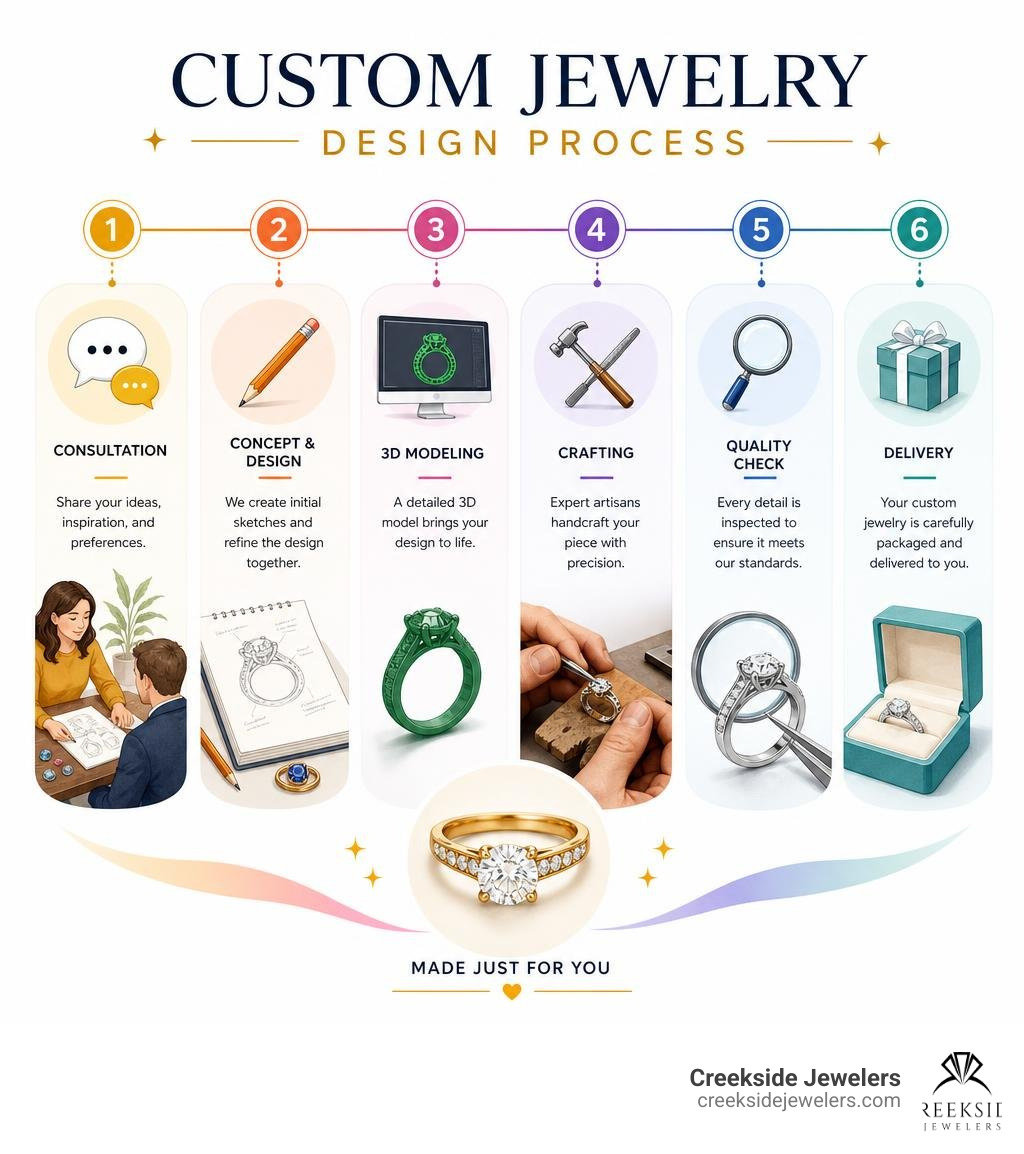
Here is a detailed breakdown of how a custom jewelry project comes to life, from the initial spark of an idea to the final polished masterpiece:
Phase 1: The Design Consultation
Every custom piece begins with a conversation. During this initial meeting, you will sit down with a jewelry designer to discuss your ideas, inspiration, budget, and lifestyle. You don't need to be an expert in jewelry design or know technical terms to get started. You can bring in Pinterest boards, sketches, photographs, or simply describe a feeling or a memory you want the piece to capture. The designer will help you narrow down your choices, suggesting metals, gemstone shapes, and setting styles that will bring your vision to life while staying within your comfortable budget.
Phase 2: 3D Modeling and CAD Rendering
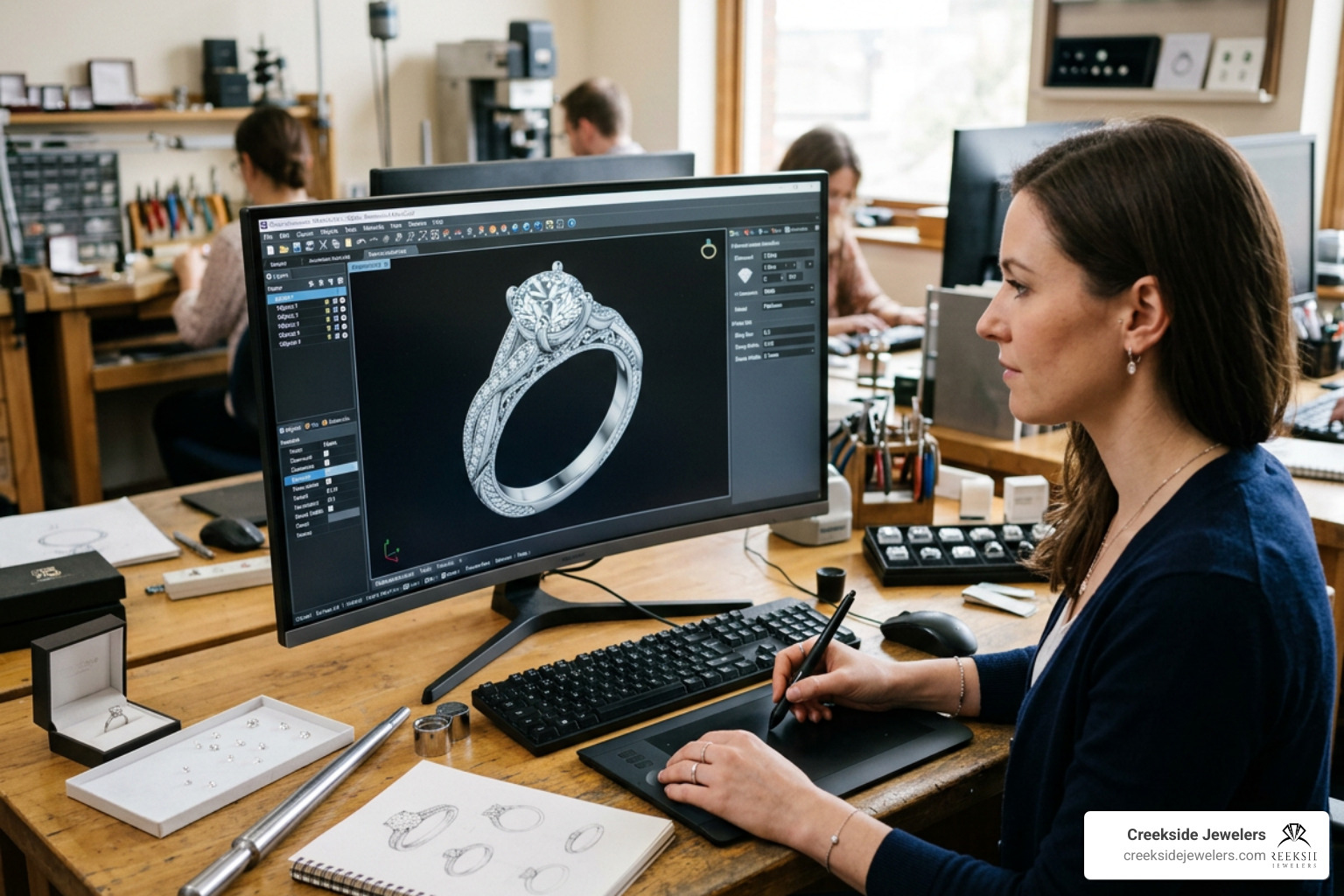
Once the design direction is agreed upon, the jeweler translates the concept into a highly detailed digital format. Using Computer-Aided Design (CAD) software, a 3D model of your piece is created. This technology allows you to see photorealistic renderings of your design from multiple angles before any metal is cast. You can see exactly how the gemstones will sit, how thick the band will be, and how the light will hit the setting. This is the perfect time to make adjustments, whether you want to widen a band, lower a setting, or change a prong style.
Phase 3: The Wax Model
After you approve the CAD renderings, the digital model is turned into a physical object. Using a high-precision 3D printer, the jeweler grows a physical model of your design out of specialized casting wax or resin. This step is incredibly valuable because it allows you to hold the design in your hand, place it on your finger or against your skin, and verify the physical scale and proportions. It bridges the gap between a digital screen and the physical world, ensuring there are no surprises when the final piece is completed.
Phase 4: Casting and Fabrication
With the wax model approved, the traditional goldsmithing begins. The wax model is placed inside a metal flask and surrounded by a plaster-like investment material. Once the plaster hardens, the flask is placed in a high-temperature kiln, which melts the wax away, leaving a perfect negative cavity of your jewelry design. Molten precious metal - whether yellow gold, white gold, rose gold, or platinum - is then poured into the cavity. Once the metal cools, the plaster is broken away, revealing the raw metal casting.
Phase 5: Stone Setting, Polishing, and Quality Assurance
The raw casting is handed over to a master jeweler who meticulously cleans, files, and preps the metal. If your design features gemstones, the jeweler will carefully hand-carve the seats for each stone and secure them using precise setting techniques. Once the stones are perfectly set, the piece undergoes multiple stages of polishing, using progressively finer abrasive compounds to bring out a mirror-like shine.
Finally, the completed piece goes through a rigorous quality assurance inspection, checking prong security, structural stability, and surface finish under high magnification. To see some incredible examples of how these steps translate into finished jewelry, you can explore professional custom jewelry portfolios to gather inspiration for your own project.
Sourcing Materials and Repurposing Heirlooms
One of the greatest advantages of custom jewelry is having complete control over the origin and quality of the materials used.
When it comes to gemstones, you can choose between natural diamonds, lab-grown diamonds, or vibrant colored gemstones like sapphires, rubies, and emeralds. A reputable jeweler will help you source certified natural diamonds, including stones graded by leading institutions like the Gemological Institute of America (GIA), and ensure that all stones are ethically sourced.
Furthermore, custom design is the perfect avenue for repurposing family heirlooms. If you have inherited a piece of jewelry that isn't quite your style, we can carefully extract the gemstones and melt down or refine the gold to create an entirely new design. Resetting stones from an old family ring into a modern pendant or a fresh engagement ring preserves the sentimental history of the original piece while giving it a second life that you will actually wear and enjoy.
Timeline: How Long Does the Bespoke Process Take?
Because bespoke jewelry is crafted by hand from scratch, it requires a realistic investment of time. A typical custom project takes anywhere from 4 to 12 weeks to complete.
The overall timeline is generally divided into two main phases:
- The Design Phase (1-4 weeks): This is the most flexible part of the timeline and is entirely driven by your pace. It includes the initial consultation, sourcing the perfect gemstones for you to view, creating the CAD models, and making any necessary design revisions.
- The Production Phase (3-6 weeks): Once you officially approve the final design and wax model, the physical fabrication begins. This involves casting the metal, hand-setting each gemstone, polishing, and performing final quality checks.
While simple projects using standard materials can sometimes be completed in under a month, complex commissions requiring rare, internationally sourced gemstones or intricate hand-engraving may take longer. If you are planning a custom piece for a specific event - like a wedding, graduation, or holiday gift - we always recommend starting the conversation at least two to three months in advance to ensure a stress-free and enjoyable design experience.
Pricing, Warranties, and Maintenance for Bespoke Pieces
A common misconception is that custom jewelry is only for the ultra-wealthy. In reality, custom design offers incredible budget flexibility. Because you are building the piece from the ground up, you can adjust the design elements to fit your comfortable spending limit.

The final cost of a custom piece is determined by three primary factors:
- Materials: The type and weight of the precious metal (e.g., 14k gold vs. platinum) and the size, cut, and quality of the gemstones.
- Labor Complexity: The amount of time and specialized skill required to carve the model, cast the metal, hand-set the stones, and polish the finished piece.
- Design Fee: The time spent by the designer creating CAD models and rendering the digital previews.
When you work with a local family-owned jeweler, you should expect complete pricing transparency. We discuss your budget upfront and make design recommendations — such as adjusting the band width or choosing an alternative gemstone — to keep your project exactly where you need it to be financially.
When investing in a custom piece, you should also look for strong warranties and after-sales care. Reputable custom jewelers stand behind their craftsmanship, typically offering a lifetime manufacturer warranty against structural defects, along with complimentary cleaning, inspection, and basic maintenance services to keep your jewelry looking as brilliant as the day you first put it on.
How to Care for Your Custom Jewelry
To preserve the beauty and structural integrity of your bespoke jewelry, proper home care and professional maintenance are essential.
Here are the best practices for keeping your custom pieces in pristine condition:
- Use Gentle Cleaning Methods: Clean your jewelry at home by soaking it in warm water mixed with a few drops of mild dish soap. Use a very soft-bristled toothbrush to gently clean behind the gemstones where lotion, soap, and dust tend to collect.
- Dry with a Soft Cloth: Always dry your jewelry with a clean, lint-free microfiber cloth. Avoid using paper towels or tissues, as their fibers can scratch highly polished metal surfaces.
- Avoid Harsh Chemicals: Remove your jewelry before swimming in chlorinated pools, soaking in hot tubs, cleaning with household chemicals, or applying cosmetics, perfumes, and hairsprays.
- Store Properly: Store your custom pieces in a clean, dry place, ideally in individual fabric-lined jewelry boxes or soft pouches to prevent them from scratching against other pieces.
- Get Regular Inspections: Bring your custom jewelry to a professional jeweler at least once a year for a complimentary inspection. We will check the security of the prongs, look for signs of wear on the metal, and give it a professional ultrasonic cleaning.
Frequently Asked Questions About Bespoke Commissions
Can I use my own gemstones or gold for a custom piece?
Yes, absolutely! Repurposing family heirlooms is one of the most rewarding aspects of custom jewelry design. We can safely extract diamonds, sapphires, or other durable gemstones from your old jewelry and reset them into a completely new, modern setting.
When it comes to the metal, we can often refine your old gold or melt it down to incorporate it into your new design. This not only preserves the sentimental value of your family history but can also provide significant cost savings on the raw materials for your project.
Is Bespoke Design Significantly More Expensive Than Ready-Made Options?
Not necessarily. While custom jewelry does involve a design and hand-fabrication cost, it is often comparable in price to high-quality, ready-made jewelry of similar weight and gemstone quality.
The key difference is value and control. With ready-made jewelry, you are paying for the retailer's overhead and markup on a pre-fabricated piece. With custom design, every dollar of your budget is directed toward the exact materials and craftsmanship you choose, giving you complete control over the final cost.
What happens if my custom piece needs to be resized?
Most custom rings can be easily resized by a professional jeweler after completion. However, there are some design limitations to keep in mind. For example, eternity bands (where gemstones go all the way around the band) or rings with highly intricate continuous engravings can be very difficult or impossible to resize without altering the design.
During the initial design phase, we will discuss your lifestyle and potential sizing needs to ensure we select a setting style that allows for easy adjustments down the road.
Conclusion
The advantages of choosing bespoke jewelry are clear. From the unmatched emotional value and physical comfort of a tailored fit to the ability to preserve your family's history through heirloom repurposing, custom design allows you to own a piece of jewelry that is truly as unique as your own story.
At Creekside Jewelers, we have been helping our community celebrate life's most meaningful moments for over a century. As the oldest continuously run watch and jewelry store in Colorado, we have proudly operated from our original family-owned location in Golden since 1902. We specialize in fine jewelry, watches, on-site repairs, and collaborative custom design. When you work with us, you are partnering with master craftsmen who combine generations of expertise with warm, personalized service to bring your dream designs to life.
Ready to start your own custom jewelry journey? Explore the Creekside Jewelers Education Portal to learn more about materials, design styles, and how we can help you create a lasting legacy.