

What You Need to Know About Wedding Rings
Wedding rings are one of the most meaningful purchases you'll ever make. Before diving into the full guide, here's a quick overview of the essentials:
| Question | Quick Answer |
|---|---|
| What is a wedding ring? | A band exchanged during the wedding ceremony, symbolizing lifelong commitment |
| Average cost | $700–$1,200 for plain gold or platinum; $1,500–$3,000+ for diamond bands |
| Best metals | Gold (yellow, white, rose), platinum, tungsten, tantalum |
| Which finger? | Fourth finger of the left hand (in most Western cultures) |
| Do rings need to match? | No — personal style matters more than matching |
| Can they be resized? | Most metals yes; tungsten and titanium are exceptions |
| Can they be customized? | Yes — engraving, metal choice, gemstones, and more |
Few pieces of jewelry carry as much weight as a wedding ring. It's worn every single day, for decades, as a quiet reminder of your commitment to another person.
But choosing the right one? That's where it gets complicated.
With hundreds of metals, styles, widths, and gemstone options available, the decision can feel overwhelming — especially when you want something that will last a lifetime and look beautiful doing it.
This guide walks you through everything: history, metals, styles, sizing, customization, cost, and care. Whether you're shopping for yourself, your partner, or both, you'll leave with the confidence to choose a ring that truly lasts.
The History and Symbolism of Wedding Rings
The tradition of exchanging rings is not a modern marketing invention. It stretches back thousands of years, carrying deep symbolic meaning across different civilizations. The circular shape of the ring itself represents eternity — a shape with no beginning and no end, mirroring a love that is meant to last forever.

Historically, the custom of wearing a wedding ring on the fourth finger of the left hand originates from the ancient Romans. They believed in the concept of the vena amoris, or the "vein of love." According to Roman lore, a vein ran directly from the fourth finger of the left hand straight to the heart. While modern anatomy has disproven this romantic notion, the tradition remains firmly in place across many Western cultures.
However, cultural variations abound. In many European nations — such as Germany, Austria, Norway, and parts of Eastern Europe — couples traditionally wear their wedding rings on the right hand. Similarly, in various cultural and religious traditions globally, the right hand is favored as the hand of vows and oaths. Whether worn on the left or right, the underlying sentiment remains identical: a public, beautiful declaration of an unbreakable bond.
Wedding Rings vs. Engagement Rings
While often discussed together, engagement rings and wedding rings serve distinct purposes and feature different design profiles.
An engagement ring is traditionally the "proposal ring." It is typically given during the marriage proposal and features a prominent center stone — often a classic diamond solitaire, a vibrant gemstone, or a modern halo setting. It represents the promise of marriage.
In contrast, a wedding ring (or wedding band) is exchanged during the marriage ceremony itself. Traditionally simpler in design, it represents the official initiation of the marriage.
Today, many brides choose to wear both rings together. This has popularized stacking options, where the wedding band is designed to nestle perfectly alongside the engagement ring. When planning your bridal stack, deciding on the metal is key. If you are comparing metal aesthetics, our guide on White vs Yellow Gold in Bridal Jewelry can help you decide which metal family best complements your everyday style.
Do Couples' Rings Have to Match?
We hear this question all the time in our Golden, CO showroom: "Do our wedding bands have to match?"
The short answer is: absolutely not!
While matching wedding band sets remain popular — in fact, many legendary designers offer coordinated wedding band sets — modern couples in 2026 increasingly prioritize individual style. Your ring should reflect your personal taste, your lifestyle, and your hand structure.
If you still want a sense of unity without having identical rings, consider these popular matching styles and coordination strategies:
- Coordinated Metals: Choose different ring designs but use the exact same metal (e.g., both partners use 14K yellow gold).
- Matching Engravings: Select entirely different ring styles but engrave the same meaningful date, phrase, or coordinates inside the bands.
- Shared Gemstones: Incorporate a small, subtle gemstone (like a hidden diamond or sapphire) on the inside of both shanks.
- Complementary Textures: One partner might wear a wide, satin-finished band, while the other wears a polished, narrow band in the same precious metal.
Selecting the Best Metals and Styles
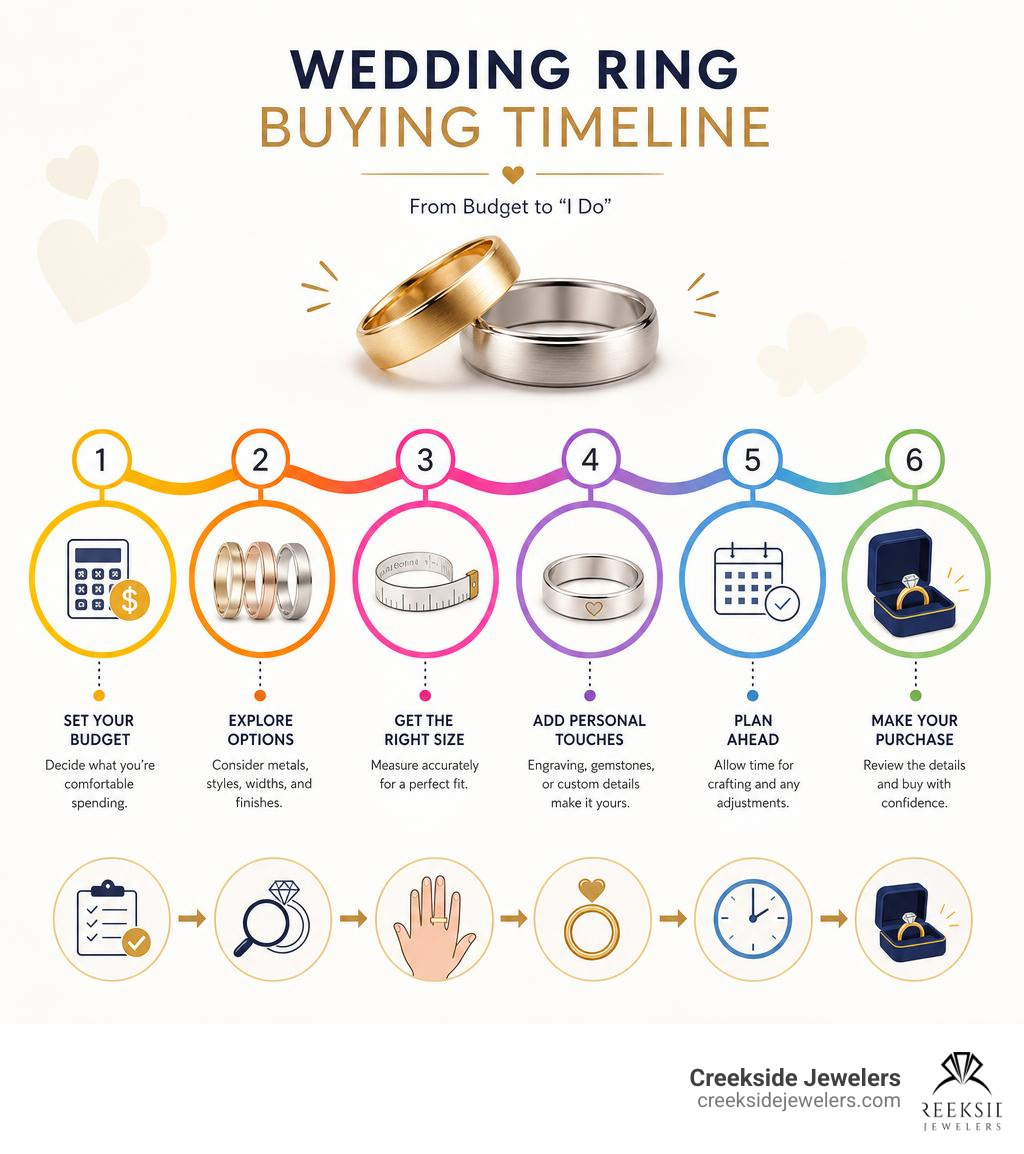
Choosing the right metal and style is the most critical step in your buying journey. Because this is a piece of jewelry meant for daily wear, durability must be balanced with visual appeal.
In 2026, we are seeing a fascinating blend of timeless precious metals and highly durable alternative metals. The choice often comes down to your daily activities and hands-on tasks. If you are shopping for a groom, checking out our expert advice on What is the Best Material for a Mens Wedding Band is an excellent starting point.
Classic and Modern Metals
Let's break down the most popular metal options for modern wedding rings:
- Platinum: The gold standard for durability. Platinum is naturally white, hypoallergenic, and incredibly dense. It doesn't wear away over time; instead, it develops a lovely "patina" finish that can be polished back to a high shine.
- Yellow Gold: Warm, classic, and timeless. It is highly resistant to tarnish and represents the traditional bridal aesthetic.
- White Gold: Sleek and modern. White gold is alloyed with white metals and plated with rhodium for a brilliant finish. If you ever want to change up your look, you might wonder: Can You Change a Yellow Gold Ring to White Gold? (Yes, through professional rhodium plating!).
- Rose Gold: Romantic and vintage-inspired. Created by alloying gold with copper, rose gold looks beautiful on all skin tones.
- Tungsten & Tantalum: Heavy, scratch-resistant alternative metals. They offer a bold, dark-gray modern edge perfect for hands-on professions.
If you are looking for a classic, comfortable look, a 5mm Mens Wedding Band offers the perfect balance of width and wearability for most hands. For those who appreciate historic European luxury, luxury designs like the Vendome Louis Cartier wedding ring, width 4.8 mm - White gold, yellow gold, rose gold - CRB4052100 -Cartier® GB showcase how stunning multi-toned gold bands can be.
Women's Styles and Gemstone Accents
For women, the options extend far beyond a simple metal band. Today's styles range from minimalist metal bands to brilliant, diamond-encrusted masterpieces.
- Eternity Bands: Feature diamonds or gemstones set completely around the entire band, symbolizing unending love.
- Curved and Contoured Bands: Specifically shaped to curve around the center stone of an engagement ring, creating a seamless, flush bridal stack.
- Gemstone Accents: Incorporating colorful gemstones like sapphires, emeralds, or rubies alongside diamonds to add personality and contrast.
To help you decide between eternity styles, here is a quick comparison:
| Feature | Full Eternity Band | Half Eternity Band |
|---|---|---|
| Gemstone Placement | All the way around the band | Halfway around the top of the band |
| Resizing Ability | Extremely difficult or impossible | Can easily be resized in the future |
| Daily Comfort | Can feel bulky between fingers | Sits flush and smooth against adjacent fingers |
| Price Point | Premium (more gemstones required) | Budget-friendly |
Sizing, Customization, and Maintenance
A wedding ring is only as good as its fit and its longevity. Because our bodies change over time, understanding how to size, customize, and care for your ring will protect your investment for decades.
Sizing and Resizing
Your ring should fit snugly at the base of your finger, with a slight resistance when sliding over the knuckle. Fingers swell and shrink based on temperature, humidity, and the time of day, so we always recommend getting sized professionally by a jeweler at least twice under different conditions.
If your finger size changes down the road, you'll need to know: Can My Ring Be Resized? Most gold and platinum rings can easily be adjusted by a professional bench jeweler. However, alternative metals like tungsten, titanium, and tantalum cannot be resized due to their extreme hardness.
Designing Custom Wedding Rings
If you want a ring that is truly one-of-a-kind, custom design is the way to go. Customization allows you to choose your exact metal combinations, select ethically sourced gemstones, incorporate unique finishes (such as hammer-textured, satin, or milgrain), and add personalized laser engravings.
When shopping locally in the Denver metro area, finding a trusted, historic jeweler makes all the difference. If you are wondering, Where Should I Buy a Wedding Ring in Lakewood CO, choosing an established local jeweler with decades of experience ensures you receive personalized service, expert guidance, and a lifetime of support for your precious investment.
Frequently Asked Questions About Wedding Bands
How much should you spend on a wedding ring?
There is no "correct" amount to spend on a wedding ring—it entirely depends on your personal budget and material preferences. Statistically, the average cost of a simple gold or platinum wedding band ranges from $700 to $1,200. If you prefer a diamond-accented or fully encrusted eternity band, prices typically range between $1,500 and $3,000 or more, depending on the stone quality, total carat weight, and metal type.
How do you choose the right size for a wedding ring?
The best way to find your perfect size is to visit a professional jeweler. Avoid using paper or string methods at home, as they are notoriously inaccurate. That wider bands (such as 6mm or wider) fit tighter than narrow bands, so you may need to go up a half-size for wider designs.
What is the best way to care for wedding rings?
To keep your ring sparkling like new, clean it regularly at home using warm water, mild dish soap, and a soft-bristled toothbrush. Avoid exposing your ring to harsh chemicals, chlorine, or abrasive cleaning products. We recommend bringing your ring to a professional jeweler once a year for an inspection to ensure the prongs are secure and the metal is in great condition.
Conclusion
Your wedding ring is more than just a beautiful piece of jewelry; it is a daily symbol of your unique love story and commitment. By taking the time to understand your options—from historic gold alloys to modern custom designs—you can select a band that you will cherish forever.
At Creekside Jewelers, we have been helping Colorado couples find and design their perfect wedding rings since 1902. As the oldest continuously run watch and jewelry store in Colorado, our family-owned shop in Golden, CO, is proud to offer expert custom designs, on-site repairs, and a warm, pressure-free shopping experience.
Ready to learn more about selecting, sizing, and caring for fine jewelry? Explore Creekside Jewelers Education to read more of our expert guides, or stop by our historic Golden location to find your perfect ring today!