
The Timeless Appeal of a 1 Carat Solitaire Diamond Ring
A 1 carat solitaire diamond ring is one of the most sought-after engagement ring choices — and for good reason. It hits a sweet spot: noticeable enough to turn heads, refined enough to wear every day, and classic enough to never go out of style.
Quick answer for shoppers:
- What it is: A single diamond weighing 1 carat, set alone on a plain band
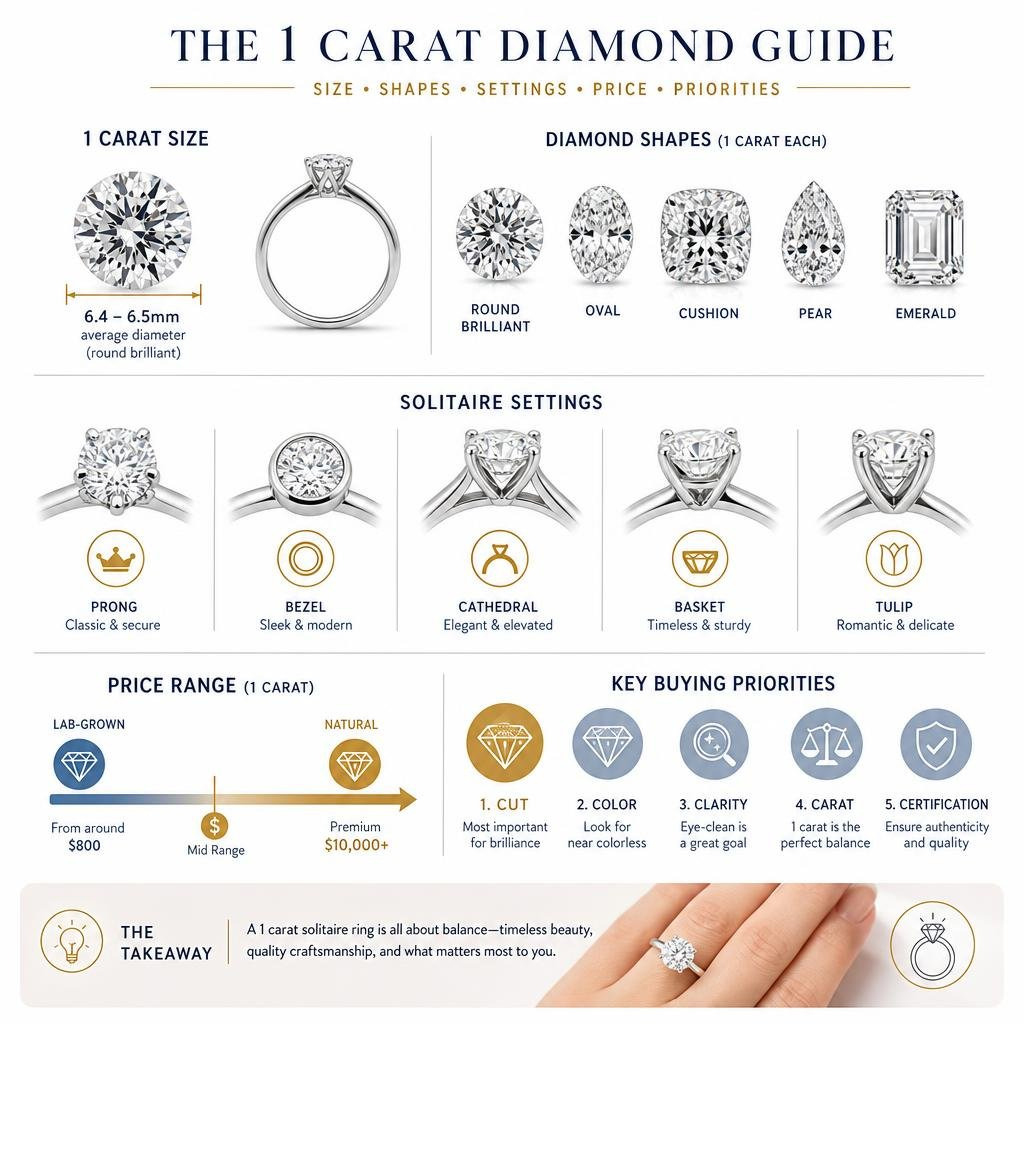
- Typical size: A round 1 carat diamond measures roughly 6.4–6.5mm across
- Price range: From around $800 for lab-grown options to $10,000+ for premium natural stones
- Best for: Anyone who wants a clean, elegant look that puts the diamond front and center
- Top priority when buying: Cut quality — it determines how much the diamond sparkles, not just its size
What surprises most buyers is how much cut, shape, and setting affect the way a 1 carat diamond actually looks on the hand. Two rings with identical carat weights can look completely different depending on those choices.
This guide walks you through everything — from understanding what "1 carat" really means, to choosing the right shape, setting, and metal, to pairing your ring with a wedding band.
Understanding the 1 Carat Solitaire Diamond Ring
When we talk about a 1 carat solitaire diamond ring, we are referring to a masterpiece of minimalist design. The term "solitaire" means the ring features a single, beautiful center gemstone without any side stones or accent diamonds along the band. This simplicity is exactly why it remains the ultimate symbol of commitment; there are no distractions, just the pure brilliance of the diamond itself.
To truly appreciate this ring style, we must first clear up a very common misconception: carat is a measure of weight, not physical size. One metric carat is equal to exactly 200 milligrams (0.2 grams). Because different diamond shapes distribute their weight differently, two diamonds that both weigh exactly 1.00 carat can look visibly larger or smaller when viewed from the top.
If you want to dive deeper into how this style evolved, you can explore our detailed guide on Solitaire Diamond Rings. To make an informed purchase, it is also essential to understand how carat weight interacts with the other three pillars of diamond grading, which you can learn about in our guide on the Four Cs of Diamonds.
What Does 1 Carat Mean for Your 1 Carat Solitaire Diamond Ring?
Because carat measures weight rather than visual dimensions, a diamond's "spread"—or how large it looks when set in a ring—is heavily dictated by its cut proportions. If a diamond is cut too deep, a significant portion of its 1-carat weight will be hidden in the bottom of the stone (the pavilion), making the diamond look smaller from the top. Conversely, if a diamond is cut too shallow, it might look wide, but it will lack the internal angles necessary to bounce light back to your eyes, resulting in a dull, lifeless stone.
A well-cut round brilliant 1 carat diamond will measure approximately 6.4mm to 6.5mm in diameter. This size offers an incredibly balanced silhouette that looks both refined and confident on almost any hand shape. For a complete look at how these measurements translate to real-world visual presence, take a look at our Diamonds Complete Guide 2026.
How a 1 Carat Solitaire Diamond Ring Looks on the Hand
How a 1 carat solitaire diamond ring looks on a finger depends heavily on the wearer's hand proportions and the design of the ring band itself. On smaller hands (ring sizes 4 to 6), a 1 carat diamond has a highly commanding presence, often looking even larger than its physical measurements suggest. On larger hands, it retains a dainty, elegant, and classic look.

We can also use visual design tricks to influence how large the diamond appears:
- Band Width: Opting for a slender band (typically between 1.6mm and 2.0mm) creates a stark contrast that makes the center stone pop. A wider band (2.5mm to 3.0mm) provides a bolder, more modern look but can slightly minimize the perceived size of the diamond.
- Elongated Shapes: Choosing shapes like oval, pear, marquise, or emerald cuts will make the diamond look larger on the hand because they cover more length on the finger than a symmetrical round or princess cut.
Prioritizing the 4Cs, Shapes, and Settings
When shopping for a 1 carat solitaire diamond ring, you do not need to buy a flawless, colorless stone to get a jaw-dropping ring. Because a solitaire puts the focus entirely on one diamond, you simply need to know where to allocate your budget.
To get the most visual impact, we recommend prioritizing the 4Cs in this order:
- Cut: Never compromise here. A diamond with excellent cut grades will sparkle intensely, hiding minor color tints and tiny natural inclusions.
- Color: Aim for the "sweet spot" of G to H (near-colorless). These stones look bright white to the naked eye but cost significantly less than D to F (colorless) grades.
- Clarity: Look for "eye-clean" VS2 or SI1 grades, where inclusions are invisible without a jeweler's magnifying loupe.
- Carat: Stick to the 1-carat mark, or look for "under-cutter" stones (like 0.90 to 0.95 carats) which offer the visual size of a 1-carat stone at a friendlier price point.
To understand which design decisions will give you the brightest sparkle, read our analysis on Which Diamond Cut Sparkles the Most. Additionally, as you wear your ring daily, you may wonder about its durability; learn the facts in our article on Can a Diamond Chip or Break.
Why Cut Quality is Your Top Priority
Cut quality is the engine that drives a diamond's beauty. It directly influences three key elements:
- Brightness: The internal and external white light reflected from the diamond.
- Fire: The scattering of white light into all the colors of the rainbow.
- Scintillation: The pattern of light and dark areas, along with the sparkle created when the ring moves.
We always advise our customers to insist on a reputable third-party grading report, such as a GIA diamond grading report, to verify the cut grade. A poorly cut diamond will let light leak out of the sides and bottom, making the stone look dark, glass-like, and physically smaller than a well-cut stone of the exact same weight.
Popular Diamond Shapes for a Solitaire
While the round brilliant cut remains the most popular and classic choice due to its unmatched symmetrical sparkle, modern brides are increasingly choosing alternative shapes to express their personal style.
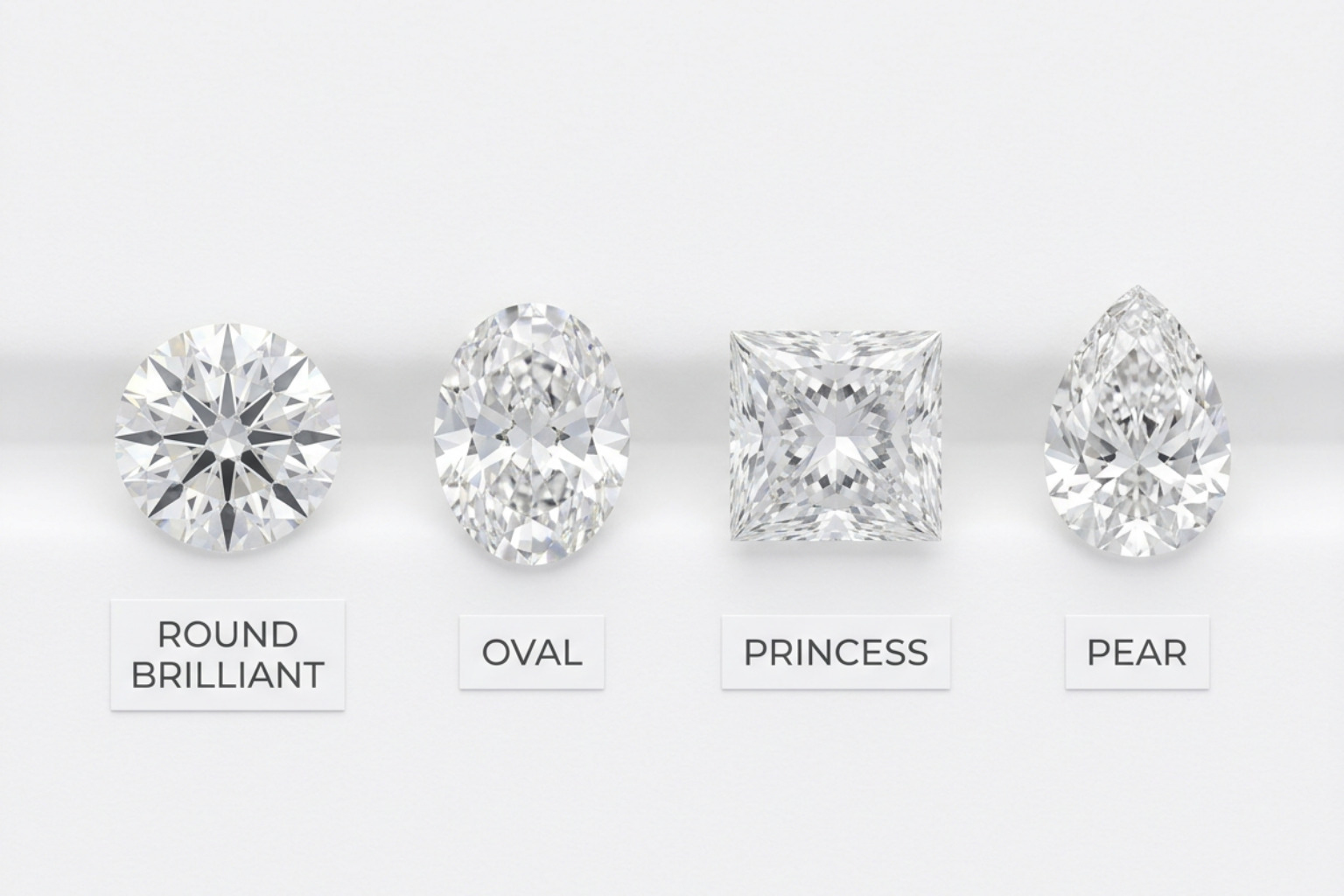
Here is how the most popular shapes compare for a 1-carat weight:
- Round Brilliant: The gold standard for light performance. It measures about 6.5mm.
- Oval Cut: Highly trending because its elongated shape flatters the finger and offers a larger face-up surface area than a round cut.
- Princess Cut: A crisp, square cut with sharp corners that offers a modern, regal, and geometric look.
- Pear Shape: A beautiful teardrop shape that combines the brilliance of a round cut with the elongating effect of a marquise.
- Emerald Cut: A step-cut style with rectangular facets that acts like a hall of mirrors, emphasizing clarity and elegant lines over raw sparkle.
Best Settings to Maximize Security and Sparkle
The right setting not only protects your 1 carat diamond but also enhances its interaction with light.
- Prong Settings: The classic choice. A 4-prong setting allows maximum light to enter the diamond from all angles, while a 6-prong setting offers superior security and makes the stone look rounder.
- Bezel Settings: A modern, sleek option where a thin metal rim completely surrounds the edge of the stone. It is incredibly secure and prevents the diamond's edges from snagging on clothing.
- Hidden Halo: A contemporary favorite where a tiny circle of pavé diamonds is placed just beneath the main stone's girdle, adding a secret touch of sparkle visible only from the side profile.
- Cathedral Settings: This design uses elegant arches of metal to raise the diamond high above the band, giving it a majestic profile. To learn more about this architectural option, read What is a Cathedral Ring.
When it comes to metals, platinum, white gold, yellow gold, and rose gold are all beautiful choices. If you have sensitive skin, we often recommend 18k white gold alloyed with palladium rather than nickel, as it is hypoallergenic and retains its white luster beautifully over time.
Natural vs. Lab-Grown Diamonds vs. Moissanite
Modern couples in 2026 have more choices than ever when selecting the center stone for their 1 carat solitaire diamond ring. Understanding the differences in origin, physical properties, and pricing is key to choosing the right option for your budget and values.
To help you understand the chemical and physical details of these options, read our guide on Are Lab Grown Diamonds Real Diamonds.
| Feature | Natural Diamond | Lab-Grown Diamond | Moissanite |
|---|---|---|---|
| Composition | Pure carbon | Pure carbon | Silicon carbide |
| Origin | Mined from the earth | Grown in a high-tech laboratory | Created in a lab (space-born origin) |
| Hardness (Mohs) | 10 (Hardest known mineral) | 10 (Hardest known mineral) | 9.25 (Extremely durable) |
| Brilliance (Refractive Index) | 2.42 (Classic, balanced sparkle) | 2.42 (Classic, balanced sparkle) | 2.65 - 2.69 (High "rainbow" sparkle) |
| Resale Value | Retains moderate long-term value | Very low resale value | None |
| Price (1 Carat) | $3,500 - $10,000+ | $800 - $2,000 | $300 - $700 |
To explain why lab-grown diamonds are chemically identical to natural ones, jewelers often use the "ice maker" analogy: ice made in your home refrigerator is identical in chemical structure, clarity, and coldness to ice harvested from an ancient glacier. Both are water; one was simply made using modern technology.
Solitaire vs. Diamond-Accented Bands
While a classic solitaire features a completely plain metal band, some buyers prefer a bit of extra sparkle along the shank.
- Classic Solitaire: Keeps 100% of the focus on your 1-carat center stone, making it look larger and more prominent. It is also much easier to clean, resize, and pair with any style of wedding band.
- Pavé Band: Features tiny, brilliant-cut diamonds set closely together along the band. This adds an extra layer of dimension and shimmer but requires more careful maintenance.
- Three-Stone Setting: Places two smaller side stones next to the center diamond, symbolizing a couple's past, present, and future.
Choosing between a classic solitaire and an accented band comes down to personal style and how you want to balance the visual weight of your ring.
Pricing and Budgeting for a 1 Carat Ring
The price of a 1 carat solitaire diamond ring varies widely based on the origin of the stone and where you shop.
Traditional luxury retailers and high-end brands often apply significant markups to cover massive overhead costs, with premium natural stones easily climbing to over $15,000. On the other hand, choosing a local, independent jeweler or opting for a high-quality lab-grown diamond can offer incredible savings, allowing you to get a stunning, high-grade stone for a fraction of the price.
When planning your budget, it helps to understand the broader context of ring pricing. You can read our advice on How Much Should You Spend on an Engagement Ring to find a number that makes financial sense for your future.
Customization and Pairing Your Wedding Band
One of the greatest benefits of choosing a classic 1 carat solitaire is its incredible versatility. Because the ring design is so clean, it serves as a beautiful foundation for customization and pairs seamlessly with almost any wedding band style.
For couples looking to create something truly one-of-a-kind, opting for a custom-made ring allows you to choose your exact diamond, select your preferred precious metal, and design a setting that fits your partner's exact lifestyle. To learn how we bring these ideas to life, read our guide on Engagement Rings Custom Made.
While some national brands offer custom options, working with a local Colorado jeweler ensures you can see the materials in person and enjoy lifetime maintenance. If you are exploring regional styles, working with a trusted local jeweler in the Colorado area will help you bring your unique vision to life.
Designing a Custom Solitaire Ring
When customizing your solitaire, the beauty is in the details:
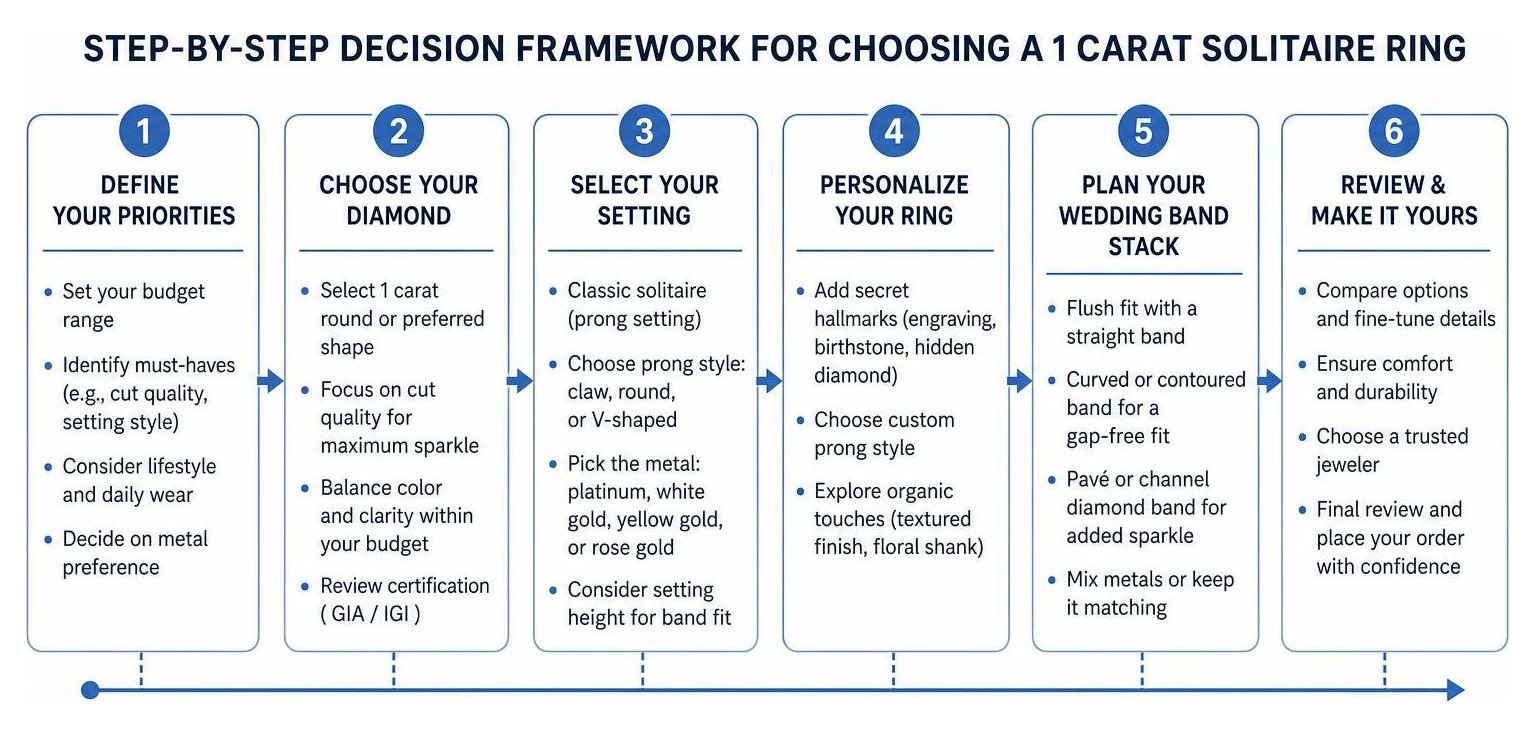
- Secret Hallmarks: You can add custom details that are invisible to the world but deeply meaningful to you, such as a custom engraving inside the band, a birthstone flush-set on the interior shank, or even a tiny hidden diamond (a technique popularized by vintage designers).
- Prong Customization: You can choose claw prongs, round prongs, or V-shaped prongs (perfect for protecting the sharp corners of princess or pear cuts).
- Organic Touches: You can opt for a textured, hammered metal finish or a floral-inspired shank to give a vintage twist to a traditional plain band.
How to Pair Your Wedding Band
Because a solitaire ring has a simple profile, you can completely change its look depending on the wedding band you stack next to it.
- Flush Fit: If your solitaire setting is raised high enough off the finger (such as in a cathedral setting), a straight wedding band can slide directly underneath it, sitting perfectly flush against the engagement ring.
- Curved and Contoured Bands: If your solitaire setting sits low to the finger, a straight band will create a small gap. A contoured or curved band is designed to sweep gracefully around the curve of your 1-carat diamond, creating a cohesive, gap-free stack.
- Diamond-Studded Bands: Adding a pavé or channel-set diamond band next to your solitaire adds a sparkling contrast that frames the center stone beautifully without overshadowing it.
To help you visualize the entire journey of selecting and customizing your ring, we have mapped out the key steps below:
Frequently Asked Questions about 1 Carat Solitaire Rings
What is the average price of a 1 carat solitaire diamond ring?
In 2026, the average price of a 1 carat solitaire ring ranges from $1,500 to $4,500 for high-quality lab-grown diamonds, and $5,000 to $10,000+ for natural diamonds with excellent cut, G-H color, and eye-clean clarity. The final cost is determined by the stone's origin, its GIA grading report, and the metal used for the setting.
How can I make my 1 carat diamond look larger?
To maximize the visual presence of a 1-carat diamond, choose an elongated shape like an oval or pear cut, set it on a slender 1.6mm to 1.8mm band, and prioritize an "Excellent" cut grade to ensure maximum light reflection. You can also opt for a hidden halo or a bright-cut bezel setting to visually expand the stone's borders.
How do I pair a wedding band with a solitaire ring?
Solitaire rings pair beautifully with almost any band. If your setting is high-profile, a straight metal or diamond-studded band will sit flush. For low-profile settings, choose a curved, contoured, or chevron-style band that wraps around the center diamond to prevent gaps in your stack.
Conclusion
A 1 carat solitaire diamond ring is the ultimate expression of timeless romance. Its beauty lies in its simplicity, allowing the natural brilliance of a single, well-cut diamond to tell your love story. Whether you prefer the classic symmetry of a round brilliant, the modern lines of a princess cut, or the finger-flattering elegance of an oval, this ring style is a choice you will cherish forever.
At Creekside Jewelers, we have been helping Colorado couples find and design their dream rings since 1902. As the oldest continuously run jewelry store in Colorado, our family-owned shop in historic Golden, CO, combines old-world craftsmanship with modern design capabilities. We specialize in custom jewelry design, on-site repairs, and personalized consultations to help you find the perfect ring without the high-pressure sales tactics of traditional retail chains.
If you are celebrating a milestone or looking for a perfect accompanying piece, you might also enjoy exploring our guide on selecting a Diamond Pendant with Chain.
Ready to start your journey? Explore Creekside Jewelers Education Guides to learn more, or visit us in Golden, CO, to see our collection in person.