

The One Ring That Never Goes Out of Style
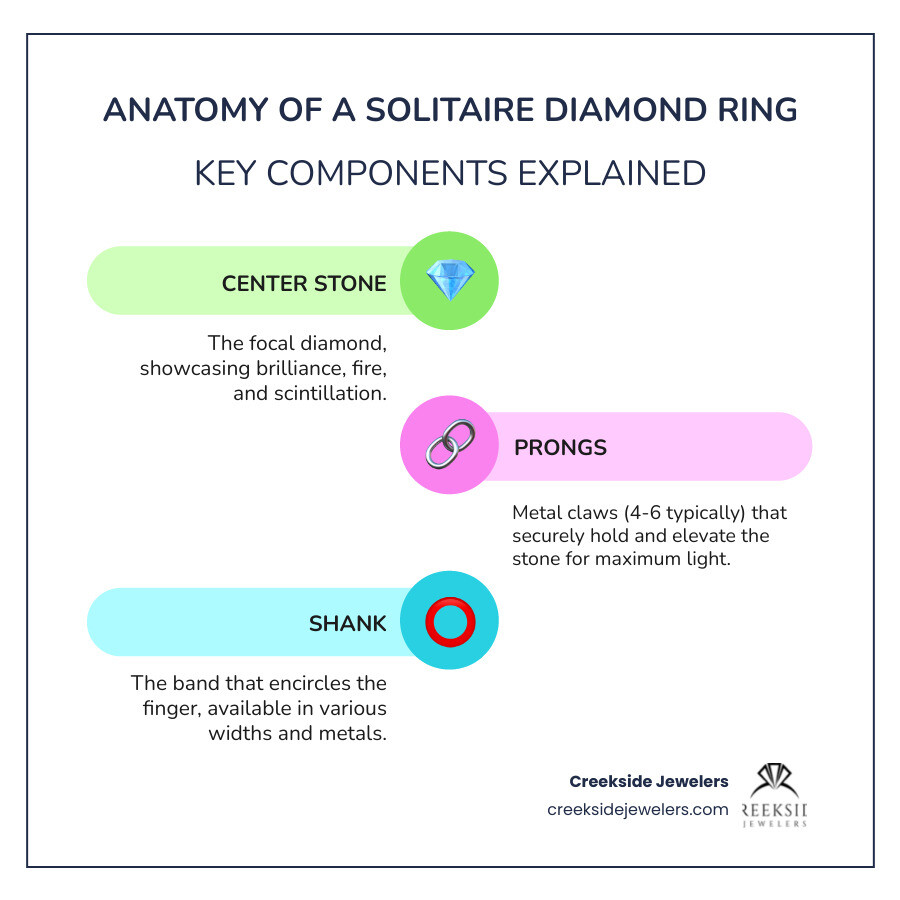
Solitaire diamond rings are the most classic and enduring style in fine jewelry — a single diamond, held in a simple metal band, letting the stone speak for itself.
If you want the short version, here's what you need to know:
What is a solitaire diamond ring?
- A ring featuring one center diamond with no side stones or accent gems
- Available in settings like four-prong, six-prong, and bezel
- Comes in metals including platinum, white gold, yellow gold, and rose gold
- Works with every diamond shape: round, oval, emerald, cushion, pear, marquise, and more
- Offered in both natural and lab-grown diamond options at a wide range of price points
It's the style that helped define the modern engagement ring back in 1886 with the introduction of the iconic six-prong setting. And it's remained the most popular engagement ring choice ever since — not because of trends, but because of what it means. One diamond. One person. One promise.
Whether you're shopping for the first time or upgrading a family heirloom, understanding what makes a solitaire ring truly exceptional — the cut, the setting, the sourcing — can make all the difference in finding a piece that lasts generations.
The Timeless Appeal of Solitaire Diamond Rings
The history of solitaire diamond rings is as deep and enduring as the stones themselves. While many modern trends come and go, the solitaire remains the undisputed champion of the engagement world. This tradition dates back significantly further than most people realize; even in ancient Roman times, a single diamond was thought to hold the power to seal a promise of eternal love. The Romans believed the "Vena Amoris" (the vein of love) ran directly from the fourth finger of the left hand to the heart, making it the perfect place for a singular, indestructible gemstone.
The modern era of the solitaire truly began in 1886. Before this time, diamonds were often set deep into metal, which obscured their brilliance. The introduction of the iconic six-prong setting changed everything by lifting the diamond off the band, allowing light to pass through the stone from all angles. This innovation defined the "modern" engagement ring as we know it today.
At Creekside Jewelers, we've seen these styles evolve firsthand. As the oldest continuously run jewelry store in Colorado, operating in the same Golden location since 1902, we have helped generations of families select their "one-and-only." The solitaire’s symbolism is its greatest strength: it represents a singular, focused devotion. By choosing Solitaire Engagement Rings at Creekside Jewelers, you are participating in a historical legacy that spans centuries.
Beyond its romantic symbolism, the solitaire is a practical masterpiece. It is "effortlessly chic," acting as a sophisticated foundation that can be paired with any wedding band style later on. To truly appreciate why this style works, it helps to start with Understanding Gemstones and the inherent properties that make diamonds the perfect choice for a lifetime of daily wear.
Anatomy of a Classic: Shapes, Cuts, and the 4Cs
When you strip away the side stones and halos, the center diamond becomes the absolute star of the show. This means that the quality of the stone and the precision of its cut are more important than ever. In a solitaire, there is nowhere for a low-quality diamond to hide.
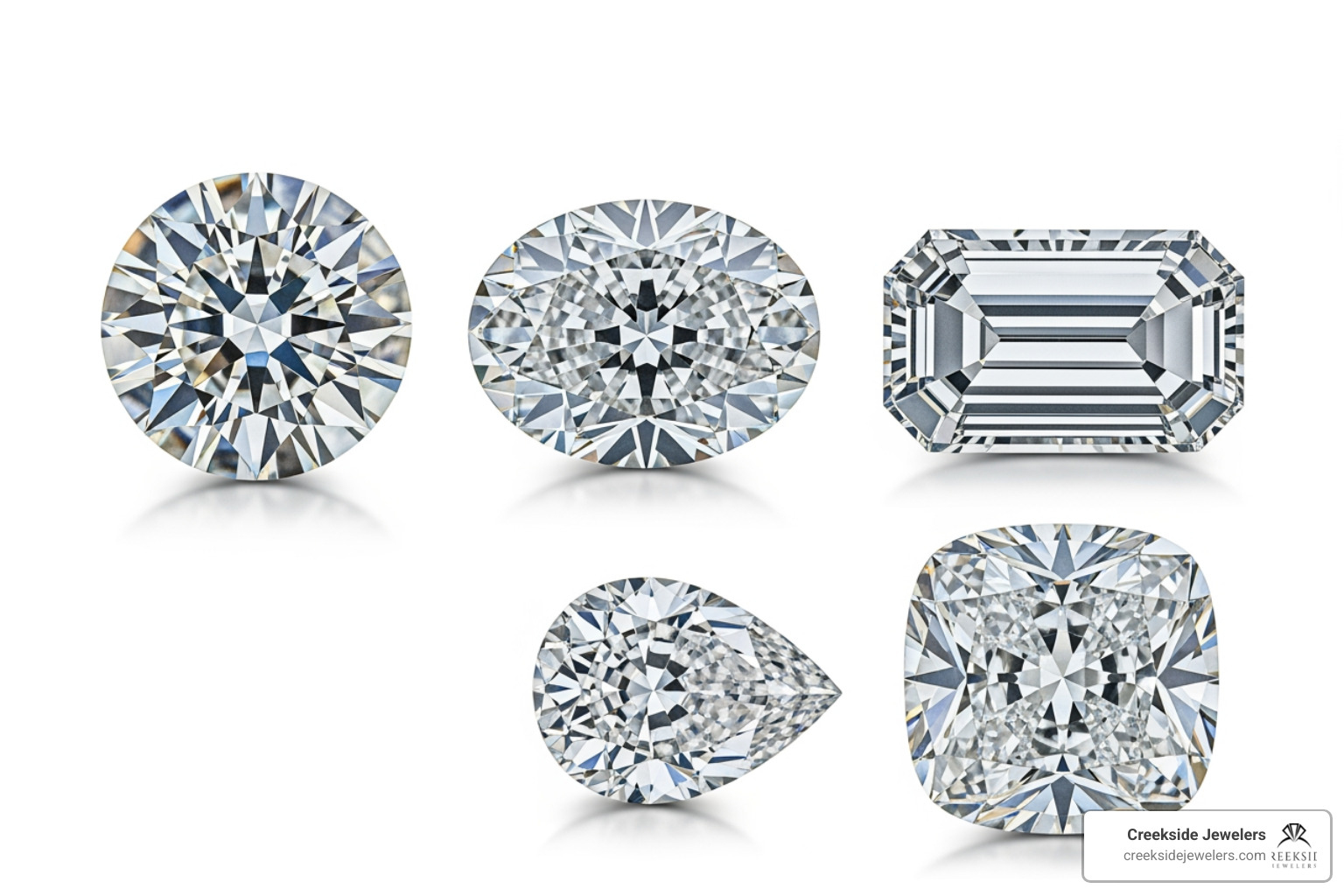
The "brilliance" of a diamond refers to the white light reflected back to your eye, while "fire" refers to the flashes of rainbow colors. The way a diamond is cut determines how these two elements interact. We often guide our clients through Exploring the 4 Cs and the Evolution of Diamond Cuts to help them understand that "cut" isn't just about the shape—it’s about the mathematical precision of the facets.
You might also wonder What is the Most Expensive Diamond Cut. Generally, the round brilliant cut commands the highest price per carat because it results in the most "rough" diamond being discarded during the cutting process to achieve that perfect sparkle.
Popular Shapes for Solitaire Diamond Rings
While the round brilliant is the most traditional choice, solitaire diamond rings are the perfect canvas for "fancy shapes." Each shape offers a different personality:
- Round Brilliant: The gold standard for sparkle, featuring 58 facets designed to maximize light return. When asking Which Diamond Cut Sparkles the Most, the round brilliant is the definitive answer.
- Oval: A modern favorite that offers a similar brilliance to the round but with an elongated shape that makes the finger appear longer and more slender.
- Emerald Cut: This "step-cut" features long, linear facets. It offers a "hall of mirrors" effect rather than a traditional sparkle, emphasizing the diamond's clarity.
- Cushion: A romantic, vintage-inspired shape with rounded corners, often described as a cross between a round and a square.
- Pear and Marquise: These shapes are bold and unique, offering a larger "face-up" appearance for their carat weight, making the diamond look more substantial.
Understanding the 4Cs in 2026
As we move through 2026, the way we evaluate diamonds has become more transparent, but the fundamental 4Cs remain the benchmark.
- Cut: This is the most critical factor. A "Triple Excellent" grade (the highest grade for cut, symmetry, and polish) ensures the diamond doesn't look "leaky" or dull.
- Color: Graded from D (colorless) to Z (light yellow). For solitaires set in white gold or platinum, we usually recommend staying in the D-F range. If you prefer yellow gold, a G or H color can offer great value as the metal's warmth hides slight tints.
- Clarity: This measures internal inclusions. Because a solitaire is so exposed, we recommend "Eye Clean" stones, typically in the VS1 or VS2 range.
- Carat Weight: While often the first thing people look at, a well-cut 1.00ct diamond will often look larger and more beautiful than a poorly cut 1.25ct stone.
When considering these factors, many buyers ask, Are Diamonds a Good Investment? While diamonds hold sentimental value and can retain a portion of their resale price, they should primarily be viewed as a symbol of love and a wearable heirloom rather than a speculative financial asset. Always ensure your diamond is GIA-certified to guarantee its quality and origin.
Customizing Your Style: Metals and Settings
The beauty of solitaire diamond rings lies in their versatility. Even with a single stone, the combination of metal and setting can create a ring that feels either ultra-modern or deeply traditional.
| Metal Type | Pros | Cons | Best For |
|---|---|---|---|
| Platinum | Extremely durable, hypoallergenic, naturally white | More expensive, heavier | Active lifestyles, security |
| White Gold | Classic look, more affordable than platinum | Needs occasional rhodium plating | Traditional elegance |
| Yellow Gold | Timeless, warm, hides lower color grades | Can show scratches more easily | Vintage or classic styles |
| Rose Gold | Romantic, unique, complements all skin tones | Contains copper (not hypoallergenic) | Modern, trendy looks |
The setting is what actually holds the diamond in place. The most common is the prong setting (usually 4 or 6 prongs). A four-prong setting shows more of the diamond, while a six-prong setting provides extra security and a more rounded silhouette.
For those who want something different, a bezel setting wraps the diamond in a thin rim of metal. This is the most secure option and is perfect for those who work with their hands. Cathedral mountings use arches of metal to lift the diamond even higher, while a hidden halo adds a secret sparkle of tiny diamonds underneath the center stone that can only be seen from the side.
You can Browse Our Solitaire Collection to see how these different elements come together in person.
How to Care for Solitaire Diamond Rings
Because the diamond in a solitaire ring is so prominent, it tends to catch on things more often than a flush-set ring. Maintenance is key to keeping that "day-one" sparkle. We recommend a weekly cleaning at home using warm water, mild dish soap, and a soft toothbrush.
However, diamonds aren't indestructible. People often ask, Can Diamond Rings Get Scratched? While the diamond itself is the hardest natural substance, the metal band certainly can. Furthermore, Can a Diamond Chip or Break? Yes—a hard blow at the right angle can cause a diamond to chip, especially on pointed corners like those found on marquise or pear shapes.
We suggest an annual professional inspection to check that your prongs haven't loosened. If the worst happens, don't panic—Can You Repair Diamond Rings? Absolutely. At Creekside Jewelers, we perform on-site repairs to ensure your ring stays secure for a lifetime.
Sourcing and Sustainability: Natural vs. Lab-Grown
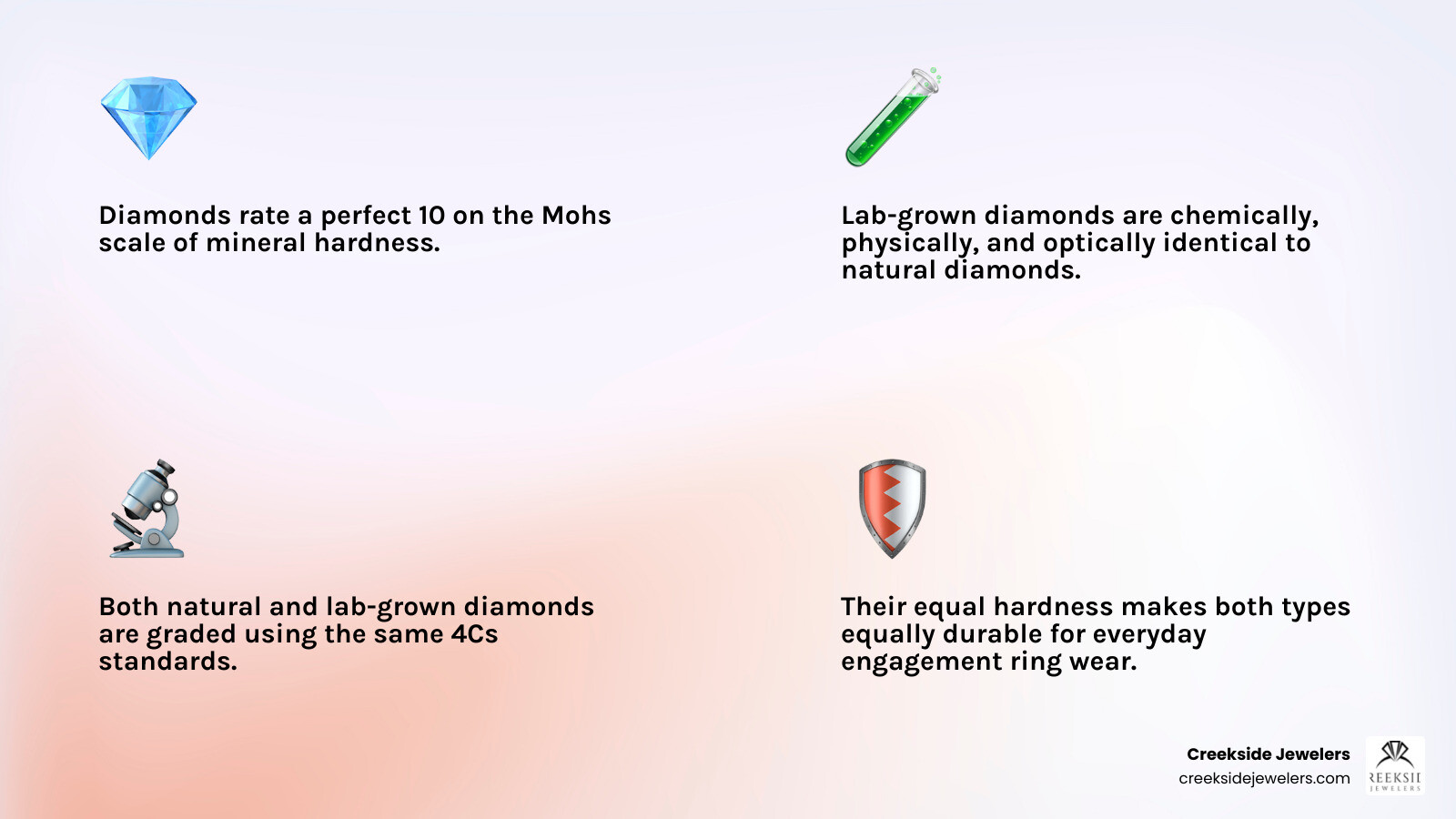
In 2026, the choice between natural and lab-grown diamonds is a standard part of the shopping experience. Both are "real" diamonds—optically, chemically, and physically identical.
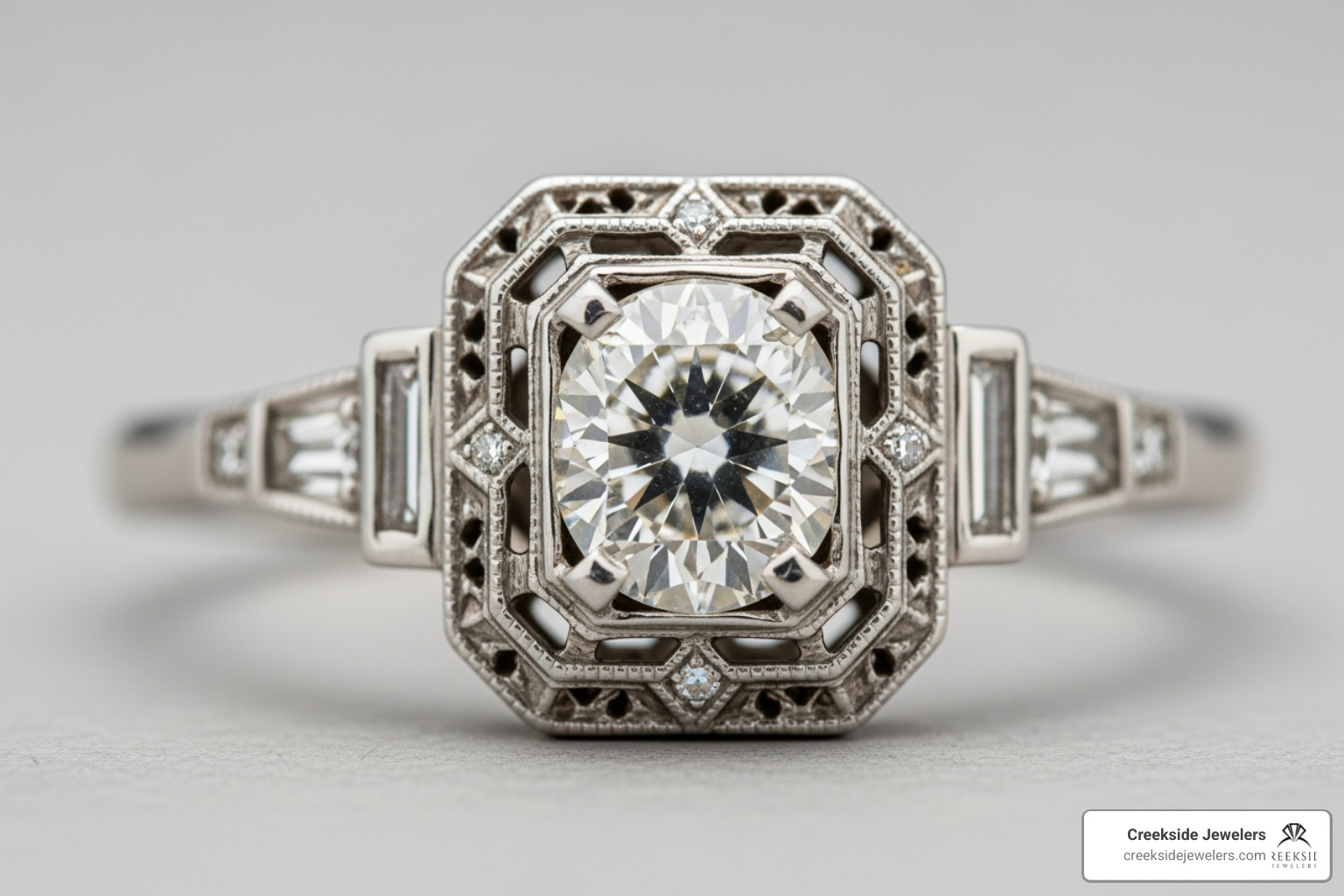
- Natural Diamonds: Formed over billions of years deep within the earth. They carry a sense of rarity and history. Many of our clients love our vintage and estate options, like Art Deco solitaires from the 1920s, which offer a unique, eco-friendly way to own a piece of history.
- Lab-Grown Diamonds: Created in a controlled environment using advanced technology. They offer a significant price advantage, often costing 30-60% less than natural stones of the same quality. This allows many couples to choose a much larger carat weight within their budget.
A common question we hear is, Are Lab Grown Diamonds Flawless? Not necessarily. Just like natural diamonds, lab-grown stones can have inclusions and color variations. They are still graded on the same 4Cs scale.
Ethical sourcing is also a top priority today. We utilize blockchain transparency and initiatives like TRACR to ensure that every diamond we sell is conflict-free and responsibly sourced, providing you with peace of mind alongside your purchase.
Frequently Asked Questions about Solitaire Rings
What is the most popular setting for a solitaire?
The six-prong round brilliant setting remains the most popular. It offers a perfect balance of security and light performance. By having six points of contact, the diamond is less likely to fall out if one prong is damaged, and the prongs help maintain the circular silhouette of the stone.
How do I choose the right band width?
Band width is all about proportion. A dainty 1.5mm band will make the center diamond look significantly larger, but it may be less durable over decades of wear. A 2mm or 2.5mm band offers a more substantial feel and better longevity. We recommend trying on different widths to see what complements the proportions of your hand.
Are lab-grown solitaires as durable as natural ones?
Yes. Both natural and lab-grown diamonds rate a 10 on the Mohs scale of mineral hardness. This means they are equally resistant to scratching and are perfectly suited for the long-term wear required of an engagement ring.
Conclusion
Choosing an engagement ring is one of the most significant decisions you'll ever make. While trends may shift toward pavé bands or halo settings, solitaire diamond rings remain the gold standard for a reason: they are timeless, elegant, and focus entirely on the promise represented by the stone.
At Creekside Jewelers, we take immense pride in our Colorado heritage. As a family-owned business in Golden since 1902, we don't just sell rings; we help start legacies. Whether you are looking for a classic modern solitaire, a custom-designed masterpiece, or a unique estate piece, our on-site experts are here to guide you every step of the way.
Ready to find the one? Learn more about diamond education or visit us in-store to see the brilliance of a solitaire diamond for yourself.