

Ring Stone Replacement Cost: What to Expect
A typical ring stone replacement cost is about $350 to $1,800 for the stone, setting work, and standard labor. Replacing a small diamond often falls between $300 and $2,000, with many projects near $900. The biggest price factors are the stone type and size, its quality, the condition and complexity of the setting, and whether the ring needs prong repair, resizing, or a new appraisal.
For a fast, reliable estimate, ask for an itemized quote that separates:
- Replacement stone cost
- Setting and bench labor
- Prong, shank, or mounting repairs
- Resizing, cleaning, and rhodium plating, if needed
- Certification and updated insurance appraisal
A lost stone can be unsettling, especially in an engagement ring or family heirloom. But replacing it does not always mean replacing the whole ring. A skilled jeweler can often preserve the original metalwork and sentiment while fitting a natural diamond, lab-grown diamond, or colored gemstone that suits your budget and the ring's structure.
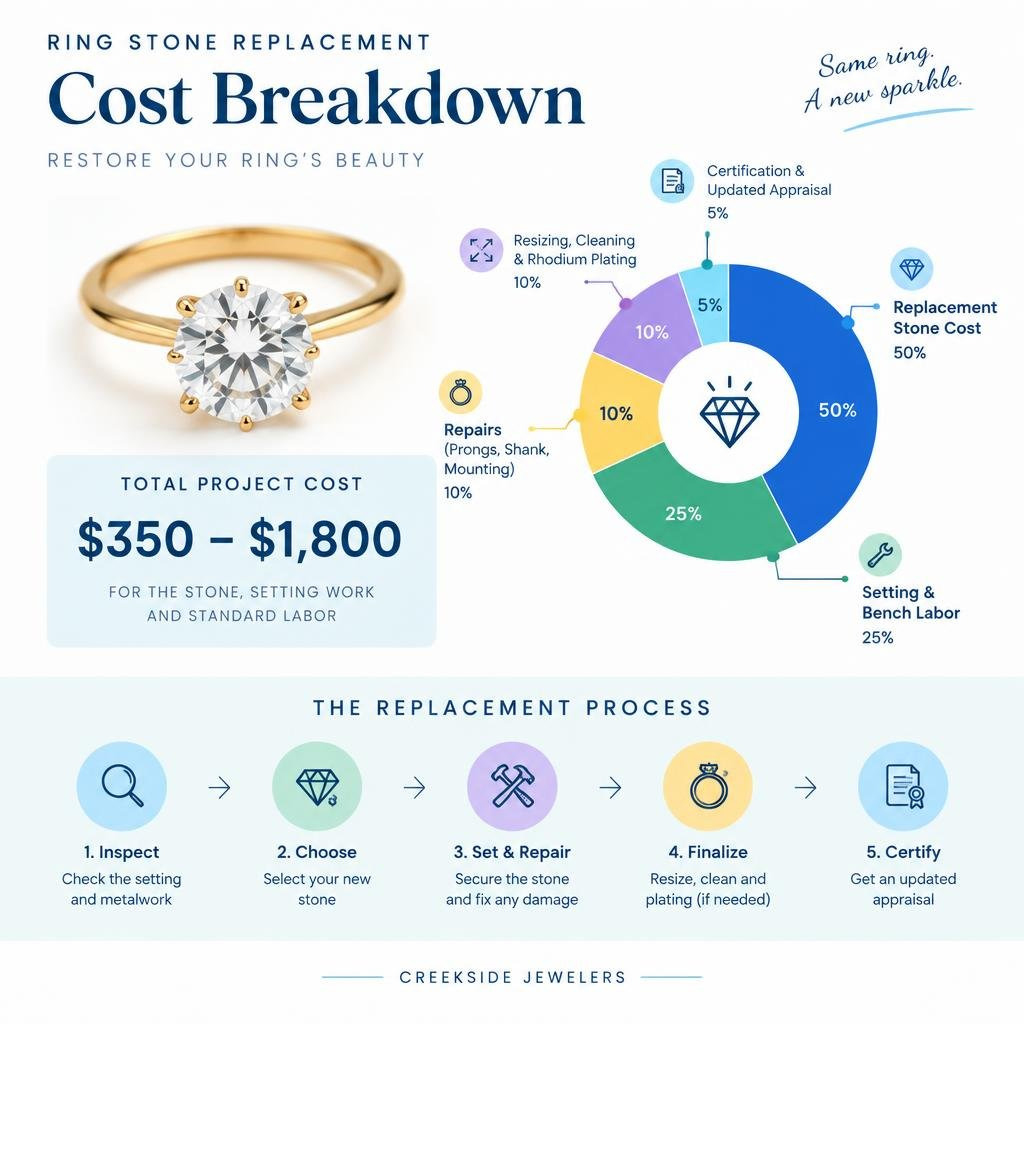
Comprehensive Overview of Ring Stone Replacement Cost
When you look down and see an empty setting, understanding where the money goes is the first step toward restoring your piece. The total cost to replace a ring stone is divided into two primary parts: the physical replacement gemstone and the bench labor required to secure it properly. For a standard project, overall repair cost ranges sit between $80 and $350 for the metalwork alone, while the total project—including the new stone—typically spans $350 to $1,800 or more.
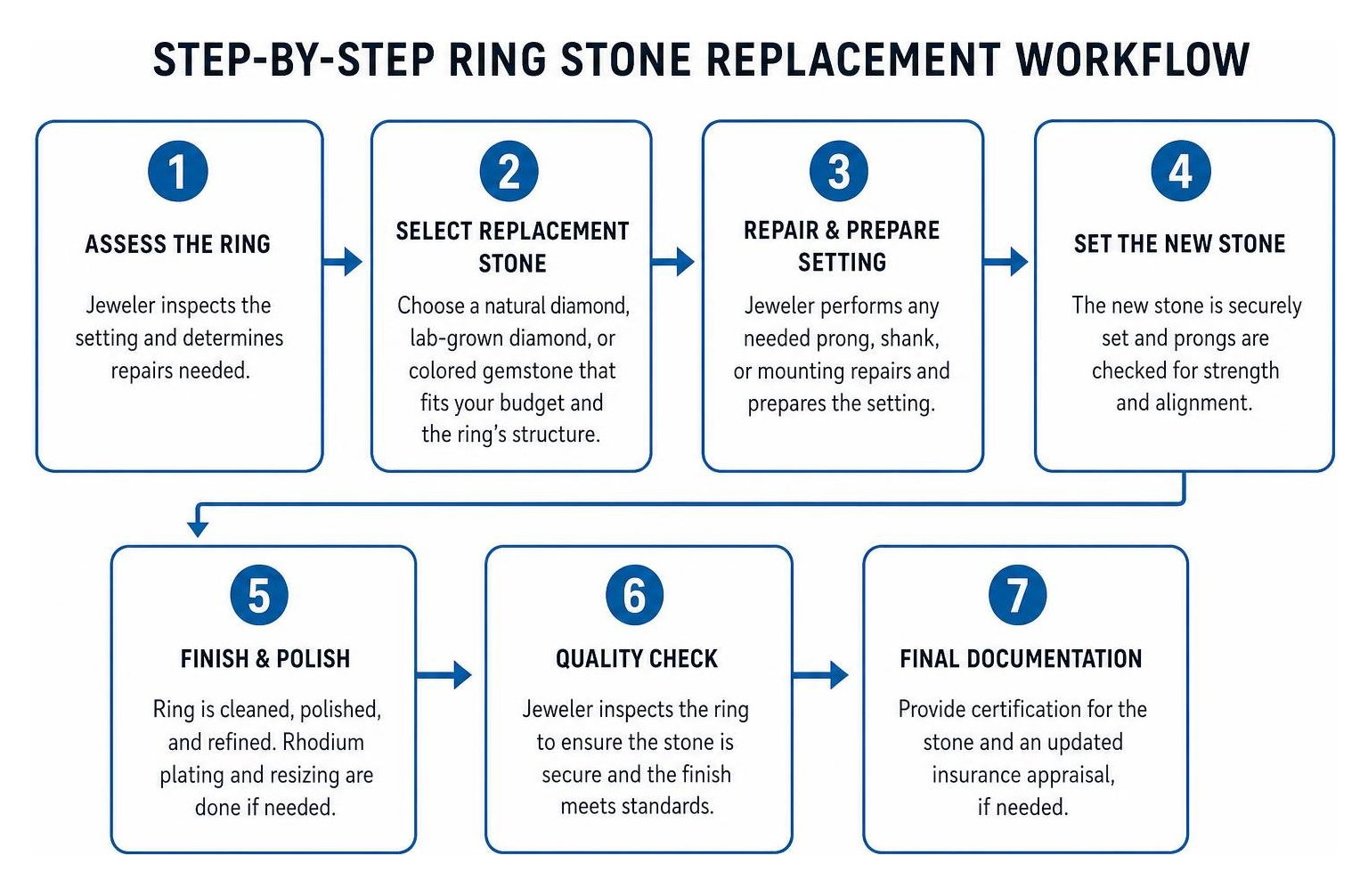
The table below outlines typical replacement price ranges across various stone categories and carat sizes to help you budget:
| Stone Type & Carat Weight | Typical Gemstone Cost | Setting & Bench Labor | Total Estimated Cost Range |
|---|---|---|---|
| Accent / Melee Diamond (0.02–0.10 ct) | $30 – $150 | $50 – $150 | $80 – $300 |
| Lab-Grown Diamond (0.50 ct) | $200 – $500 | $100 – $250 | $300 – $750 |
| Lab-Grown Diamond (1.00 ct) | $600 – $1,800 | $150 – $350 | $750 – $2,150 |
| Natural Diamond (0.50 ct, mid-grade) | $800 – $2,200 | $100 – $250 | $900 – $2,450 |
| Natural Diamond (1.00 ct, mid-grade) | $2,500 – $6,500+ | $150 – $400 | $2,650 – $6,900+ |
| Natural Sapphire (approx. 1.00 ct) | $300 – $1,500 | $100 – $300 | $400 – $1,800 |
| Moissanite (1.00 ct equivalent) | $100 – $350 | $100 – $200 | $200 – $550 |
Natural Diamonds vs. Lab-Grown Diamonds and Colored Gemstones
The material you choose for your center stone has the largest impact on your final invoice. A 1-carat natural diamond with balanced cut, color, and clarity grades can command $3,000 to $10,000 or more, whereas a 1-carat lab-grown diamond created with identical chemical, physical, and optical properties typically runs $600 to $1,800. Lab-grown diamonds are often 30% to 50% less expensive than natural gems of equivalent grade, offering an attractive path for budget-conscious owners seeking substantial finger coverage.
When choosing a gemstone, durability is just as important as appearance. While diamonds score a 10 on the Mohs hardness scale, hard impacts can still cause damage; learning how a diamond can chip or break helps prevent future losses. Colored gemstones offer distinct aesthetic alternatives:
- Sapphires and Rubies (Corundum): Scoring 9 on the Mohs scale, these gems resist scratching and withstand daily wear well. High-quality natural sapphires often range from $300 to $1,500 per carat.
- Emeralds (Beryl): Scoring 7.5 to 8, emeralds naturally feature internal inclusions (known as jardin) that make them brittle under direct pressure, requiring specialized, gentle bench setting.
Replacing Small Accent Diamonds and Pavé Stones
It is surprisingly common to lose an accent stone from a halo or eternity band. Replacing a tiny diamond in a ring typically costs between $80 and $300 per stone. The stone itself—often a 0.01 to 0.05 carat round brilliant—represents a modest cost, but the precision bench work required to seat the gem and retip surrounding micro-prongs requires significant time and skill.
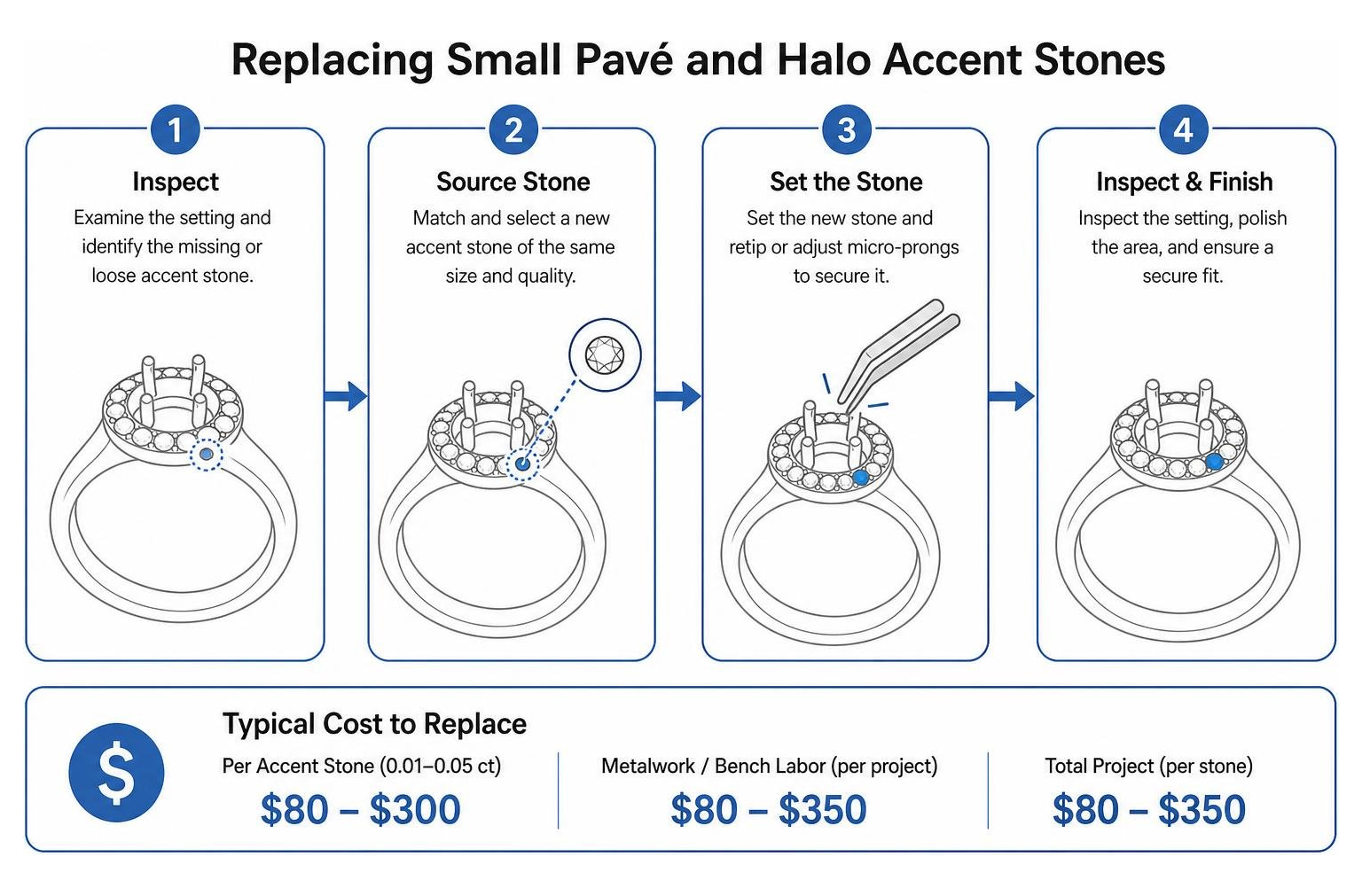
If multiple prongs are worn down, resetting an accent diamond without reinforcing the surrounding metal leaves the rest of the band vulnerable. For a deeper breakdown of accent diamond pricing, review the Cost to Replace a Small Diamond in a Ring 2026 – LatestCost – Real-Time Price Insights.
Core Factors Shaping Your Replacement Project

Analyzing Ring Stone Replacement Cost by Metal Type and Labor Rates
Labor rates for skilled bench jewelers commonly range from $40 to $120 per hour across the United States, with specialty gemologists charging $60 to $150 per hour. Standard stone replacements require roughly 2 to 6 hours of hands-on labor depending on the mounting's complexity.
The ring's metal alloy directly influences the difficulty of the repair:
- Sterling Silver: Highly workable, but softer metal requires frequent maintenance. Labor and solder operations are straightforward and affordable.
- 14k and 18k Gold Alloys (Yellow, White, Rose): Gold is malleable yet durable. White gold requires rhodium plating after torch work to restore its bright finish, which adds $30 to $80 to the bill.
- Platinum: Platinum melts at a much higher temperature than gold and requires specialized torch equipment and polishing compounds. Retipping platinum prongs or rebuilding a platinum bezel takes extra time, translating to higher labor fees.
Additional structural repairs can also influence total costs, as outlined in the Ring Repair Cost Guide – Current Cost.
Regional Differences in Ring Stone Replacement Cost Across the U.S.
Jewelry repair costs reflect local commercial overhead, insurance expenses, and bench labor markets. Metropolitan centers and coastal regions typically show quotes 10% to 25% higher than rural markets.
If you are located in the Denver metro area or the Rocky Mountain foothills, having work done by a trusted local shop prevents the risks and shipping insurance fees associated with mailing fine jewelry across state lines. Residents in Jefferson County can rely on expert jewelry repair in Lakewood, CO to have their mountings inspected locally without middleman markups.
Hidden Fees, Sizing, and Long-Term Maintenance
Diagnostic Fees, Sizing Adjustments, and Setting Reinforcements
When a stone falls out, underlying structural damage is often the root cause. If your ring took a blow that sheared off a prong, the shank may also be out of round or worn thin.
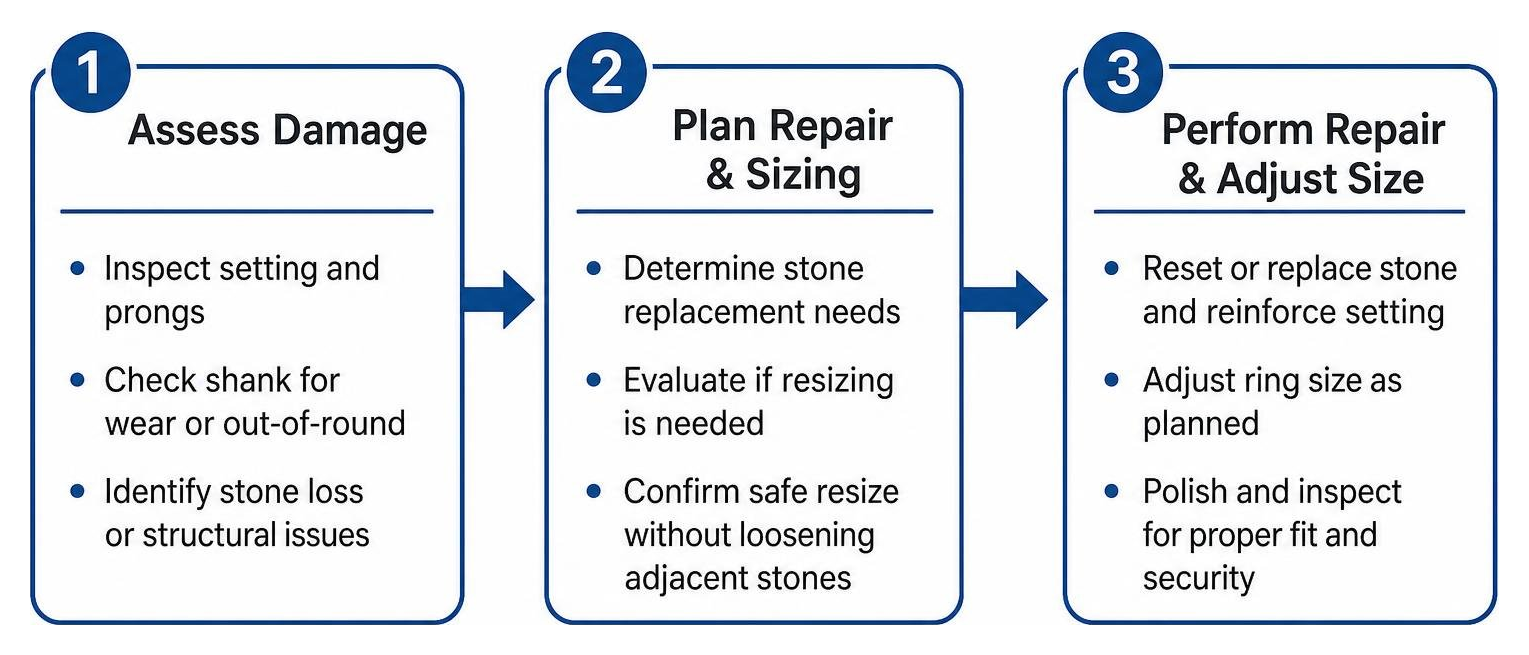
A simple ring adjustment on a plain 14k gold band runs $40 to $120, while sterling silver costs $25 to $60 and platinum costs $90 to $250. Complex adjustments on pavé, halo, or eternity bands run $120 to $350. When coordinating a stone reset, learning about proper ring sizing ensures your ring fits comfortably and stops spinning on your finger.
If your ring has structural wear, first assess whether your ring can be resized safely without loosening adjacent stones. Repeated adjustments weaken the shank over time; in cases of arthritic knuckles or fluctuating finger sizes, an adjustable band or internal sizing beads may be a safer, more economical alternative.
Gemstone Certification, Appraisals, and Insurance Coverage
Replacing a center stone often changes the documented specifications of your piece. If you replace a diamond with a stone of different weight, clarity, or origin, an insurance update is necessary to guarantee proper coverage.
- Lab Reports: High-value replacement stones should come with independent grading reports from recognized institutions like the GIA (Gemological Institute of America) or IGI (International Gemological Institute).
- Insurance Documentation: Schedule a certified jewelry appraisal in Golden, CO post-replacement to obtain an itemized statement of value for your insurer.
Plan on setting aside an ongoing annual maintenance budget of $25 to $75 for routine cleaning, ultrasonic inspections, and prong tightening. Having your prongs checked every six to twelve months helps catch loose gems before they fall out.
Retrofitting vs. Replacing: When to Reset or Buy New
Changing Stone Shapes, Sizes, and Structural Setting Limits
Replacing a lost stone provides an opportunity to update your ring's style. However, fitting a different cut—such as replacing an oval with an emerald cut, or increasing from a 0.75-carat to a 1.50-carat gem—usually requires modifying or replacing the center head.
Prongs cast for a round brilliant cannot simply be bent around the sharp corners of a princess cut without risking stone failure. When jewelers can solder a new head onto the original shank, giving you room for a different stone geometry while preserving the original band.
Evaluating Repair Budgets: The 50 Percent Rule and Reset Options
A helpful benchmark to consider is the 50 Percent Rule: if the combined cost of replacing the stone, rebuilding prongs, and reinforcing a worn shank reaches 50% or more of the cost of a comparable brand-new ring, you should weigh full replacement against repair.
With the national average for a new engagement ring ranging from $4,600 to $5,500, a $900 to $1,500 repair on an existing setting remains a practical and cost-effective choice. However, if the metal is heavily worn or structurally compromised, exploring custom jewelry redesign services allows you to melt down worn metal or reset surviving accent stones into a new mounting.
Frequently Asked Questions About Ring Stone Replacement
How long does it typically take a jeweler to replace a lost ring stone?
Standard ring stone replacement usually takes 1 to 2 weeks. This timeframe gives the jeweler time to source a matching gemstone, prepare the metal setting, secure the stone, polish the piece, and complete quality checks. If custom head fabrication or specialized lapidary cutting is needed, turnaround can take 3 to 4 weeks. Expedited rush services can shorten turnaround to 2 to 4 days, though rush surcharges of $50 to $150 often apply.
Is it less expensive to replace a lost diamond or buy an entirely new ring?
Replacing a lost stone is almost always less expensive than purchasing a new ring, saving between 30% and 60% compared to a complete retail replacement. Because you already own the precious metal mounting, you avoid paying for new gold or platinum fabrication. Choosing a lab-grown diamond or alternative gemstone can further reduce project expenses while maintaining your desired look.
How do I find a reputable jeweler and evaluate a repair estimate?
Look for an established, full-service jewelry store with on-site bench jewelers and certified gemological credentials. When reviewing an estimate, make sure it is fully itemized and clearly breaks out:
- Exact gemstone specifications (carat weight, cut, color, clarity, and origin).
- Labor and metal charges for retipping, rebuilding the head, or setting.
- Incidental costs such as sizing, rhodium finishing, and updated appraisals.
- Written guarantees covering setting craftsmanship.
Conclusion
Losing a gemstone from a favorite piece of jewelry can be frustrating, but restoring your ring is straightforward with the right guidance. With total project costs typically falling between $350 and $1,800, you have flexible options across lab-grown diamonds, natural stones, and colored gems to suit both your style and budget.
At Creekside Jewelers, we have provided trusted, family-owned jewelry care and custom bench craftsmanship from our original location since 1902. As Colorado's oldest continuously operating watch and jewelry store, our on-site team handles repairs with skill and care. If your ring is missing a stone or needs a secure checkup, visit us for reliable jewelry repair in Golden, CO to receive a transparent, itemized estimate.