

How to Find the Right Custom Design Service
For custom design jewelry, start with a clear idea of what matters most: the look, the meaning, and your budget. Then ask a jeweler how they turn your ideas into a design, when you can review it, and what changes are possible before work begins. Get the price, timeline, return terms, and warranty details in writing.
This matters most when a piece will mark a family milestone or carry an heirloom stone. The right process gives you room to ask questions and approve the design before it becomes jewelry. This guide covers what to expect and how to choose a service you trust.
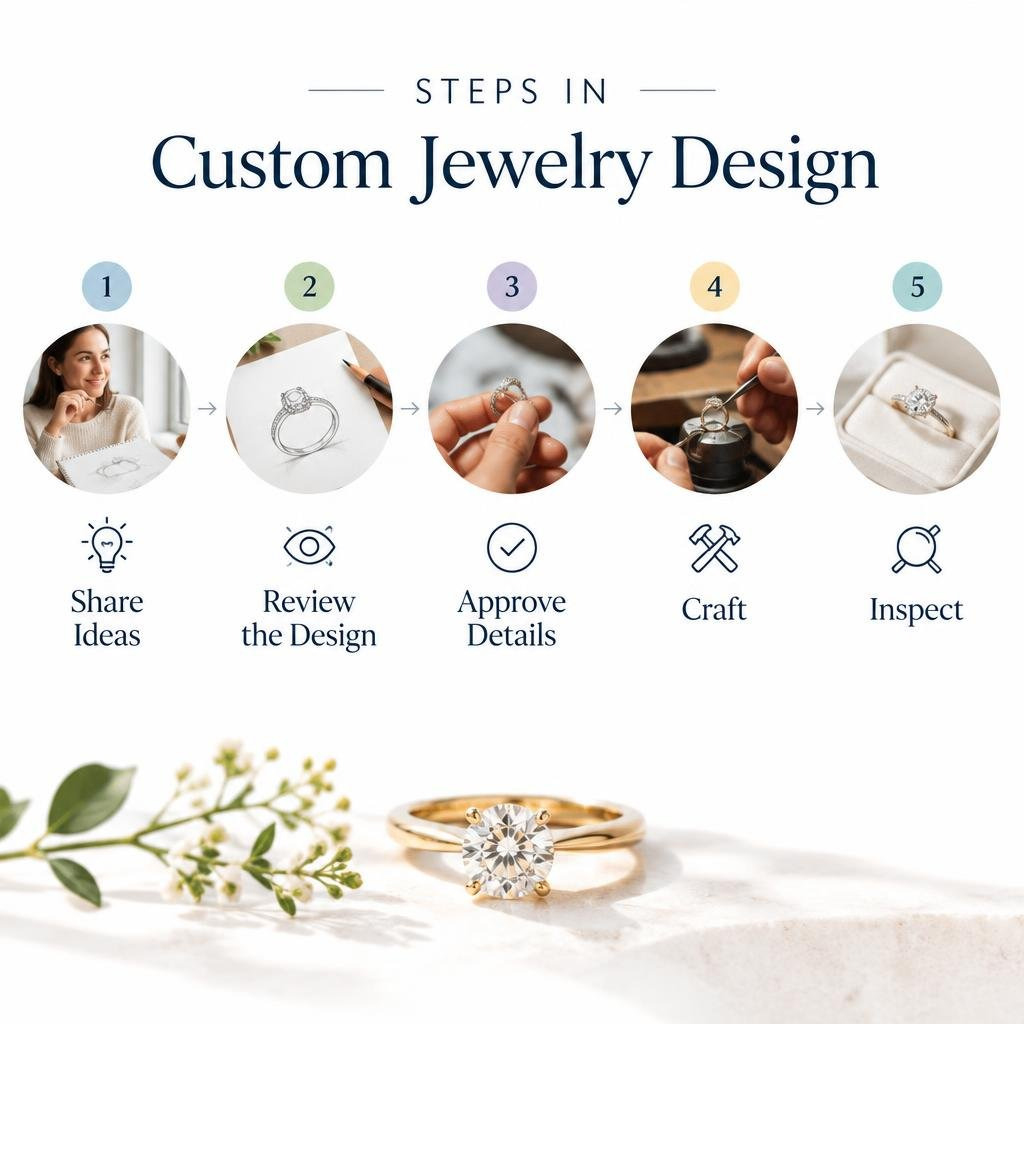
Defining Fine Jewelry Types: Bespoke, Personalized, and Ready-to-Wear
Understanding the landscape of fine jewelry helps you identify exactly what level of customization your vision requires. Many shoppers assume that adding an engraving to a pre-cast ring constitutes custom jewelry. While that is a wonderful way to add sentimental value, it differs fundamentally from building a piece from the ground up.
Fine jewelry generally falls into three distinct categories:
- Ready-to-Wear (Mass-Produced): These pieces are manufactured in large production runs using standardized molds. They offer immediate availability and consistent styling, but provide no room for structural changes.
- Semi-Custom (Personalized): Built on an existing catalog framework, these items let you choose specific elements—such as selecting between white gold or yellow gold, picking an accent birthstone, or adding an inner-band engraving.
- Fully Bespoke (Custom): An entirely unique creation starting with a blank canvas. Every dimension, prong angle, metal alloy, and gemstone is curated specifically for you.
| Feature | Ready-to-Wear | Semi-Custom / Personalized | Fully Bespoke Custom |
|---|---|---|---|
| Design Origin | Mass production mold | Pre-set template with options | Blank canvas / 100% original |
| Material Flexibility | Fixed alloys and stones | Selected from a fixed list | Unrestricted fine metals and gems |
| Fit & Dimensions | Standard sizes only | Standard sizing with basic tweaks | Built to exact millimeter specs |
| Heirloom Integration | Not supported | Rare / very limited | Fully supported (reusing gold & gems) |
| Production Time | Immediate off-the-shelf | 1 to 3 weeks | 3 to 6 weeks on average |
Key Benefits of Custom Design Over Off-the-Shelf Jewelry
Opting for custom creation allows you to break free from cookie-cutter designs found in showcase displays. When you work with a master jeweler, you dictate the balance of materials, ensuring every dollar goes directly into quality rather than retail markup.
- No Design Compromises: You never have to settle for a setting that is "almost right." If you love vintage Edwardian filigree but want modern structural durability, we combine those elements seamlessly.
- Tailored Ergonomics: Rings and bracelets can be contoured around the unique anatomy of your hand, accommodating knuckle shapes and preventing spinning.
- Sentimental Storytelling: You can incorporate hidden birthstones, secret engraved messages, or meaningful cultural motifs.
- Heirloom Upcycling: Repurposing inherited gemstones honors family history while updating the setting into a fresh, wearable work of art.
For an in-depth breakdown of these advantages, explore our expert custom jewelry guide.
Comparing Mass-Produced, Semi-Custom, and Fully Bespoke Pieces
Mass-produced jewelry relies on efficiency. Manufacturers produce thousands of units from a single master mold, often thinning out metal bands to reduce raw gold costs. This can result in delicate prongs that wear down quickly over time.
Semi-custom jewelry offers a happy medium for shoppers who want a personal touch without entering a lengthy design phase. You pick an existing mounting from a catalog and select your preferred diamond shape.
In contrast, investing in one-of-a-kind custom jewelry involves architectural planning. The setting is sculpted specifically around the precise millimeter measurements and optical properties of your chosen center stone, ensuring optimal light performance and lifelong security.
How the Custom Design Process Transforms Ideas into Heirloom Jewelry
Creating custom fine jewelry is a collaborative art form that blends old-world bench artistry with cutting-edge 3D technology.
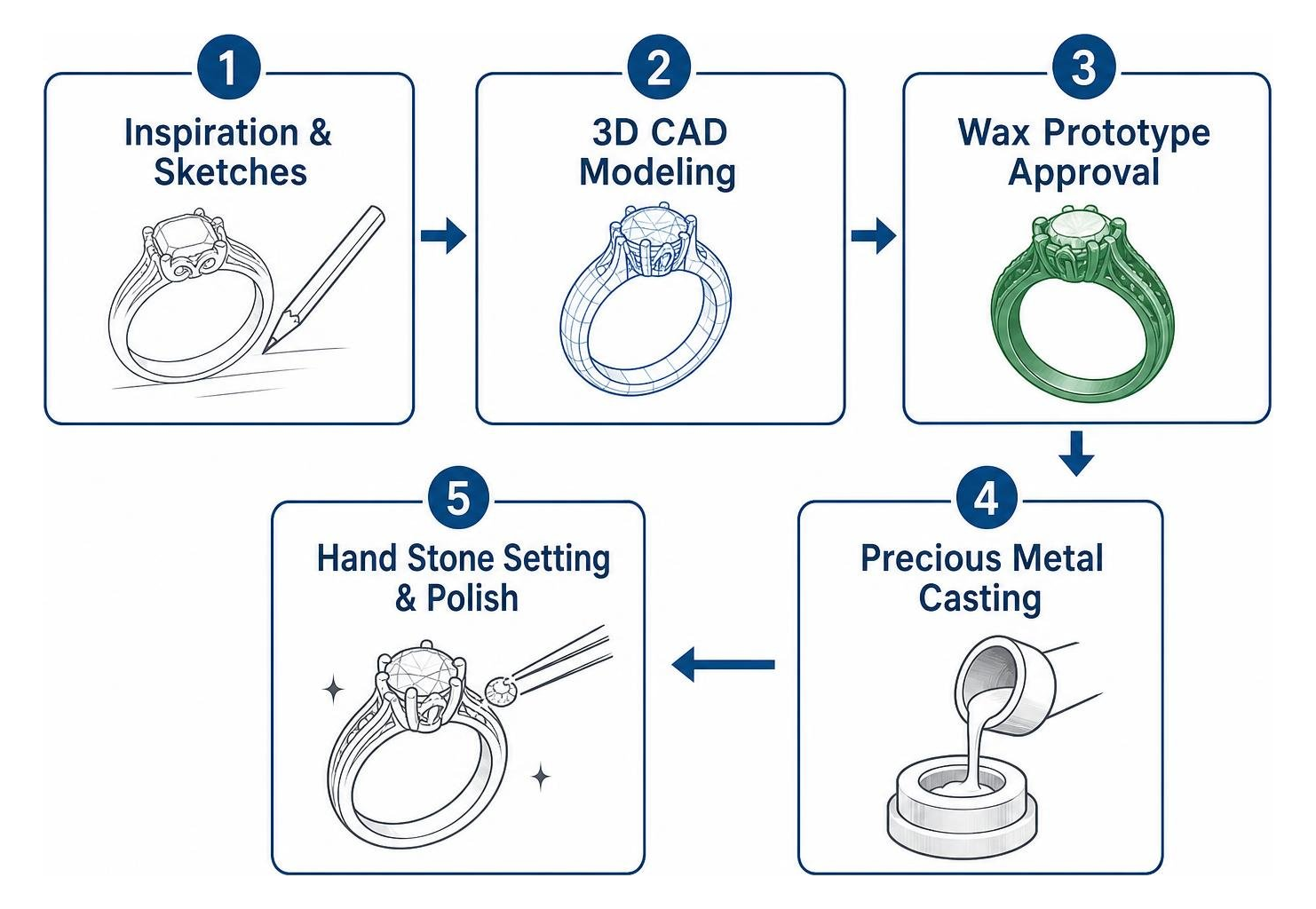
When partnering with dedicated custom jewelry design services, the journey moves smoothly through structured milestones.
Initial Consultation, Sketches, and Inspiration Gathering
The journey starts with a conversation. You share photos, pencil sketches, Pinterest boards, or family heirlooms that inspire you. During this initial session, we discuss:
- Your aesthetic preferences (art deco, minimalist, organic, vintage)
- Metal options (14k or 18k yellow, white, or rose gold, platinum)
- Gemstone sourcing requirements (natural diamonds, lab-grown diamonds, sapphires, emeralds)
- Functional lifestyle considerations (high vs. low profile settings for active hands)
3D CAD Modeling, Digital Previews, and Wax Prototypes
Once the initial concept is established, our designers translate the sketches into high-precision Computer-Aided Design (CAD) software. This technology allows us to build a virtual 3D model of your piece with sub-millimeter accuracy.
You receive photorealistic digital renderings showing the piece from multiple angles. Modern platforms allow for full virtual previews, making it easy to adjust prong heights, modify shank widths, or rearrange accent stones before any precious metal is poured. To verify dimensions and proportions in real life, a physical wax model or resin prototype can be 3D-printed for you to try on.
Casting, Gemstone Setting, and Final Polishing
After you approve the 3D model, the piece moves to the workshop:
- Lost-Wax Casting: The wax model is encased in plaster to create an investment mold. Molten precious metal is poured into the cavity, creating the raw solid structure.
- Hand Clean-Up & Assembly: Bench jewelers file, deburr, and assemble multi-part components.
- Stone Setting: Master artisans meticulously carve seats into the metal, securing each diamond and gemstone under high-magnification microscopes to ensure tight, even prongs and bezels.
- Final Polishing & Quality Assurance: The piece undergoes multiple stages of ultrasonic cleaning, hand-buffing, and rhodium plating (for white gold) to achieve a mirror finish.
Key Factors When Selecting Custom Services and Jewelers
Selecting the right partner is the most critical decision in your custom journey. You want an experienced jeweler with a proven track record, clear communication, and transparent workshop standards.
Creating Fine Jewelry and Engagement Rings with Custom Design
Custom design is exceptionally popular for bridal jewelry. Designing custom made engagement rings guarantees that the ring matches your partner's exact taste. Whether you are pairing an unconventional gemstone with intricate scrollwork or creating matching bridal sets that fit flush together without gaps, bespoke fabrication offers endless possibilities.
For couples planning their big day, consulting a comprehensive engagement ring design guide can clarify stone proportions and metal pairing choices. Don't overlook the groom, either—creating custom men's wedding bands allows for distinctive textures, custom widths, and specialized inlays like Damascus steel or raw gold finishes.
Ethical Sourcing, Material Integrity, and Diamond Certifications
Transparency in sourcing is essential when commissioning fine jewelry. Leading jewelers provide full disclosure regarding where and how their materials are obtained:
- Diamond Certification: Fine diamonds should be accompanied by independent grading reports from respected institutions such as the Gemological Institute of America (GIA). These certificates verify the stone's 4Cs (Cut, Color, Clarity, Carat Weight).
- Conflict-Free Sourcing: Ensure diamonds comply with the Kimberley Process or originate from verified ethical mines.
- Alternative Gemstones: Lab-grown diamonds offer identical physical, chemical, and optical characteristics to mined diamonds while catering to modern sustainability preferences.
- Recycled Metals: Ask if the workshop uses refined, recycled precious metals to reduce environmental impact.
Red Flags to Avoid When Evaluating Custom Services
Be cautious of providers that display any of the following warning signs:
- Vague or Shifting Estimates: A jeweler should offer a clear price quote tied to specific metal weights and stone grades before casting begins.
- No Digital Previews or Approvals: Never work with a service that moves straight from a rough sketch to final metal casting without intermediate 3D renderings or physical wax approvals.
- Lack of Independent Certification: Be wary of jewelers who provide in-house grading certificates rather than third-party lab documentation for high-value center stones.
- Hidden Revision Fees: Clarify early on how many CAD design revisions are included before extra charges apply.
Pricing, Timelines, and Warranty Logistics for Made-to-Order Pieces
Custom jewelry is an investment in artisanal skill and fine materials. Understanding how costs, schedules, and protections work ensures a smooth, stress-free experience.
Key Factors Influencing Material and Labor Costs
The cost of a bespoke piece depends on three core elements:
- Precious Metals: Market spot prices for platinum, 18k gold, or 14k gold fluctuate daily. The overall weight and thickness of the piece directly impact material costs.
- Gemstone Selection: Carat weight, cut quality, clarity grade, and rarity are primary price drivers. A bespoke engagement ring can range from $2,800 to over $50,000 depending primarily on the center diamond's size and pedigree.
- Bench Complexity: Intricate filigree, hand-engraving, micro-pave setting, and multi-metal fabrication require extensive bench hours from master goldsmiths.
Production Timelines and Approval Windows
High-quality craftsmanship requires patience, though modern CAD modeling has made turnaround times faster than ever. Most custom projects follow a reliable schedule:
- Concept & Digital CAD Phase: 1 to 2 weeks (depending on design revision speed)
- Wax Prototyping & Client Review: 3 to 5 business days
- Casting, Hand Setting, and Finishing: 2 to 4 weeks
- Total Project Window: 3 to 6 weeks from initial design consultation to final delivery
If you need a piece expedited for an upcoming proposal or anniversary, let your jeweler know during your initial consultation so casting and setting schedules can be prioritized.
Return Policies and Craftsmanship Warranties
Because bespoke items are individually fabricated to personal specifications, custom pieces are generally non-refundable once approved and cast. However, reputable jewelers back their work with robust guarantees:
- Structural Lifetime Warranties: Protection against manufacturing defects, loose prongs, or casting flaws.
- Complimentary Sizing & Maintenance: Look for services that include initial ring resizings, routine ultrasonic cleaning, and prong inspections.
- Alteration Policies: Clear terms on how modifications are handled if you wish to adjust the profile after wearing the piece.
Frequently Asked Questions About Custom Jewelry
How much does bespoke jewelry typically cost?
Bespoke jewelry pricing depends on your selected metal, design complexity, and gemstone choices. Custom projects can start around $1,000 to $2,500 for tailored bands or semi-mounts, while fine bespoke engagement rings with certified center diamonds typically range from $2,800 to $50,000 or more based on stone quality and carat weight.
How long does the entire design and manufacturing process take?
The full design and manufacturing process generally takes between 3 and 6 weeks. The initial CAD design and prototype review usually take 1 to 2 weeks, while casting, stone setting, hand-polishing, and final quality inspections take approximately 2 to 4 weeks.
Can custom-designed fine jewelry be returned or resized?
Because custom pieces are fabricated to exact client specifications, they cannot be returned for a standard refund. However, reputable jewelers provide craftsmanship guarantees and can resize or adjust most rings and mountings to ensure a comfortable fit.
Conclusion
Commissioning custom jewelry is a deeply personal, rewarding journey. Working alongside experienced artisans allows you to transform abstract memories, shared milestones, and personal aesthetics into an enduring heirloom that can be passed down through generations.
Since 1902, we at Creekside Jewelers have served as Colorado's oldest continuously run watch and jewelry store. As a family-owned destination in our original location, we pair time-tested bench jeweler traditions with modern digital modeling and on-site repairs. Whether you want to reset a family diamond or craft a one-of-a-kind engagement ring, we invite you to discover our artisanal custom jewelry in Golden, CO and experience the art of custom design firsthand.