

Start With a Design That Fits Your Life
The best engagement ring design balances four things: a center stone you love, a secure setting, a metal that suits daily wear, and a profile that feels comfortable on your hand. Start by choosing the stone shape and setting style, then compare metals, band width, and personal details such as engraving or heirloom stones.
A simple solitaire remains a lasting favorite, while halo, three-stone, bezel, pavé, and vintage-inspired designs offer more sparkle or character. The right choice is not only about what looks beautiful in the box. It should also sit securely, avoid frequent snagging, and work with a future wedding band.
For an heirloom-minded purchase, focus on strong craftsmanship and design longevity. A low-profile bezel or sturdy prong setting can be practical for an active routine, while platinum and gold each bring a distinct look, maintenance need, and feel. Natural diamonds, lab-grown diamonds, and colored gemstones also give buyers different options for budget, sourcing priorities, and style. For broader context on how these choices fit into the jewelry market, the engagement ring overview explains common traditions and design conventions.
This guide compares the details that matter, so you can choose a ring that reflects your story and is built to be worn for decades.
Core Elements of Modern Engagement Ring Design
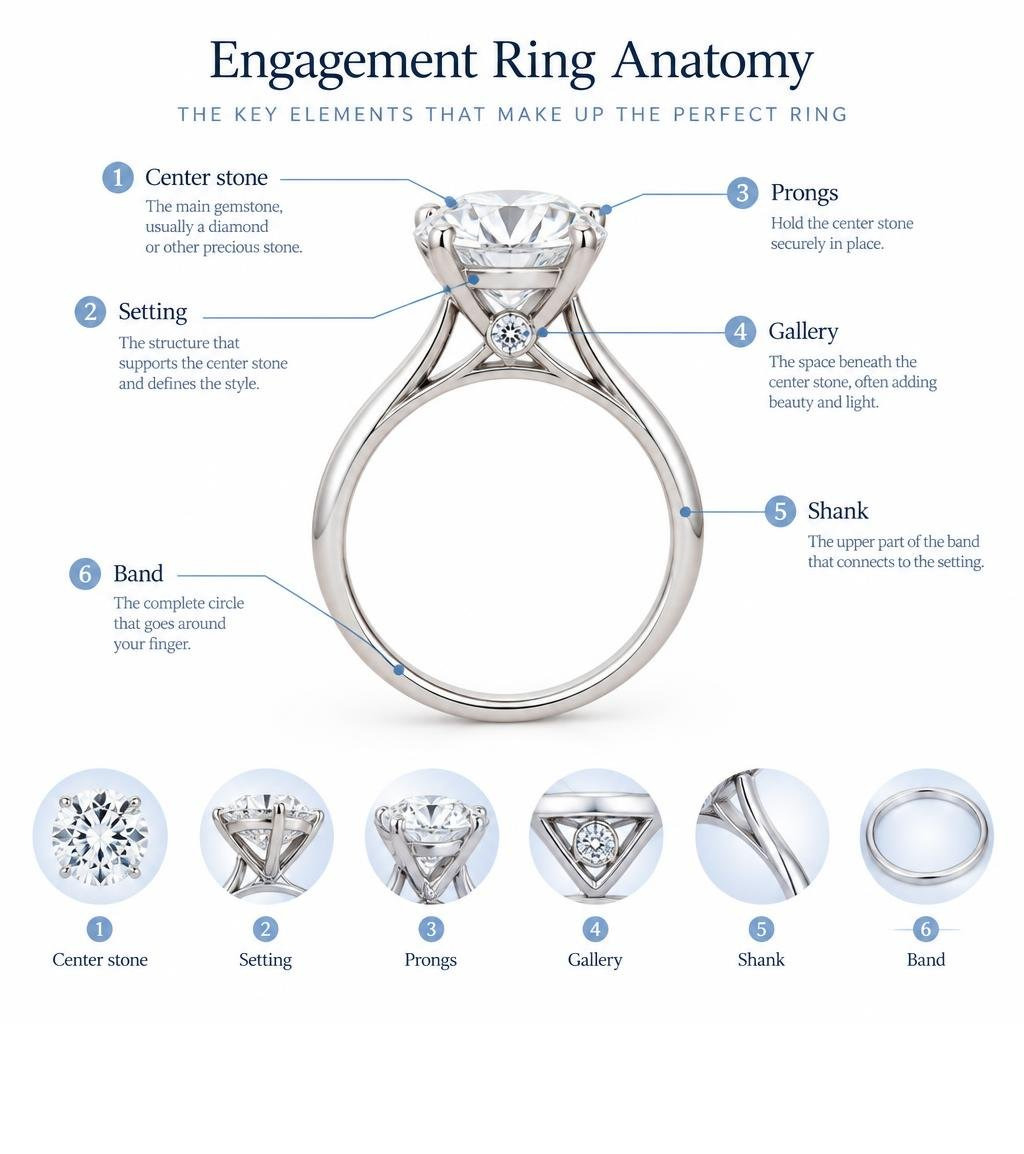
Designing an engagement ring involves harmonizing several structural components: the mounting, the accent stones, the shank (band), and the center stone. Every setting technique serves both an aesthetic purpose and a protective function.
A prong setting utilizes metal claws to elevate the diamond, allowing maximum light to enter from all angles for exceptional brilliance. Bezel settings encircle the gemstone entirely or partially in a metal rim, creating a sleek profile that eliminates snag points. For extra radiance along the band, pavé settings embed tiny diamonds into the surface with delicate bead prongs, while channel settings suspend accent stones between two parallel walls of precious metal.
Cathedral arches elevate the head of the ring using sweeping shoulders that rise from the shank, adding architectural elegance and structural reinforcement. Another meaningful option is the three-stone mounting, which accounts for approximately 12% of all ring sales. This design pairs a prominent center diamond with two flanking side stones, traditionally symbolizing a couple's past, present, and future.
Preferences vary widely among couples. Industry surveys reveal that 56% of engaged individuals prefer classic solitaire engagement rings for their minimalist focus, while 24% choose dazzling halo settings, which encircle the center stone with a perimeter of smaller diamonds to amplify sparkle and perceived size.
Classic and Contemporary Setting Styles
Mounting styles range from time-tested vintage motifs to clean, modern aesthetics:
- Four-Prong vs. Six-Prong Mounts: Four-prong baskets allow more light into square or round diamonds while offering an airy appearance. Six-prong mounts provide superior retention security and a rounder silhouette for circular gems.
- Bezel and Half-Bezel Encasements: A full bezel provides maximum protection against chipping, making it ideal for active lifestyles. Half-bezels leave the sides open for enhanced light entry.
- Tension and Semi-Tension Settings: These use the compression force of the band to hold the center gem, creating the striking optical illusion of a floating diamond.
- Split-Shank Bands: The band divides as it reaches the center stone, adding width and intricate visual interest to the finger.
- Vintage Milgrain and Filigree: Delicate beaded metal borders (milgrain) and lace-like metal wirework (filigree) give contemporary mountings an authentic antique charm.
Whether you lean toward clean minimalism or intricate antique styling, exploring diverse engagement ring collections helps you identify the setting that best reflects your personal taste.
How Center Stone Shapes Influence Engagement Ring Design
The geometric cut of your center stone dictates the proportions of the entire ring. Round brilliant cuts remain the undisputed classic, accounting for approximately 75% of all engagement ring diamonds sold due to their unmatched light refraction and optical symmetry.
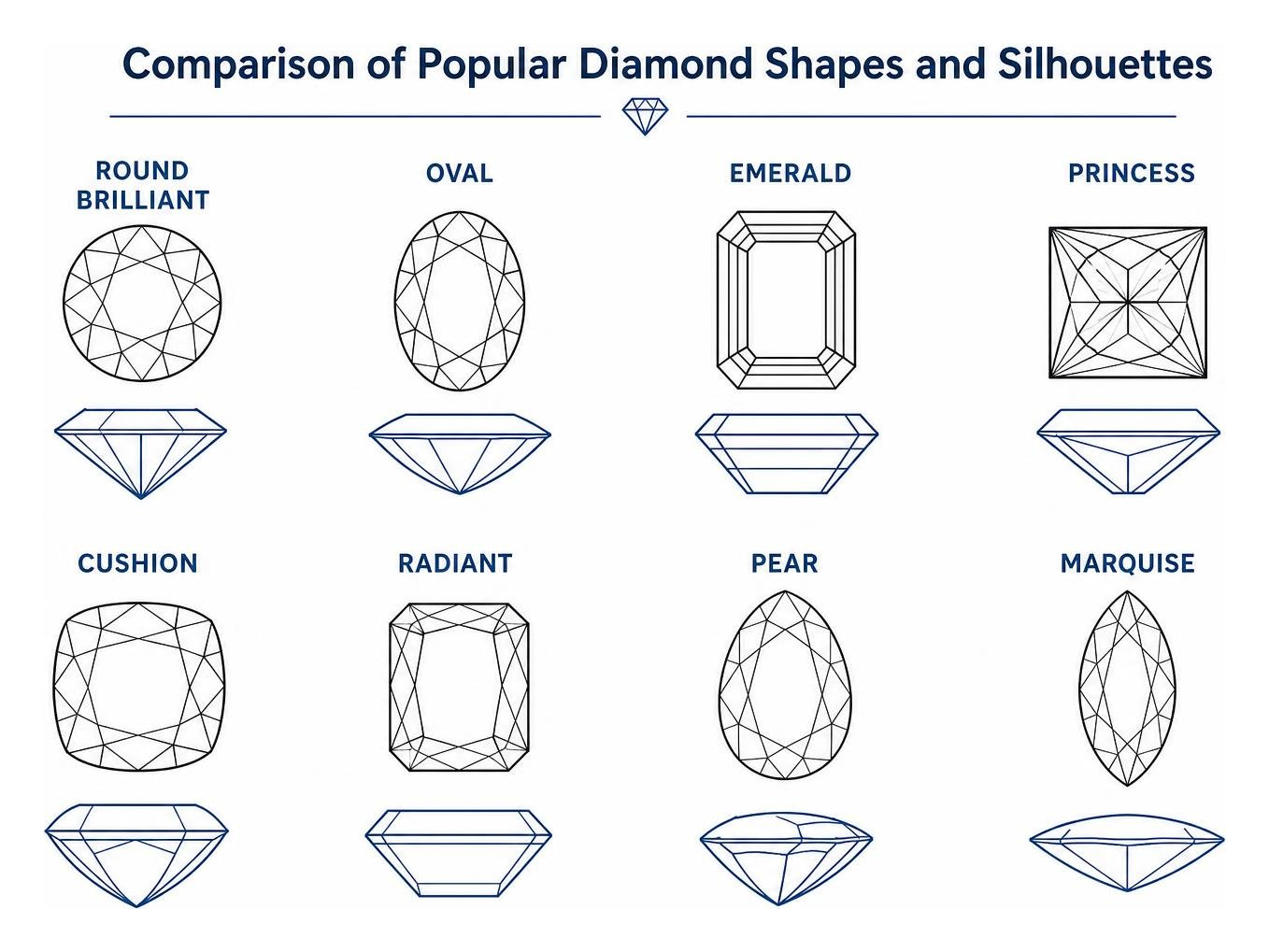
Fancy shapes bring distinct design advantages:
- Oval Cut: Oval diamonds have seen a remarkable 35% increase in popularity over the past five years, now representing 15% of all center diamond choices. Their elongated footprint creates a slimming effect on the finger while offering generous surface area per carat.
- Emerald Cut: Featuring clean step-cut facets and an open rectangular table, emerald cuts showcase diamond clarity with sophisticated, vintage-inspired flashes of light rather than intense sparkle.
- Princess Cut: With crisp, 90-degree square corners and brilliant-style faceting, the princess cut delivers modern geometric lines and fire.
- Pear and Marquise Silhouettes: Tapered shapes draw the eye along the length of the hand, providing dramatic coverage and distinctive character.
Precious Metals and Daily Wearability in Ring Architecture
The metal you choose forms the foundation of your ring's durability, weight, and long-term maintenance requirements.
Platinum is a naturally white, dense, and hypoallergenic metal chosen by 45% of buyers. Unlike white gold, which is alloyed with other metals and plated with rhodium to achieve a bright finish, platinum will never lose its white color. White gold, selected by 35% of buyers, offers comparable brilliance at a lighter weight, though it requires periodic rhodium replating to maintain its bright luster.
Yellow gold provides timeless warmth through a natural blend of pure gold, copper, and silver. Rose gold incorporates higher copper ratios to produce a romantic blush hue with natural resistance to everyday wear.
| Precious Metal | Composition & Karatage | Durability & Hardness | Maintenance Needs | Hypoallergenic Status |
|---|---|---|---|---|
| Platinum | 90–95% pure platinum | Extremely durable; develops protective patina | Minimal; occasional polishing | 100% Hypoallergenic |
| 14k White Gold | 58.3% gold + nickel/zinc/silver | High tensile strength; resists scratching | Periodic rhodium replating (every 1–3 years) | May trigger nickel sensitivities |
| 18k Yellow Gold | 75% gold + copper/silver | Moderate hardness; rich golden tone | Occasional professional polishing | Highly hypoallergenic |
| 14k Rose Gold | 58.3% gold + copper alloy | Highly durable due to copper strength | Minimal; easy long-term maintenance | Generally skin-friendly |
Metal Durability and Aesthetic Impact
Precious metals respond differently to daily wear. When platinum is scratched, the metal displaces rather than chips away, developing a soft, matte "patina" finish over time that many collectors cherish. Gold alloys slowly shed microscopic particles when abraded, requiring eventual prong re-tipping after decades of consistent wear.
Metal color also enhances the optical appearance of center gems. Cool metals like platinum and white gold emphasize the crisp, ice-white sparkle of high-color-grade diamonds (D–F). Warm yellow and rose gold mountings complement earth-toned gemstones, warm-colored diamonds (G–J), and vintage cuts beautifully.
Ergonomics, Band Profiles, and Setting Security
A ring must feel as good as it looks. Comfort-fit interior bands feature a subtly domed inner surface that slides over the knuckle smoothly and reduces pressure on the finger during daily tasks.
Setting height also determines practical wearability. High-profile cathedral settings lift the stone high off the hand, which allows light to enter from every angle and lets wedding bands sit flush against the shank. However, high heads can catch on knitwear, pockets, and gloves. Low-profile basket and bezel mountings sit closer to the skin, offering protection against accidental impacts for individuals with active professions or hobbies.
When planning your complete bridal set, ensure your engagement ring setting leaves adequate clearance for matching wedding bands to sit flush without rubbing against the center prongs.
Diamond and Gemstone Selection: Natural, Lab-Grown, and Colored Stones
The center stone is the visual centerpiece of your design. While diamonds are standard due to their top rating of 10 on the Mohs hardness scale, couples have multiple options:
- Natural Mined Diamonds: Formed deep within the earth over billions of years, natural diamonds offer geological rarity, enduring value, and traditional prestige.
- Lab-Grown Diamonds: Sharing identical optical, physical, and chemical properties with mined diamonds, lab-created gems have grown to represent 30% of engagement ring diamond sales (up from 15% in 2020). They provide substantial cost savings, allowing couples to choose larger carat weights and higher clarity grades within the same budget.
- Fine Colored Gemstones: For a burst of color, durable options like sapphire and ruby (rating 9 on the Mohs scale) provide vibrant alternatives. Softer stones, such as emerald (7.5–8 Mohs) or morganite, require protective bezel or halo mountings to guard against everyday abrasion. Explore our collection of gemstone rings to see how colored center stones pair with custom metalwork.
Sourcing Ethics and Sustainability Priorities
Nearly 70% of modern engagement ring buyers consider ethical sourcing a top priority. Today's couples want assurance that their symbols of love are conflict-free and environmentally conscious.
Sourcing transparency includes Kimberly Process compliance, tracked origin documentation from reputable mining regions, and the use of recycled precious metals. For zero-mining alternatives, lab-grown diamonds offer verified origins created using advanced technological processes.
Balancing Carat, Quality, and Budget Considerations
The average engagement ring expenditure in the United States sits around $5,500, but roughly 25% of couples spend between $1,000 and $3,000. Smart design choices allow you to maximize beauty at any price point:
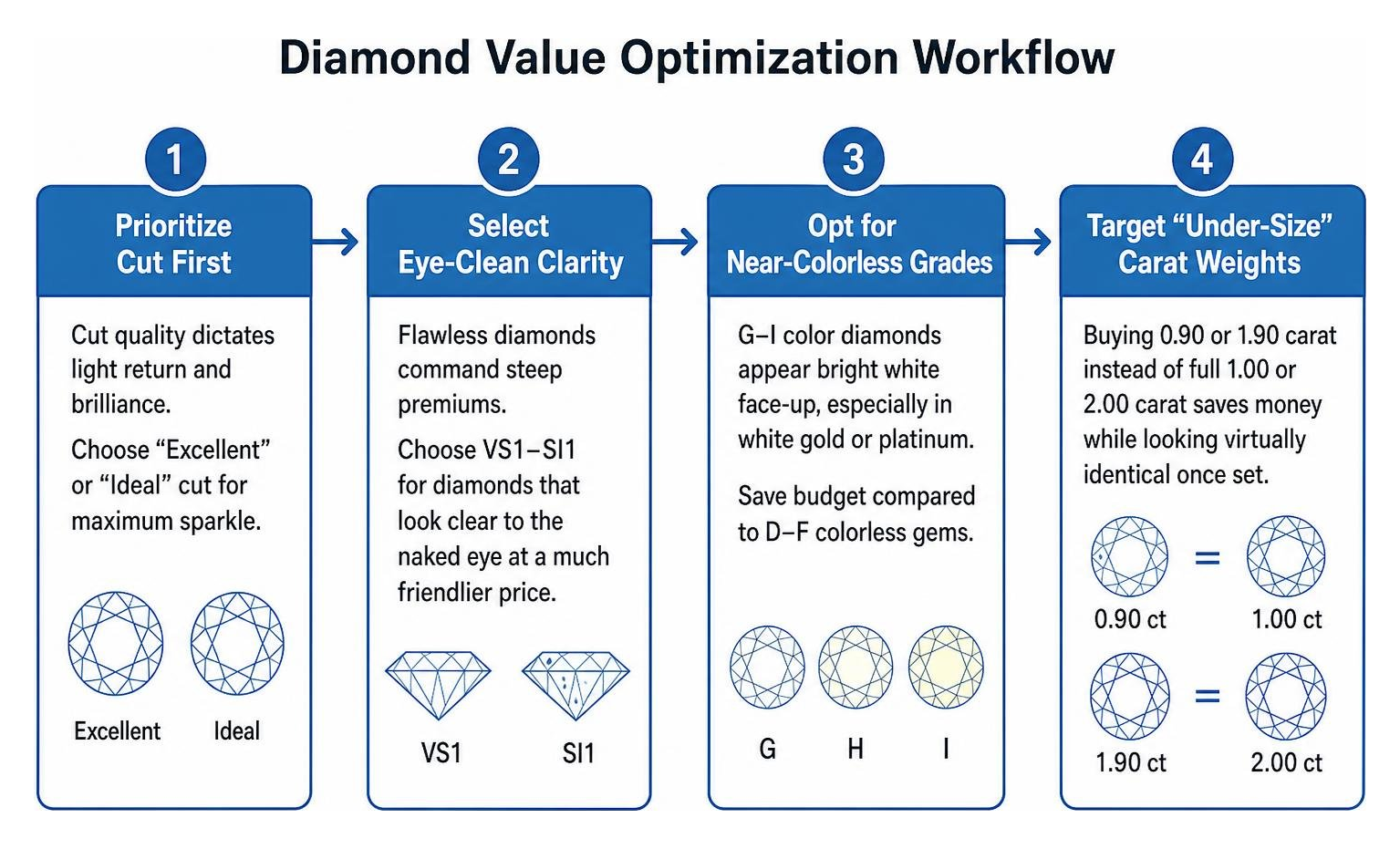
- Prioritize Cut First: Cut quality dictates light return and brilliance. An "Excellent" or "Ideal" cut grade ensures maximum sparkle, which naturally masks minor inclusions and subtle body color.
- Select Eye-Clean Clarity: Flawless diamonds command steep premiums. Choosing stones in the VS1–SI1 range gives you diamonds that look clear to the naked eye at a much friendlier price.
- Opt for Near-Colorless Grades: Stones in the G–I color range appear bright white face-up, especially when set in white gold or platinum, saving substantial budget compared to D–F colorless gems.
- Target "Under-Size" Carat Weights: Buying a 0.90-carat or 1.90-carat diamond instead of a full 1.00 or 2.00-carat mark saves money while looking virtually identical in size once set.
Custom Engagement Ring Design and Personalization
Custom engagement rings have surged in popularity, with 40% of couples opting for custom or semi-custom design work. Modern jewelry technology allows clients to create one-of-a-kind heirlooms from scratch.
Through bespoke modeling, you can add subtle, private details. Hidden halos place a miniature collar of diamonds just beneath the center stone, visible only from the profile view. Other popular touches include flush-setting secret birthstones inside the inner shank, incorporating heirloom diamonds from family jewelry, or carving meaningful dates and Roman numerals into the band. To begin exploring your own bespoke concept, discover how custom-made engagement rings come to life.
Personal Details and Unique Modifications
- Intricate Under-Galleries: Transform the structural underside of the ring head into delicate open filigree, floral motifs, or intertwined initials.
- Two-Tone Metalwork: Pair a platinum head (for white, secure prongs) with an 18k yellow gold shank for warm contrast.
- Asymmetrical Cluster Settings: Arrange mixed-cut diamonds and colored gemstones in modern, organic clusters for an artistic, non-traditional look.
The Custom Design Timeline and Collaboration Process
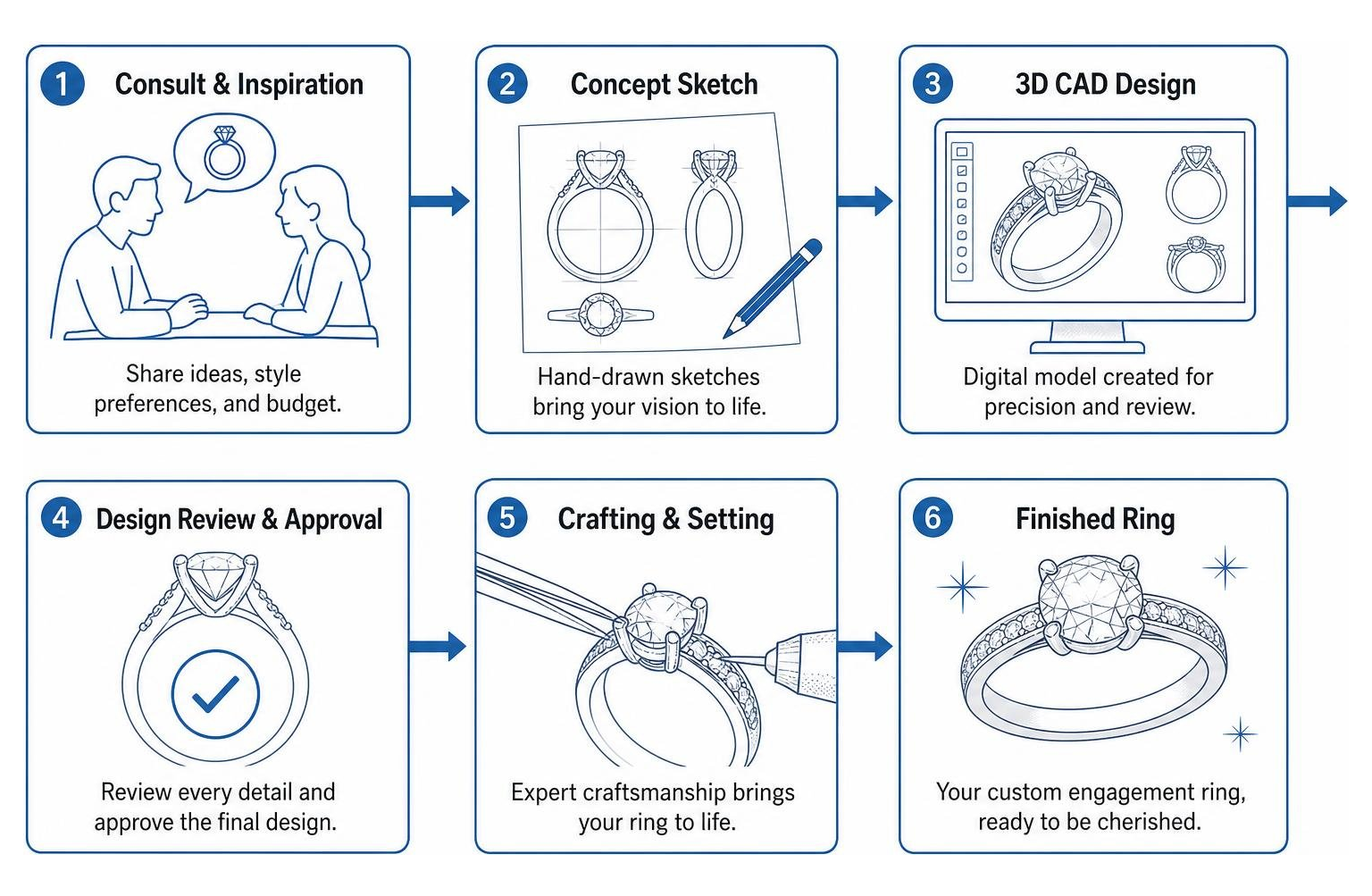
The custom ring design journey averages 3 to 4 weeks from concept to completion, with 60% of couples initiating the process online:
- Initial Consultation & Concept Sketching: We discuss your aesthetic preferences, metal choices, diamond options, and budget parameters.
- 3D CAD Modeling & Photorealistic Renderings: Digital software creates multi-angle renderings of your exact ring design for review and adjustments.
- Physical Wax Model Review: A precise wax model is produced, allowing you to check the scale, height, and finger proportions in person.
- Lost-Wax Casting & Bench Assembly: Master bench jewelers cast the piece in your chosen precious metal, hand-assemble the components, and polish the structure.
- Stone Setting & Final Detailing: Gemstones are set under high-magnification microscopes, milgrain or engraving is applied, and the ring receives a final inspection.
Frequently Asked Questions About Engagement Ring Design
Which engagement ring setting provides the greatest security for active wearers?
Bezel settings offer the highest level of security. By surrounding the diamond's girdle with a continuous rim of precious metal, the stone is protected against chipping, hard knocks, and loose prongs. Low-profile flush mountings and wide channel settings are also excellent choices for hands-on lifestyles.
How does stone shape influence the perceived size of a ring?
Elongated shapes—such as oval, emerald, pear, and marquise cuts—distribute more of their total carat weight across the top surface (table) rather than in the base of the stone. This creates an optical spread that makes the gem appear up to 15% larger face-up than a round diamond of identical carat weight.
What is the primary difference between white gold and platinum settings?
Platinum is a naturally white, dense metal that does not tarnish or change color, requiring only occasional buffing to maintain its shine. White gold is pure yellow gold alloyed with white metals and plated with rhodium to achieve an icy white luster, which requires periodic replating over the lifetime of the ring to preserve its bright finish.
Conclusion
Choosing the right engagement ring design is an exciting balance of personal style, lifestyle practicality, and timeless craftsmanship. Whether your heart is set on a minimalist solitaire, an intricate vintage halo, or a fully bespoke creation, the best design is one crafted to last for generations of daily wear.
Since 1902, our family-owned shop has helped couples select and create their most treasured fine jewelry right in the heart of Colorado. If you are ready to explore stone shapes, compare settings, or start a custom build, explore our collection of certified loose diamonds and custom mountings to begin creating a ring as enduring as your commitment.