

Pricing Breakdown: What Does a 2 ct Lab Created Diamond Cost?
A 2 ct lab created diamond represents the ultimate value sweet spot, offering an impressive visual size (roughly 8.1 mm across) with identical optical, physical, and chemical properties to a mined stone at a fraction of the cost. A high-quality 2-carat lab-grown diamond typically costs between $4,000 and $8,000, compared to $20,000 to $40,000 for an equivalent natural diamond. This allows buyers to achieve substantial presence and top-tier cut quality without compromise.
When evaluating fine jewelry, the financial distinction between earth-mined and laboratory-grown gems is striking. The global lab-grown diamond market is projected to reach $49.9 billion by 2030, growing at a compound annual growth rate of 9.4% from 2022 to 2030. This rapid growth is fueled primarily by the remarkable affordability and accessibility of larger carat sizes, making stones above the 2-carat mark accessible to a much broader audience of jewelry buyers.
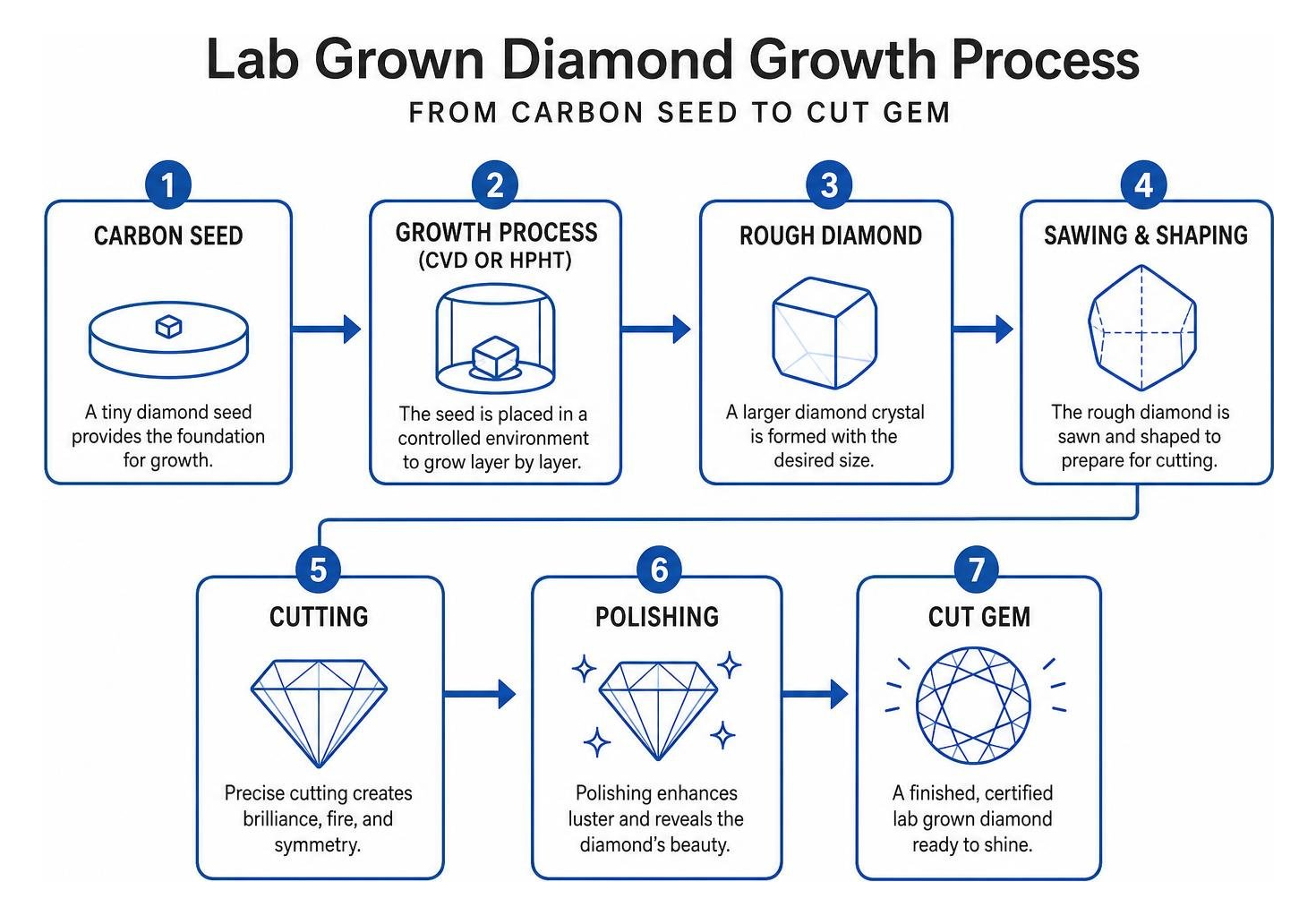
Understanding market trends is essential when making such an important purchase. Up-to-date data on 2 Carat Lab Grown Diamond Prices shows that lab stones provide unprecedented value per carat. While natural gems increase exponentially in cost at the 2-carat milestone due to geological rarity, lab creation scales efficiently through Chemical Vapor Deposition (CVD) or High Pressure High Temperature (HPHT) processes. These innovative manufacturing methods allow master growers to control crystallization environments precisely, minimizing structural flaws and reducing the astronomical mining premiums associated with large carat milestones.
The average price per carat for a 2-carat lab-grown diamond sits around $2,500 to $4,000, whereas natural diamonds command roughly $10,000 to $20,000 per carat for comparable beauty and structure. By choosing a lab-grown stone, buyers routinely save between 40% and 60% compared to mined diamonds, giving them the flexibility to allocate resources toward custom precious metal settings, side accents, or complementary fine jewelry.
| Feature / Metric | 2 Carat Natural Mined Diamond | 2 Carat Lab Created Diamond |
|---|---|---|
| Typical Price Range | $20,000 – $40,000 | $4,000 – $8,000 |
| Average Price Per Carat | $10,000 – $20,000 | $2,500 – $4,000 |
| Chemical Composition | Pure crystallized carbon ($C$) | Pure crystallized carbon ($C$) |
| Mohs Scale Hardness | 10 | 10 |
| Grading Availability | GIA, IGI, AGS | IGI, GIA |
| Average Cost Savings | Baseline | 40% to 60% Savings |
Quality Factors and Certification Standards
Evaluating the 4Cs for a 2 ct Lab Created Diamond
Because a 2-carat gem offers generous surface area, imperfections or subpar cuts become much more noticeable to the naked eye than in smaller stones. When you move up to larger carat weights, light performance and facet alignment dictate how the stone sparkles across the room. Mastering the Four Cs of Diamonds ensures your budget is allocated where it makes the greatest visual impact:
- Cut: Cut grade is paramount. An Ideal or Excellent cut maximizes brilliance, fire, and scintillation. Look for a balanced table percentage (54% to 57% for round brilliants) and depth percentage (61% to 62.5%) to prevent light from leaking through the pavilion. A poorly proportioned stone can appear dull or look smaller than its actual carat weight.
- Color: For a bright, icy look in white gold or platinum, stones in the F, G, or H range offer exceptional beauty without the price premium of D or E grades. Because lab diamonds often show exceptional crystalline purity, G and H stones face up completely colorless in everyday lighting. Warmer metals like yellow or rose gold pair beautifully with I or J color grades, where subtle warm undertones harmonize naturally with the band.
- Clarity: At 2 carats, focus on eye-clean stones. VS1 and VS2 grades provide pristine visual clarity without paying extra for microscopic differences found in VVS or Flawless ratings. Because inclusions in a 2-carat diamond are magnified by larger facet windows, always confirm that any internal characteristics are located away from the center table.
- Carat: Weight is simply mass (0.4 grams for 2 carats). Ensure the stone is cut to proper proportions so the weight is displayed across the diameter rather than hidden in a heavy base or thick girdle.
Grading Labs, Hardness, and Everyday Durability
A common concern is whether these gems withstand daily activity. Lab diamonds are identical to earth-mined diamonds in physical durability, ranking at a perfect 10 on the Mohs hardness scale. This extreme crystalline hardness means the stone easily resists chipping, scuffing, and surface abrasion from regular contact with everyday surfaces.
Questions like Do Lab Grown Diamonds Scratch Easily? are answered by the crystal lattice itself: nothing can scratch a lab diamond except another diamond. Because the carbon atoms form an identical tight cubic arrangement under intense heat and pressure, a lab stone delivers the same multi-generational durability that has made diamonds the traditional choice for heirloom rings.
Independent gemological laboratories such as the International Gemological Institute (IGI) and the Gemological Institute of America (GIA) evaluate lab diamonds using the exact same rigid grading criteria applied to mined stones. These certificates verify dimensions, color, clarity, polish, and symmetry. A reputable grading report provides complete transparency, ensuring you receive an unbiased evaluation of your diamond's precise specifications and origin.
Setting Styles and Long-Term Considerations
Popular Ring Settings for a 2 ct Lab Created Diamond
A 2-carat center stone commands attention, making setting selection an important design choice. Exploring whether Are Lab Grown Diamonds Good for Engagement Rings? reveals that their structural strength makes them ideal for any ring architecture:
- Classic Solitaires: A four-prong or six-prong mounting allows maximum light entry, placing full focus on the stone's fire and table dimensions. Platinum or 14k/18k gold solitaires remain timeless choices that highlight the diamond's generous outline without visual distraction.
- Pavé Bands: Lining the band with delicate accent diamonds accentuates the size of the center stone while adding continuous sparkle along the shank. This setting style brings intricate detail to the ring profile without overpowering the 2-carat centerpiece.
- Halo Mountings: Encircling the diamond with a ring of smaller accent stones delivers dramatic finger coverage and vintage appeal. A halo can make a 2-carat diamond appear closer in visual surface area to a 2.5 or 3-carat gem.
- Bezel Settings: Wrapping the gem's perimeter in a sleek metal rim offers maximum protection and a contemporary aesthetic. Bezel mountings are particularly well-suited for active lifestyles because they protect the girdle from accidental impacts.

Environmental Impact and Resale Value
Modern consumers frequently consider the origin and sustainability of their fine jewelry. Approximately 70% of millennials consider lab-grown diamonds for engagement rings, citing ethical and environmental concerns. A 2020 report noted that lab-grown stones have a carbon footprint that is 7 times lower than traditional mined stones, avoiding large-scale open-pit excavation and habitat disturbance.
When considering value retention, realistic expectations are key. Exploring Are Diamonds a Good Investment? highlights that diamonds—whether mined or grown—should be purchased for love, longevity, and personal enjoyment rather than financial speculation. While mined diamonds have an established secondary market, both categories incur significant retail markups upon initial purchase. Lab diamonds do experience resale depreciation, but their accessible upfront cost lets you capture substantial savings right from the start, leaving your capital intact for other meaningful life investments.
Frequently Asked Questions About 2 Carat Lab Diamonds
How large does a 2-carat diamond look on the hand?
A classic round brilliant 2-carat diamond measures approximately 8.1 millimeters in diameter. On an average finger (size 6), a 2-carat gem covers roughly 40% of the finger's width, delivering substantial presence without feeling cumbersome during day-to-day tasks. Fancy shapes, such as oval, marquise, or emerald cuts, often look even larger due to their elongated profiles and shallow depth distributions.
Will a 2-carat lab created diamond test as a real diamond?
Yes. Because lab diamonds share identical thermal and electrical conductivity with earth-mined stones, standard handheld diamond testers detect them as genuine diamond material. Unlike diamond simulants such as cubic zirconia or moissanite, a lab diamond is 100% pure carbon. Advanced spectroscopic equipment in certified gemological laboratories is required to identify the specific growth patterns that distinguish lab creation from natural crystallization.
How do I verify the authenticity of my lab stone?
Authentic lab diamonds come with an independent grading report from recognized laboratories like IGI or GIA. Reputable growers engrave a microscopic laser inscription on the diamond's girdle that matches the unique certificate number, which can be viewed under a standard jeweler's loupe. This inscription ensures that the physical stone corresponds exactly with its digital or paper grading documentation.
Conclusion
Choosing a 2-carat center stone offers an exceptional balance of size, brilliance, and value. By opting for laboratory cultivation, you achieve eye-catching elegance and premium cut standards while retaining financial flexibility for a bespoke mounting and custom metalwork.
As the oldest continuously run watch and jewelry store in Colorado since 1902, we take immense pride in guiding you through every step of the selection process. Whether you are looking for custom design, on-site repairs, or expert advice, explore our curated selection of Lab Grown Diamonds in Arvada CO and let our family help you create an heirloom piece designed to shine for generations.