

Start With a Jewelry Appraisal You Can Trust
A jewelry appraisal is a written professional opinion of what a piece of jewelry is worth for a specific purpose, such as insurance, resale, an estate, or a legal matter.
| If you need to... | You likely need... |
|---|---|
| Insure an engagement ring or heirloom | Replacement value appraisal |
| Settle an estate, donation, or divorce | Fair market value appraisal |
| Sell jewelry quickly | Immediate liquidation value estimate |
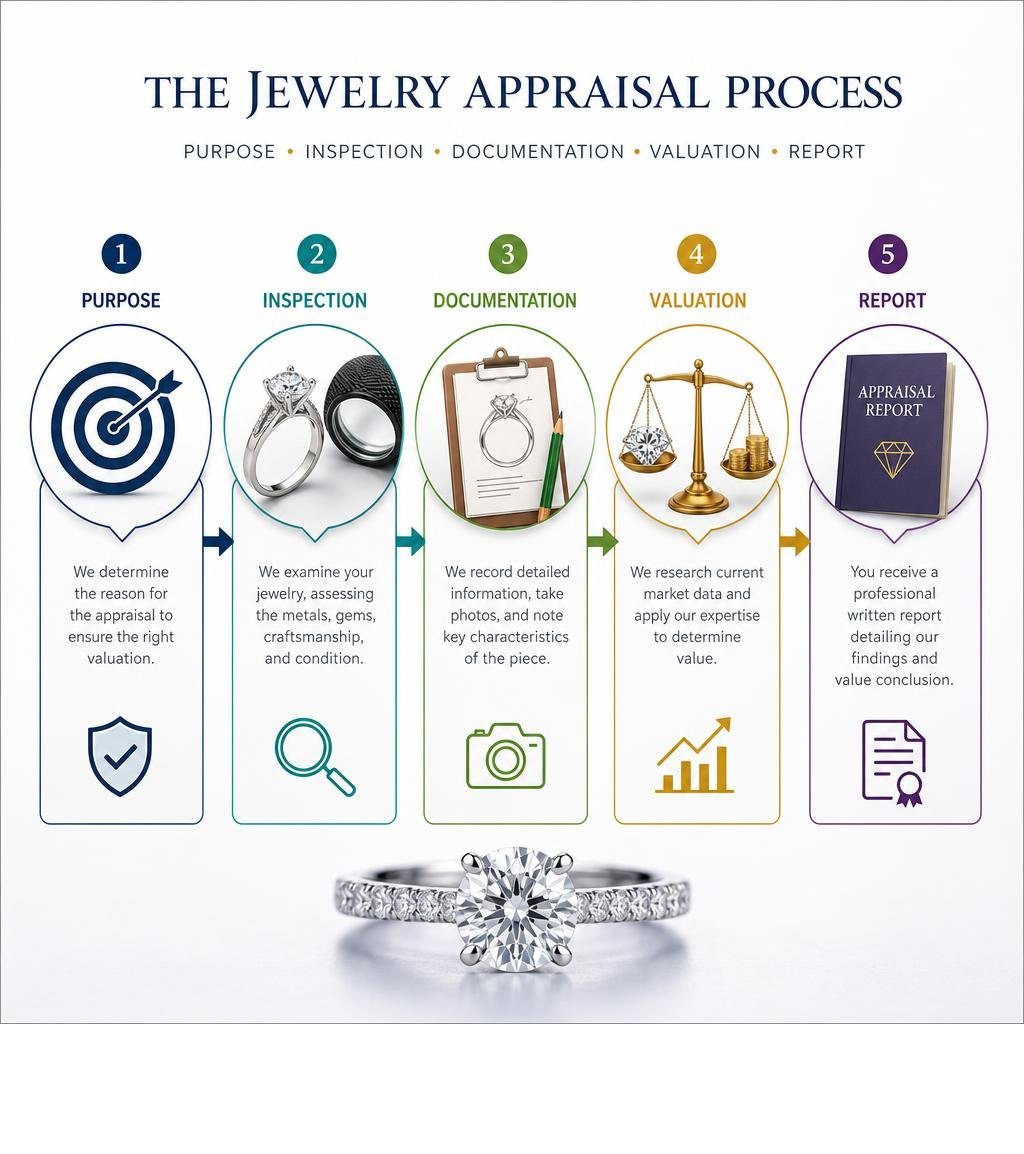
The purpose matters. A ring's insurance replacement value can be very different from what it would sell for today. A strong report identifies the piece, describes its gems and metals, documents its condition, and explains the value conclusion.
For valuable family jewelry, an accurate estimate is more than paperwork. It helps protect the piece, preserve its story, and avoid surprises when you need coverage or need to make an important decision.
What Is a Jewelry Value Report vs. a Gemstone Grading Certificate?
One of the most common points of confusion we encounter at Creekside Jewelers is the difference between an appraisal report and a gemstone grading certificate (often called a lab report). While both documents contain detailed technical information, they serve entirely different purposes in the jewelry world.
A gemstone grading report—issued by major independent gemological laboratories—is an objective quality assessment. It evaluates the physical and optical characteristics of an unmounted diamond or colored gemstone. A grading report identifies the exact 4 Cs (Carat weight, Cut, Color, and Clarity) along with proportions, fluorescence, and plot diagrams of inclusions. However, a laboratory grading report never assigns a monetary dollar value to the gemstone.
In contrast, a professional jewelry appraisal takes those quality characteristics, factors in the precious metal setting, evaluates artistic craftsmanship and historical provenance, and applies market research to assign an opinion of monetary value.
| Feature | Gemstone Grading Report | Jewelry Appraisal Report |
|---|---|---|
| Primary Focus | Physical quality evaluation | Opinion of monetary value |
| Monetary Value | Never included | Core component of document |
| Item Assessed | Loose stone (typically) | Complete jewelry item (stone + setting) |
| Issued By | Gemological laboratories | Independent certified appraisers |
| Key Purpose | Verifies authenticity and quality | Insurance, tax, estate, or resale standard |
When you present a grading certificate to an insurance company, they will typically tell you it isn't enough to write a scheduled policy rider. They require a formal appraisal that clearly translates those gemological stats into a defensible replacement cost.
Key Types of Value in a Jewelry Appraisal
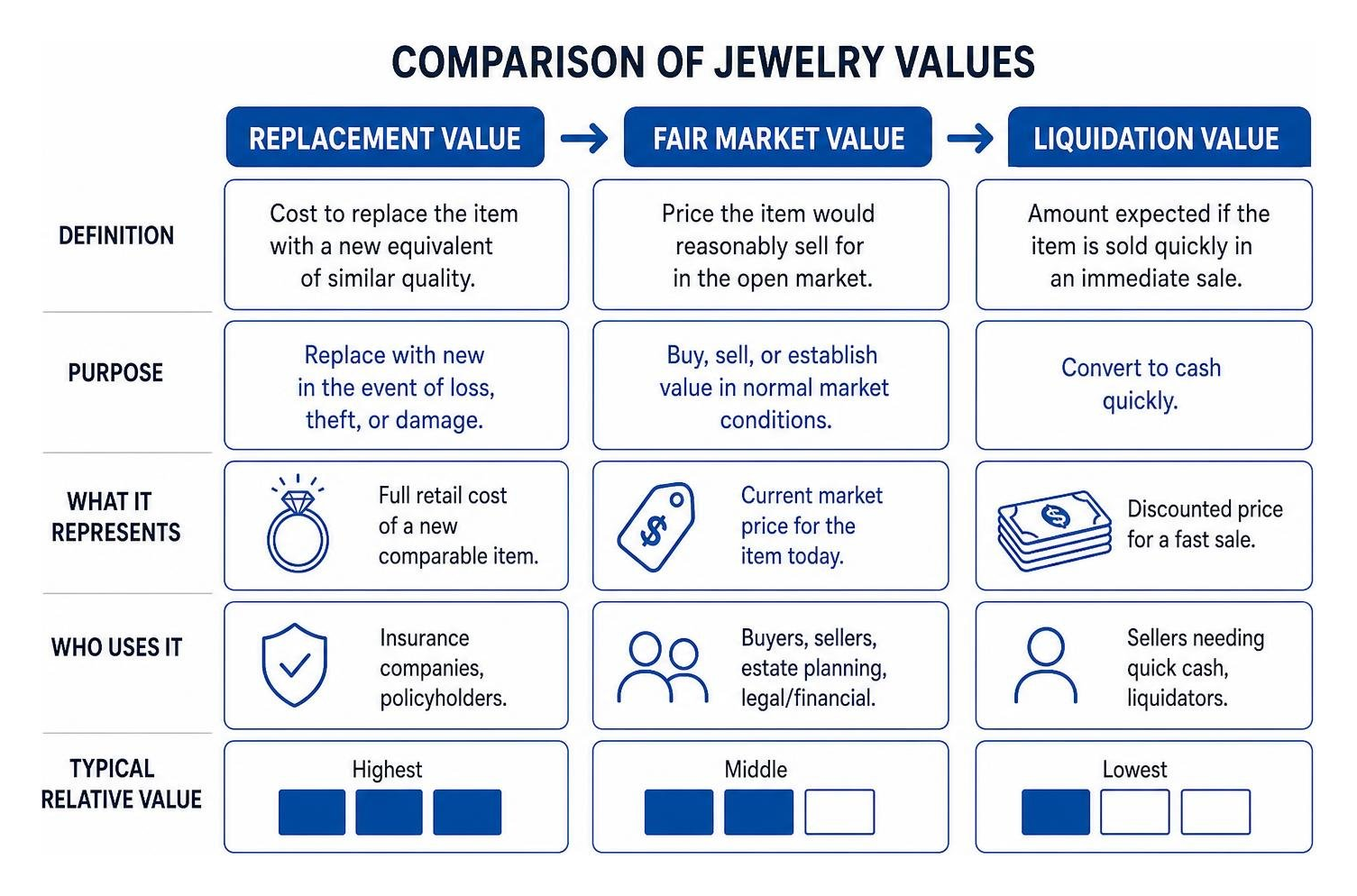
Value is not a single fixed number etched in stone. Depending on why you need an estimate, a single diamond ring can have several entirely valid values on the exact same day. Understanding these distinctions ensures you get the right appraisal for your exact legal, financial, or personal situation.
Insurance Replacement Value
Insurance replacement value reflects the current full retail cost required to replace an item with a brand-new equivalent of similar quality, materials, and workmanship. Because this figure represents peak retail costs—including manufacturing, precious metal spot prices, gem acquisition, and standard retail markup—it is usually the highest valuation figure on paper.
Standard homeowners or renters insurance policies rarely cover fine jewelry in full. Most standard policies cap un-scheduled jewelry coverage at $1,000 to $1,500 total, which quickly leaves items underinsured in the event of loss, theft, or damage. To fully protect fine pieces, insurance companies require a scheduled policy rider based on a professional jewelry appraisal.
When considering valuable jewelry, many people wonder: Are Diamonds A Good Investment? While diamonds hold enduring intrinsic worth, insured replacement values account for the real-world retail costs of replacing custom crafting and retail sourcing immediately in today's market.
Fair Market Value and IRS Acceptance
Fair market value (FMV) is a legal definition widely required by government agencies, probate courts, and tax authorities. FMV represents the price at which property would change hands between a willing buyer and a willing seller in an open market, with neither party under compulsion to buy or sell and both having reasonable knowledge of relevant facts.
Unlike insurance values, FMV excludes retail markups and custom replacement overhead. You will need a certified Fair Market Value appraisal for:
- Estate Tax Reporting: Required on IRS Form 706 for federal estate tax declarations.
- Charitable Noncash Donations: Filing IRS Form 8283 for noncash tax deductions over $5,000 requires a qualified appraisal signed by a certified appraiser.
- Divorce Settlements: Determining equitable distribution of marital assets.
- Probate Court: Calculating Net Family Assets during estate administration.
Key Types of Jewelry Appraisal Reports
In addition to retail replacement and fair market value, immediate liquidation value is utilized when a item must be converted to cash immediately (such as forced liquidations or bankruptcy proceedings). Liquidation value typically represents scrap precious metal value plus wholesale gem spot prices.

Because precious metal markets and diamond indices fluctuate constantly, an appraisal document isn't permanent. Industry standards recommend updating your insurance appraisals every 3 to 5 years. If you hold vintage pieces or are exploring Estate Jewelry Consignment, keeping your documentation current ensures your heirlooms are accurately protected against shifting market values.
How to Choose a Qualified Appraiser
Surprising as it may sound, there are currently no state or federal laws requiring formal licensing to become a jewelry appraiser in the United States. Technically, anyone can print a document and call it an appraisal! That is why choosing an appraiser with recognized professional credentials and rigorous educational background is paramount.
When evaluating an appraiser, verify that they hold top-tier industry credentials, such as:
- Graduate Gemologist (GG): Issued by the Gemological Institute of America (GIA), verifying advanced expertise in gem identification and diamond grading.
- National Appraisal Organizations: Accreditations from recognized bodies such as the National Association of Jewelry Appraisers (NAJA), the American Society of Appraisers (ASA), or the International Society of Appraisers (ISA).
- USPAP Compliance: Strict adherence to the Uniform Standards Of Professional Appraisal Practice, which defines ethical and technical requirements for personal property appraising.
Finding Unbiased Appraisal Experts
To maintain defensibility in court or with the IRS, an appraiser must remain completely independent and objective. Under Federal Trade Commission (FTC) guidelines, artificially inflating appraisal values is illegal and unethical.
Working with an appraiser who does not buy the item being evaluated prevents inherent conflicts of interest. If an appraiser offers to buy a piece while simultaneously establishing its value, they face a financial temptation to undervalue the item. Conversely, inflating replacement values to make a customer feel they got a bargain damages insurance defensibility. When exploring Jewelry Stores That Buy Diamonds, ensure the appraisal side of the business operates with complete ethical transparency.
Choosing a Remote vs In-Person Jewelry Appraisal
With digital technology evolving, consumers today can choose between remote, photo-based appraisals and traditional in-person assessments.
Remote appraisals rely on high-resolution digital photographs, owner descriptions, and existing sales receipts or GIA certificates. Remote appraisal services allow items or detailed documentation to be submitted online or via trackable overnight shipping, with standard documentation delivered within 7 to 10 business days.
However, in-person appraisals conducted right in front of you offer unmatched peace of mind. Hands-on testing allows a gemologist to inspect prong integrity under magnification, measure precise millimeter dimensions, verify metal purity with physical assay tools, and detect lab-grown diamonds using specialized lab equipment. Qualified gemological appraisers emphasize the importance of specialized testing tools and hands-on gemological verification.
What Influences the Cost and Timeline of an Appraisal?
How much does a jewelry appraisal cost, and how long does it take? The cost of a professional valuation depends on the complexity of the piece, the depth of research required, and the intended use of the document.
Professional appraisal fees are generally structured as a flat fee per item or an hourly rate based on collection size:
- Single Item Appraisals: Standard insurance replacement appraisals generally cost between $100 and $200 per item.
- Advanced / IRS-Qualified Appraisals: Complex estate, tax, or legal reports (such as IRS Form 8283 filings) typically range from $295 to $495+ per item due to extensive market analysis and legal compliance standards.
- Volume Estate Pricing: Large estate collections of 10 to 50+ pieces are often appraised on a flat collection rate or hourly basis ($150 to $350/hour).
Appraisal ethical codes strictly prohibit charging a fee based on a percentage of the item's appraised value, as this creates a direct incentive to artificially inflate the value!
The typical turnaround timeline for a written appraisal report is between 5 and 10 business days. This timeframe allows the appraiser to carefully clean and inspect the jewelry, verify gemstone measurements, research live metal spot prices, and compile formal documentation.
Before completing a valuation, a qualified goldsmith should perform a complimentary cleaning and structural check. Discovering a loose prong or fractured gallery before issuing a report ensures your ring is safe to wear. If repairs are necessary, reviewing our Jewelry Repair Near Complete Guide, exploring options for Local Jewelry Repair Shops Near Me, reading up on Repairs, or asking Can You Repair Diamond Rings will help restore your fine pieces before formal policy binding.
Frequently Asked Questions About Jewelry Valuations
How often should I update my valuation for insurance?
Insurance companies and appraisal professionals recommend updating your jewelry appraisal reports every 3 to 5 years. Gold, platinum, and diamond markets shift over time. If metal or gemstone prices increase significantly, an outdated valuation could leave you underinsured if you ever need to file a total loss claim.
What documentation do I need to provide for an evaluation?
To get the most accurate and efficient appraisal, bring any existing paperwork you have for the piece. Helpful documentation includes:
- Previous appraisal reports or original retail store sales receipts.
- Laboratory grading reports (such as GIA, AGS, or IGI certificates).
- Historical documentation, estate provenance records, or antique bills of sale.
- High-resolution photos showing maker's marks or stamps if appraising remotely.
Will my appraisal report be accepted by insurance companies, courts, and the IRS?
Yes, provided the appraisal is prepared by a qualified appraiser following USPAP standards and IRS guidelines. Major insurance providers, probate courts, and federal tax authorities require appraisals that contain thorough item descriptions, gemological measurements, clear methodology, and verified market comparisons.
Conclusion
At Creekside Jewelers, we take pride in serving our community with honest, expert care. As Colorado's oldest continuously run watch and jewelry store operating in our original Golden location since 1902, we understand that your fine jewelry carries rich personal histories and priceless emotional sentiment.
Whether you need to insure a new engagement ring, settle a family estate, or verify the current market standing of an heirloom, an accurate valuation provides absolute peace of mind. We invite you to visit us for trusted in-person evaluation, professional cleaning, and expert advice. Learn more about our specialized appraisal services today!