

Choose Gold Rings That Fit Your Life and Last
The best gold rings balance karat, construction, fit, and style. For an everyday ring, 10k and 14k solid gold are popular because their alloys add strength; 14k offers a richer gold color, while 10k is often the more budget-friendly, durable choice. Confirm the ring is solid gold rather than plated, get an accurate size, and look for clear hallmarks, sound craftsmanship, and a warranty or repair policy.
Gold is not one-size-fits-all. Yellow, white, and rose gold each create a different look, while band width, thickness, and shape affect comfort. A slim, dainty band may be easy to stack, while a wider or sculptural ring can become a meaningful standalone piece.
Whether you are choosing a daily band, marking a family milestone, or planning an heirloom piece, this guide will help you compare materials, find a comfortable fit, and shop with confidence.
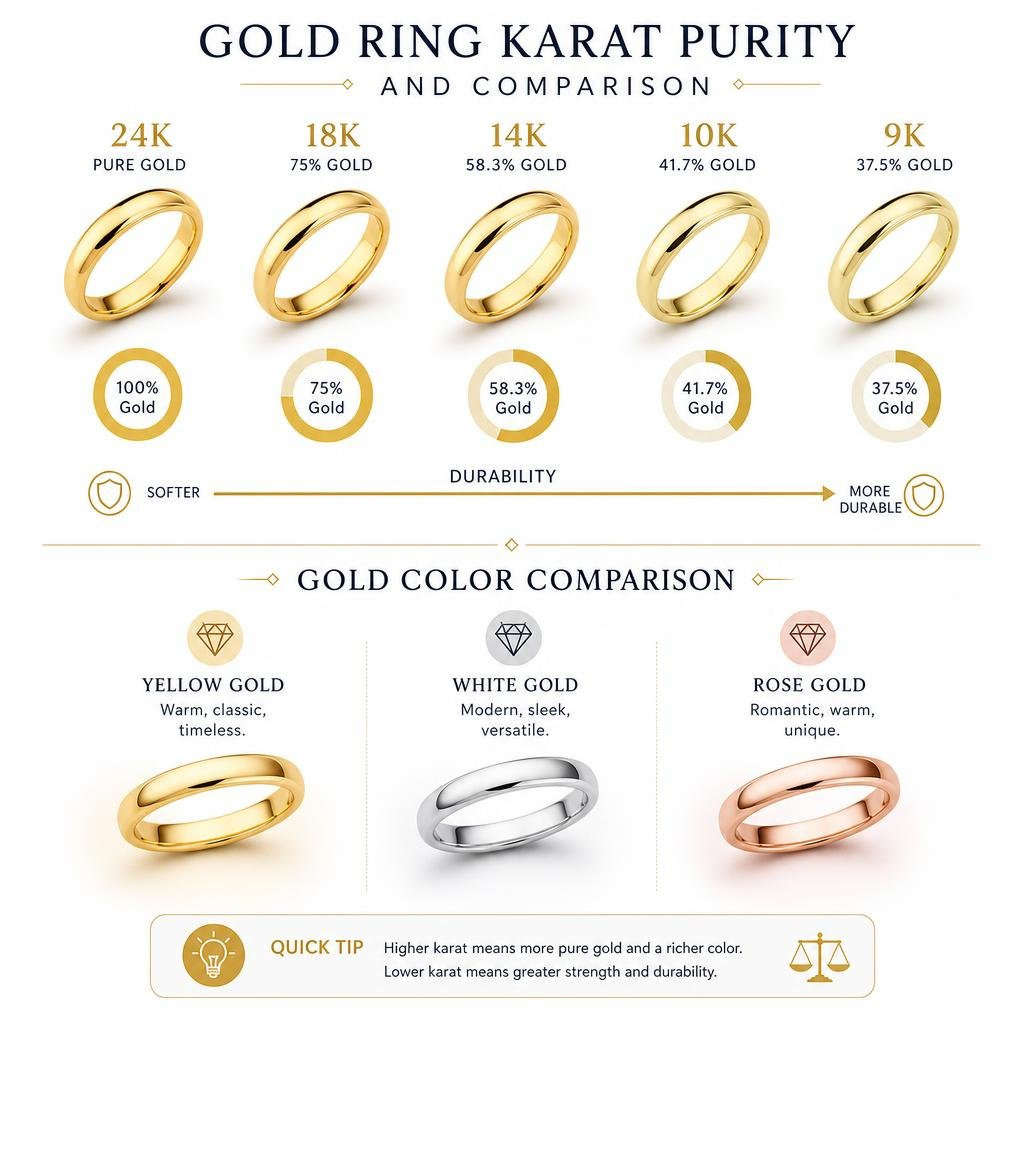
Gold Types and Purity: Solid Gold vs. Alternatives
When stepping into fine jewelry, understanding metal composition is the first step in finding a piece that can withstand the tests of time. Natural 24k gold is an elemental wonder: it never rusts, tarnishes, or corrodes. However, in its pure state, gold is exceptionally softmalleable enough that you could bend a pure gold band simply by squeezing it tightly between your fingers.
To give gold the structural integrity required for daily life, jewelers alloy pure gold with other metals like copper, silver, nickel, and zinc. This alloying process not only enhances durability and scratch resistance, but it also creates the distinct color profiles we know and love:
- Yellow Gold: The traditional classic, combining pure gold with balanced proportions of silver and copper to retain that rich, warm, sunlit luster.
- White Gold: Created by alloying pure gold with white metals like nickel, palladium, or silver, often finished with a bright rhodium plating to achieve an icy, mirror-like sheen.
- Rose Gold: Produced by increasing the copper ratio in the alloy, yielding a romantic, blush-toned pink or reddish glow that complements every skin tone.
Solid Gold, Gold-Filled, and Gold-Plated Differences
Navigating the jewelry counter often means deciphering industry terms that sound similar but carry vastly different lifespans. The primary distinction comes down to how much real gold is present and how it is bound to the core metal.
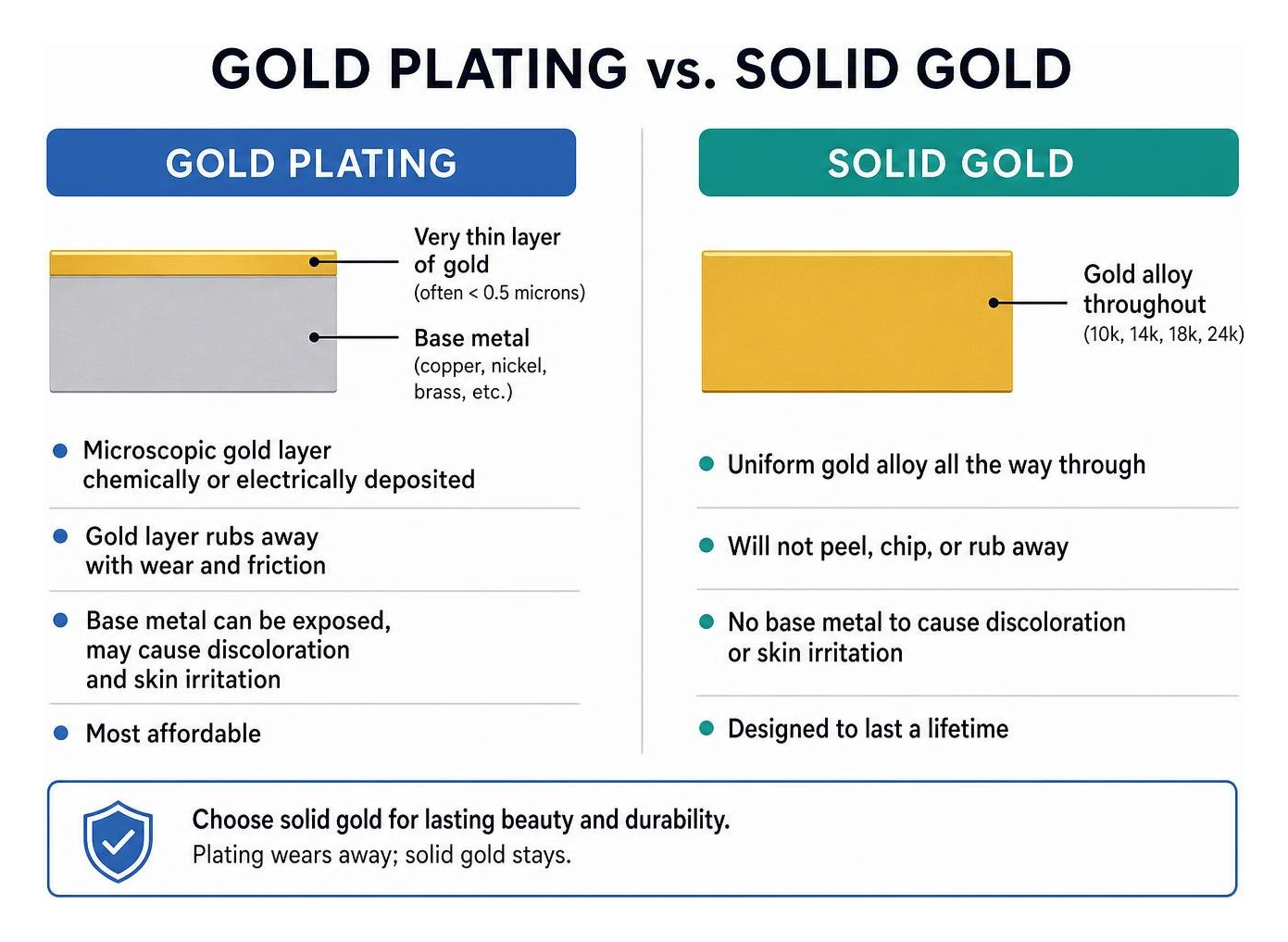
- Solid Gold: The entire item is made of a uniform gold alloy throughout. There is no base metal waiting to be exposed beneath the surface. Solid gold does not tarnish, peel, or chip away with wear, making it the premier choice for lifetime pieces.
- Gold-Filled: A thick layer of gold alloy is mechanically bonded with heat and pressure to a brass or silver core. By law, gold-filled items must contain at least 5% gold by total weight under FTC jewelry guidelines. While substantially more durable than plating, the outer layer can still wear away over decades of continuous friction.
- Gold Vermeil & Gold-Plated: Gold-plated jewelry involves chemically or electrically depositing a microscopic film of gold (often less than 0.5 microns) over base metals like copper, nickel, or brass. Vermeil is a higher-grade plating specifically over sterling silver. While affordable, the gold layer on plated rings inevitably rubs away within months of regular handwashing and friction, frequently leaving dark green or black oxidation marks on your skin and potentially triggering allergic contact dermatitis.
For those seeking eco-friendly alternatives without compromising structural integrity, modern jewelers frequently utilize recycled solid gold. Refined back to elemental purity before being re-alloyed, recycled gold eliminates the environmental footprint of newly mined ore while retaining identical physical, chemical, and aesthetic properties.
Comparing 10k, 14k, and 18k Karat Options
Karat (abbreviated as "k" or "kt") measures the purity of gold out of 24 parts. Choosing the right karat level involves balancing gold richness, everyday durability, and overall budget.
| Gold Karat | Gold Purity (%) | Alloy Composition | Hardness & Scratch Resistance | Color Intensity | Best Suited For |
|---|---|---|---|---|---|
| 10k Gold | 41.7% Pure Gold | 58.3% Silver, Copper, Zinc | Highest (Very hard and durable) | Subtle, pale warm yellow | Active lifestyles, rugged daily wear, budget-conscious buyers |
| 14k Gold | 58.3% Pure Gold | 41.7% Silver, Copper, Zinc | High (Ideal balance of strength and luster) | Rich, classic golden glow | Everyday wear, engagement rings, versatile fine jewelry |
| 18k Gold | 75.0% Pure Gold | 25.0% Silver, Copper | Moderate (Softer, prone to fine scratches) | Deep, saturated buttery yellow | High-end luxury pieces, formal jewelry, sensitive skin |
For most people, 14k solid gold hits the sweet spot. It offers that classic, warm glow while retaining enough alloy strength to resist the dents, dings, and knocks of modern life.
Popular Styles and Modern Trends in Gold Rings

Whether you are browsing for timeless engagement rings or enduring classic wedding bands, ring silhouettes have evolved far beyond standard flat-edge bands. Current design movements blend architectural structure with free-flowing nature, celebrating artistic individuality.
Sculptural, Organic, and Cultural Design Inspirations
Modern fine jewelry heavily embraces organic, dynamic forms. Moving away from rigid, machine-perfect symmetry, designers are crafting pieces with freeform edges, molten textures, and fluid contours.
A prominent example of this movement is wave-inspired jewelry, using soft ripples and asymmetric undulations that capture the perpetual motion of water and look striking from every angle. Similarly, regional artisanal pieces, like a locally crafted gold band highlighting rugged mountain silhouettes, offer wearers a way to anchor personal heritage and regional identity directly into their everyday wardrobe. When standard off-the-shelf bands do not capture your vision, commissioning custom jewelry allows you to sculpt unique curves tailored specifically to your hand.
Dainty and Stackable Gold Rings
The ring stack remains one of jewelry’s most versatile styling rituals. Layering minimalist bands allows you to mix textures, widths, and karat colors over time to commemorate anniversaries, career achievements, or personal milestones.
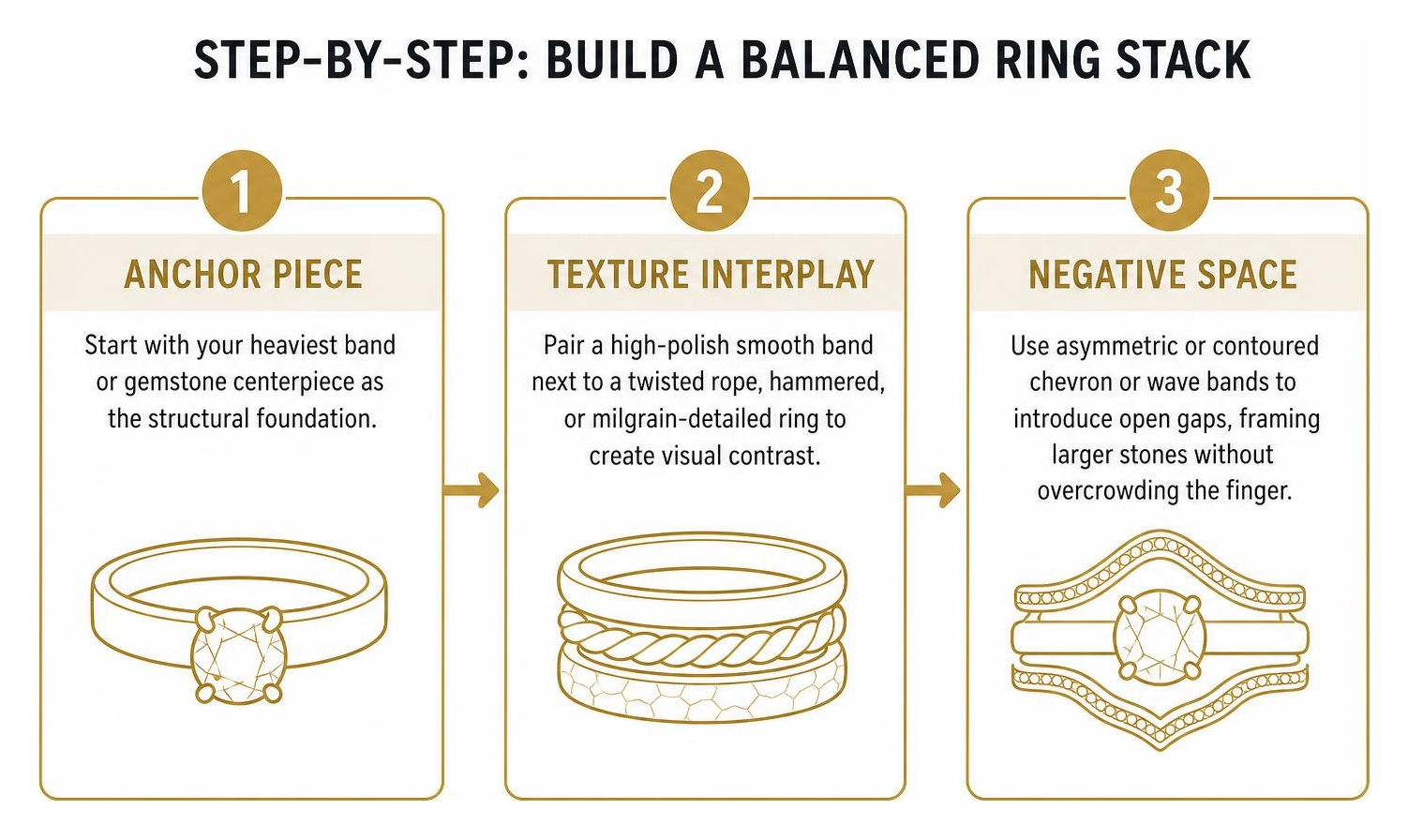
When pairing accent pieces alongside traditional wedding bands, aesthetic balance is everything:
- Anchor Piece: Begin with your heaviest band or gemstone centerpiece as the structural foundation.
- Texture Interplay: Pair a high-polish smooth band next to a twisted rope, hammered, or milgrain-detailed ring to create visual contrast.
- Negative Space: Asymmetric and contoured "chevron" or "wave" bands intentionally introduce open gaps, framing larger stones without overcrowding the finger.
Sizing, Proportions, and Finding the Perfect Fit
A ring can be an artistic masterpiece, but if it sits uncomfortably or spins continuously, it will spend more time in a jewelry box than on your hand. Achieving a precise fit requires understanding knuckle anatomy, environmental factors, and band geometry.
Accurate Measurement Techniques and Online Sizing Policies
Your fingers change size throughout the day. Temperature, humidity, sodium intake, exercise, and hydration levels cause blood vessels to dilate or contract. For the most reliable measurement:
- Measure at the End of the Day: Fingers reach their maximum average size in the evening when body temperature has stabilized.
- Factor in the Knuckle: If your knuckle is significantly wider than the base of your finger, measure both areas. Your ideal ring size will generally be the halfway point between the two measurements so the band slides over the joint without sliding off the base.
- Use Dedicated Sizing Tools: While a strip of paper or soft measuring tape can provide a baseline estimate, professional metal sizing rings provide the most accurate assessment of how a band settles against your skin.
When purchasing fine rings online, always examine the jeweler's operational terms. Look for reasonable return windows (typically 30 days) and straightforward exchange policies. That deeply customized pieces—especially rings featuring custom laser engraving, continuous eternity diamond patterns, or complex sculptural contours—may have resizing limitations or require specific bench adjustments.
Band Dimensions: Width, Thickness, and Weight Considerations
A ring’s dimensions directly dictate its resilience, hand feel, and longevity.
- Band Width: Dainty and minimalist bands typically range between 1.5 mm and 2.0 mm in width. Mid-range bands sit between 2.5 mm and 4.0 mm, while wide statement bands span 5.0 mm to 8.0 mm or more. Wider bands trap more skin underneath; as a rule of thumb, bands wider than 5 mm often require stepping up by a half-size for a comfortable fit.
- Band Thickness: To prevent a gold band from warping or turning oval over years of grip pressure, look for a thickness profile of at least 1.1 mm to 1.5 mm. Ultra-thin bands below 1.0 mm risk bending under everyday stress.
- Gold Weight: A delicate solid gold band often weighs between 1.2 to 2.5 grams, while heavy statement or signet rings easily exceed 5.0 to 10.0 grams. Solid precious metal provides a reassuring heft that distinguishes fine jewelry from hollow or plated costume pieces.
Craftsmanship, Quality Standards, and Maintenance
A solid gold ring should be built to become an heirloom. Behind every enduring ring is skilled bench craftsmanship, structural integrity, and proper gemstone setting techniques—whether showcasing natural diamonds in Golden CO or modern, conflict-free lab grown diamonds in Golden CO.
Inspecting Craftsmanship, Authenticity, and Lifetime Warranties
Before finalizing your purchase, inspect the structural quality markers of the piece:
-
Hallmarks & Karat Stamps: Authentic precious metal bands feature tiny interior stamps indicating metal purity (such as
10k,14k,585, or750) alongside maker marks. - Joint Soldering & Surface Finish: Inspect the seam where the band joins. High-grade benchwork shows seamless solder joins with zero porosity (tiny air bubbles or pinholes in the metal casting) and a uniform, mirror-like polish.
- Prong & Bezel Integrity: Gemstones should sit perfectly level, with prongs smoothed down evenly against the stone facets without snagging on fabrics.
- Warranties and Documentation: Reputable fine jewelers back their creations with a certificate of authenticity and manufacturing warranties that cover structural defects, offering clear paths for routine checkups, professional cleaning, and future resizing.
Caring for Your Everyday Gold Rings
While solid gold will never rust or tarnish, daily life leaves behind a film of lotion, hand sanitizer, natural skin oils, and dust that dulls its reflective brilliance. Keeping your gold rings radiant is simple with safe, regular maintenance:
- Soak in Gentle Suds: Submerge your gold rings in a bowl of warm water mixed with a few drops of mild dish soap for 15 to 20 minutes to break down oils.
- Soft Bristle Cleaning: Use an extra-soft baby toothbrush to gently dislodge trapped debris from underneath the ring head, basket settings, and inner band engravings.
- Rinse Thoroughly: Rinse under lukewarm running water (always ensure the sink drain is covered with a secure strainer!).
- Dry and Polish: Pat dry with a lint-free microfiber cloth. Use a specialized jewelry polishing cloth to gently buff out micro-scratches and restore shine.
- Avoid Harsh Chemicals: Always remove your rings before swimming in chlorinated pools or hot tubs, as chlorine at high concentrations can chemically attack and weaken gold alloys over time.
- Safe Storage: Store rings in separate fabric-lined compartments or soft pouches so harder stones (like diamonds) do not scratch adjacent polished gold surfaces.
Frequently Asked Questions About Gold Rings
How do I choose between 10k and 14k gold for daily wear?
Choose 10k gold (41.7% pure gold) if you prioritize maximum scratch resistance, lead an exceptionally hands-on lifestyle, or want the most budget-conscious solid gold option. Choose 14k gold (58.3% pure gold) if you want the industry-standard balance of rich, classic golden color, high durability, and long-term heirloom value.
Can organic and wave-shaped bands be stacked flush with traditional rings?
Yes! While an organic or wave band will not sit completely flush against a straight-edge ring, the resulting asymmetrical gap is a celebrated styling technique. Alternatively, many wearers pair wave bands with custom-contoured or nesting rings designed specifically to mirror their organic curves.
Why is recycled gold becoming the preferred choice for fine jewelry?
Recycled gold is chemically and structurally identical to newly mined gold, meaning it retains the exact same luster, strength, and longevity. Choosing recycled gold minimizes the environmental disruption, water usage, and carbon emissions associated with commercial mining, making it a cornerstone of sustainable fine jewelry.
Conclusion
A well-crafted solid gold ring is more than a simple accessory; it is a wearable personal story, an enduring investment, and a potential family heirloom. By matching the right karat alloy, band proportions, and design silhouette to your personal daily routine, you ensure your piece will maintain its beauty and structural integrity for decades to come.
When you are ready to explore artisanal craftsmanship, find your precise size, or custom-design a one-of-a-kind ring, explore our curated selection of gold jewelry in Golden CO to discover pieces built to last a lifetime.