

The Timeless Appeal of the Estate Tennis Bracelet
An estate tennis bracelet is one of the most sought-after pieces in pre-owned fine jewelry — and for good reason.
Quick answer: What is an estate tennis bracelet?
- An estate tennis bracelet is a previously owned diamond line bracelet featuring a continuous row of individually set diamonds (or gemstones) around the wrist
- "Estate" simply means pre-owned — the piece has had a prior owner
- They are typically set in 14k or 18k gold, or platinum, with diamonds ranging from under 1 carat to well over 10 carats total weight
- Prices generally range from around $1,000 to $27,000+, depending on metal, carat weight, and brand
- Common designers found in estate collections include renowned global luxury brands and historic design houses
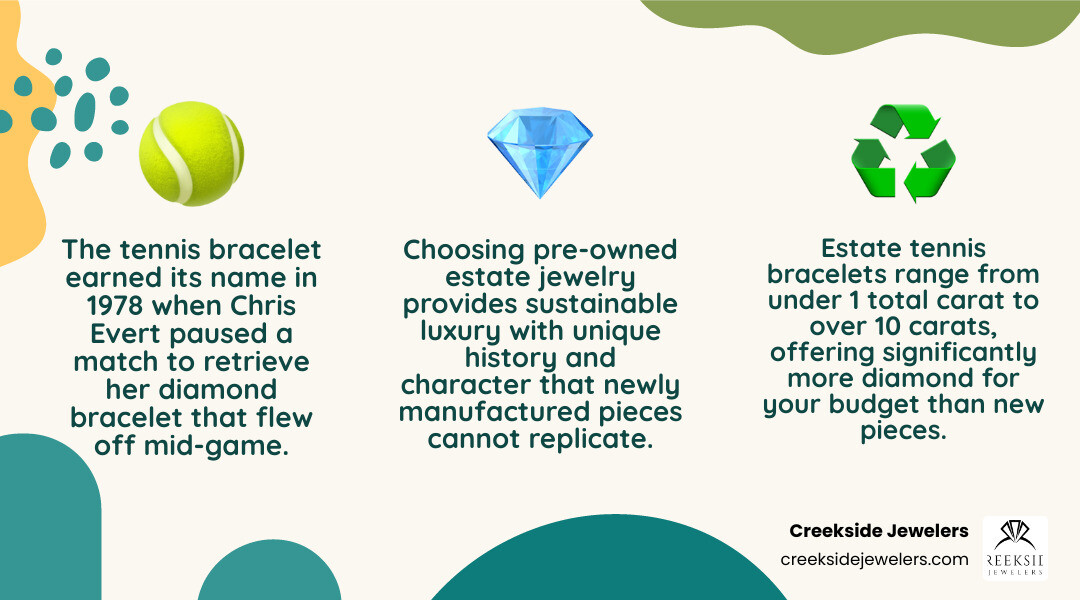
The style itself has a great origin story. At the 1978 US Open, tennis champion Chris Evert stopped a match to search for her diamond bracelet, which had flown off her wrist mid-game. From that moment on, this classic diamond line bracelet became known simply as a "tennis bracelet."
Decades later, the style is still one of the most universally flattering pieces in fine jewelry. And buying one estate — pre-owned — means you can often get significantly more diamond for your budget, while owning a piece with real history behind it.
Understanding the Value of an Estate Tennis Bracelet
When you choose pre-owned jewelry, you are stepping into a world of unique value, character, and sustainable luxury. The estate tennis bracelet has a special charm that newly manufactured pieces simply cannot replicate.
Ever since Chris Evert’s diamond bracelet flew off her wrist at the 1978 US Open, this continuous line of bezel or prong-set diamonds has symbolized a perfect balance of sporty casualness and high-end luxury. It is a piece you can wear just as easily with a crisp white t-shirt and jeans as you can with a formal evening gown.
But why buy an estate piece instead of walking into a modern retail store and buying brand new?
First and foremost, there is the undeniable financial advantage. New jewelry carries a hefty retail markup to cover manufacturing, importing, and brand-name marketing. When you buy a pre-owned piece, much of that initial depreciation has already occurred. This allows you to secure a higher total carat weight or a superior gold purity for a fraction of the original retail cost. For instance, a stunning 18K Yellow Gold Estate Diamond Tennis Bracelet featuring 52 full-cut diamonds totaling approximately 3.75 carats (with high-quality G-H color and VS clarity) might retail brand new for well over $8,400, but can often be found in curated estate collections for around $6,735.
Second, estate jewelry is an excellent example of sustainable luxury. By choosing a pre-loved line bracelet, you are giving a second life to existing precious metals and gemstones. This bypasses the environmental impact associated with mining new materials.
Finally, there is the romance of history. Every estate bracelet carries a story. Some pieces might have graced elegant dinner parties in the 1980s, while others might be vintage heirlooms passed down through generations. If you find yourself wanting to sell or upgrade a piece you already own, looking into Estate Jewelry Consignment is a fantastic way to let your jewelry's story continue with a new owner while unlocking its monetary value.
Key Characteristics of Vintage and Pre-Owned Line Bracelets
To appreciate the vast array of choices in the estate market, it helps to understand the physical components that make up these iconic bracelets. Because estate jewelry spans several decades, you will find a much wider variety of metals, settings, and gemstone combinations than you would in a typical modern department store.
Common Metals and Settings in an Estate Tennis Bracelet
The metal alloy used in your bracelet determines both its visual aesthetic and its daily durability. In the estate market, you will primarily encounter three precious metals:
- Platinum: Known for its luxurious weight and natural hypoallergenic properties, platinum is the ultimate choice for security. It does not wear away over time, making it excellent for holding precious diamonds safely in place.
- 18K Yellow Gold: Offering a rich, warm, buttery hue, 18K yellow gold is highly prized in vintage collections. It provides a striking, high-contrast backdrop for bright white diamonds.
- 14K White Gold: A highly durable and popular choice, white gold offers a sleek, monochromatic look that makes the diamonds appear seamless and incredibly bright.
The way the diamonds are secured to the metal also varies by era and design:
- Prong Settings: This is the most traditional style. Diamonds are held in place by three or four tiny metal claws (prongs). Three-prong baskets, like those found in high-end designer estate lines, allow maximum light to enter the side of the diamond, creating unparalleled sparkle.
- Bezel Settings: In a bezel-set tennis bracelet, a low-profile collar of precious metal completely surrounds the perimeter of each stone. This style is incredibly secure, prevents snagging on clothing, and offers a clean, modern, and geometric aesthetic.
- Channel Settings: Here, the diamonds are nestled side-by-side between two parallel walls of precious metal. This creates a continuous, uninterrupted beam of light around your wrist and offers excellent protection for the edges of the diamonds.
Diamond Carat Weights and Gemstone Varieties
One of the most exciting aspects of shopping for an estate tennis bracelet is the sheer diversity of diamond weights and gemstone configurations available.
In the estate market, you can find delicate "starter" bracelets with a total carat weight (ctw) of 1.00 to 3.00 carats, which are perfect for stacking. On the other end of the spectrum, magnificent collector pieces can feature up to 40.00 carats of total diamond weight set in substantial white gold or platinum. The classic round brilliant cut remains the most popular shape due to its unmatched ability to bend and reflect light, but vintage collections also showcase beautiful emerald cuts, princess cuts, and rare French-cut stones.
For those who love a splash of color, estate line bracelets frequently incorporate vibrant precious gemstones. You will often find diamonds alternated with deep blue sapphires, rich green emeralds, or velvety purplish-blue tanzanites.
When shopping for colored gemstone bracelets, it is highly beneficial to brush up on Understanding Gemstones to know what to look for in terms of color saturation and clarity. Additionally, understanding the Durability of Precious and Semi Precious Gemstones is crucial; while diamonds score a perfect 10 on the Mohs hardness scale, colored gemstones like emeralds or tanzanites require a bit more care during daily wear to prevent scratching.
Smart Buyer's Guide: Evaluating Quality and Authenticity
Shopping for estate jewelry is an adventure, but it requires a discerning eye. Because these pieces are pre-owned, buyers must know how to verify authenticity, assess condition, and understand exactly what they are purchasing.
How to Authenticate an Estate Tennis Bracelet

When evaluating an estate piece, always look closely at the clasp and the inner links. This is where a jeweler's secrets are hidden.
- Look for Hallmarks: Check for metal purity stamps such as "14K", "18K", "750" (indicating 18k gold), or "950 Plat". High-quality designer pieces will also feature maker's marks or signatures. For example, a genuine piece from a legendary design house might be stamped with their signature logo, or a specialized designer brand might feature their unique maker's mark alongside the metal purity stamp.
- Inspect the Clasp and Safety Catch: Because of the active lifestyle associated with the tennis bracelet, a secure clasp is non-negotiable. Ensure the primary tongue-in-groove clasp clicks firmly into place, and verify that the safety catch (such as a fold-over safety latch or double figure-eight safety clasps) is tight and functional.
- Verify Gemological Documentation: For high-value estate bracelets, ask if there is an accompanying GIA (Gemological Institute of America) report or a detailed independent appraisal. A proper appraisal should include clear photographs, exact measurements, metal weight, and a professional grading of the diamonds' color, clarity, and carat weight.
Comparing Estate vs. Modern Tennis Bracelets
Is it truly better to buy estate? Let's look at how estate tennis bracelets stack up against modern retail alternatives:
| Feature | Estate Tennis Bracelets | Modern Tennis Bracelets |
|---|---|---|
| Price Point | Typically 20% to 50% below original retail value; excellent value retention. | Higher upfront cost due to retail markups and manufacturing overhead. |
| Craftsmanship | Often features unique, hand-finished details and historical settings. | Highly standardized, computer-aided manufacturing (CAD) designs. |
| Uniqueness | High; rare or discontinued styles that stand out from the crowd. | Low; widely available styles that many others may also be wearing. |
| Sustainability | Highly eco-friendly; zero new mining required. | Requires new mining and manufacturing resources. |
When shopping for an estate tennis bracelet, choosing a reputable, established jeweler is the best way to ensure you are purchasing an authentic, high-quality piece. A professional jeweler can guide you through the unique history of each bracelet, helping you find a timeless treasure that fits your style and budget perfectly.
Frequently Asked Questions About Estate Jewelry
What is the difference between estate, vintage, and antique jewelry?
In the jewelry industry, these terms are often used interchangeably by the public, but they have very specific definitions for professionals:
- Estate: This is an umbrella term for any jewelry that has been previously owned. A bracelet purchased last year and sold today is technically an estate piece.
- Vintage: To be classified as vintage, a piece must typically be at least 20 to 30 years old, representing the design trends of a specific past era (such as the retro 1980s or glamorous 1950s).
- Antique: To earn the title of "antique," a piece of jewelry must be at least 100 years old.
If you enjoy learning about the distinct eras of pre-loved jewelry, you might find our guide on styling classic Estate Pearl Earrings to be a helpful companion read. View our Estate Jewelry Collection.
How do I safely clean and maintain my vintage diamond bracelet at home?
Keeping your estate tennis bracelet sparkling doesn't require expensive equipment. You can maintain its brilliant shine at home with a few simple steps:
- Prepare a Gentle Solution: Fill a small bowl with warm (not hot) water and add a few drops of mild, non-abrasive dish soap.
- Soak Mindfully: Let the bracelet soak for 10 to 15 minutes to loosen accumulated dirt, lotions, or oils.
- Brush Gently: Use a clean, ultra-soft bristle toothbrush to gently brush the diamonds, paying close attention to the spaces underneath the settings where dirt loves to hide.
- Rinse and Dry: Rinse thoroughly in warm running water (make sure the sink drain is closed!) and dry gently with a soft, lint-free cloth.
Note of caution: Never use household bleach, chlorine, or harsh abrasive cleaners, as these can weaken gold alloys and discolor the metal. Avoid using home ultrasonic cleaners on older estate pieces unless a trusted jeweler has verified that all the prongs are perfectly tight and secure.
Where is the best place to buy authenticated estate jewelry?
The safest and most rewarding way to buy an estate tennis bracelet is through an established, brick-and-mortar jeweler who specializes in estate curation. While online auction sites can be tempting, they carry a high risk of counterfeit metals, undisclosed synthetic diamonds, or loose settings.
A reputable physical jeweler provides a secure, hands-on showroom where you can feel the weight of the platinum or gold, test the clasp yourself, examine the diamonds under a loupe, and ask questions directly to an in-house gemologist. Always look for a jeweler with a clear, fair return policy and a long-standing reputation in the community.
Conclusion

An estate tennis bracelet is more than just an elegant accessory; it is a timeless investment in style, history, and sustainable luxury. Whether you are searching for a delicate 3-carat white gold piece for everyday wear or a jaw-dropping 10-carat platinum showstopper, buying estate allows you to acquire exceptional quality and character that modern retail simply cannot match.
If you are ready to explore the magic of pre-owned treasures, we invite you to visit us at Creekside Jewelers. Located in the heart of Golden, Colorado, we are proud to be the oldest continuously run watch and jewelry store in the state, family-owned and operating in our original location since 1902.
Our team specializes in curated estate collections, custom jewelry design, and expert on-site repairs to ensure your precious pieces stay secure on your wrist for generations to come. Stop by our Golden showroom to find your next heirloom, or dive deeper into fine gems by exploring the Creekside Jewelers Education Blog.