

What Defines Estate Pearl Earrings?
When we talk about estate pearl earrings, we are entering a world of "pre-loved" luxury. At its simplest, "estate" is an umbrella term for any piece of jewelry that has had a previous owner. However, in fine jewelry, the word carries a weight of sophistication and history. Unlike mass-produced modern pieces, estate jewelry often tells a story of a specific moment in time, reflecting the fashion, technology, and social values of the era in which it was created.
Estate pearl earrings vs vintage, antique, and new
Navigating the terminology of the jewelry world can feel like learning a second language, but the distinctions are actually quite straightforward once you know the "magic numbers":
- Antique Pearl Earrings: These are pieces that are at least 100 years old. In May 2026, any pair of earrings made before 1926 is officially an antique. These often feature natural pearls or early cultured examples and are prized for their rare, hand-crafted construction.
- Vintage Pearl Earrings: To be considered vintage, a piece must be at least 25 years old but less than 100. This category currently covers everything from the bold, chunky gold designs of the 1980s back to the refined, mid-century styles of the 1940s and 50s.
- Estate Pearl Earrings: This is the broadest category. It includes both antique and vintage pieces, as well as "contemporary estate"—jewelry that might only be five or ten years old but was previously owned.
- New Pearl Earrings: These are modern productions, typically manufactured in large quantities using current casting and stone-setting techniques.
Why buyers choose estate pearl earrings
Why do collectors and style enthusiasts flock to estate pieces rather than buying brand new? There are several compelling reasons:
- One-of-a-Kind Appeal: You aren't likely to see someone else wearing the exact same pair of 1920s Art Deco drops at a dinner party.
- Superior Craftsmanship: Many older pieces were hand-fabricated or hand-engraved. Victorian-era drops, for instance, often feature substantial gold weight and intricate wirework that would be prohibitively expensive to replicate today.
- Sustainability: Buying estate is the ultimate form of "green" shopping. No new mining is required, and you are preserving a piece of history.
- Value Retention: While new jewelry often depreciates the moment you leave the store, estate pearl earrings—especially those from prestigious makers—tend to hold their value well and can even appreciate over time.
Pearl Types, Size, and Luster in Estate Pearl Earrings
Not all pearls are created equal. When browsing estate collections, you'll encounter several distinct types of pearls, each with its own personality and price point. Understanding these differences is key to making an informed purchase. For those interested in the technical grading of these gems, the Gemological Institute of America (GIA) offers a comprehensive guide on pearl quality.
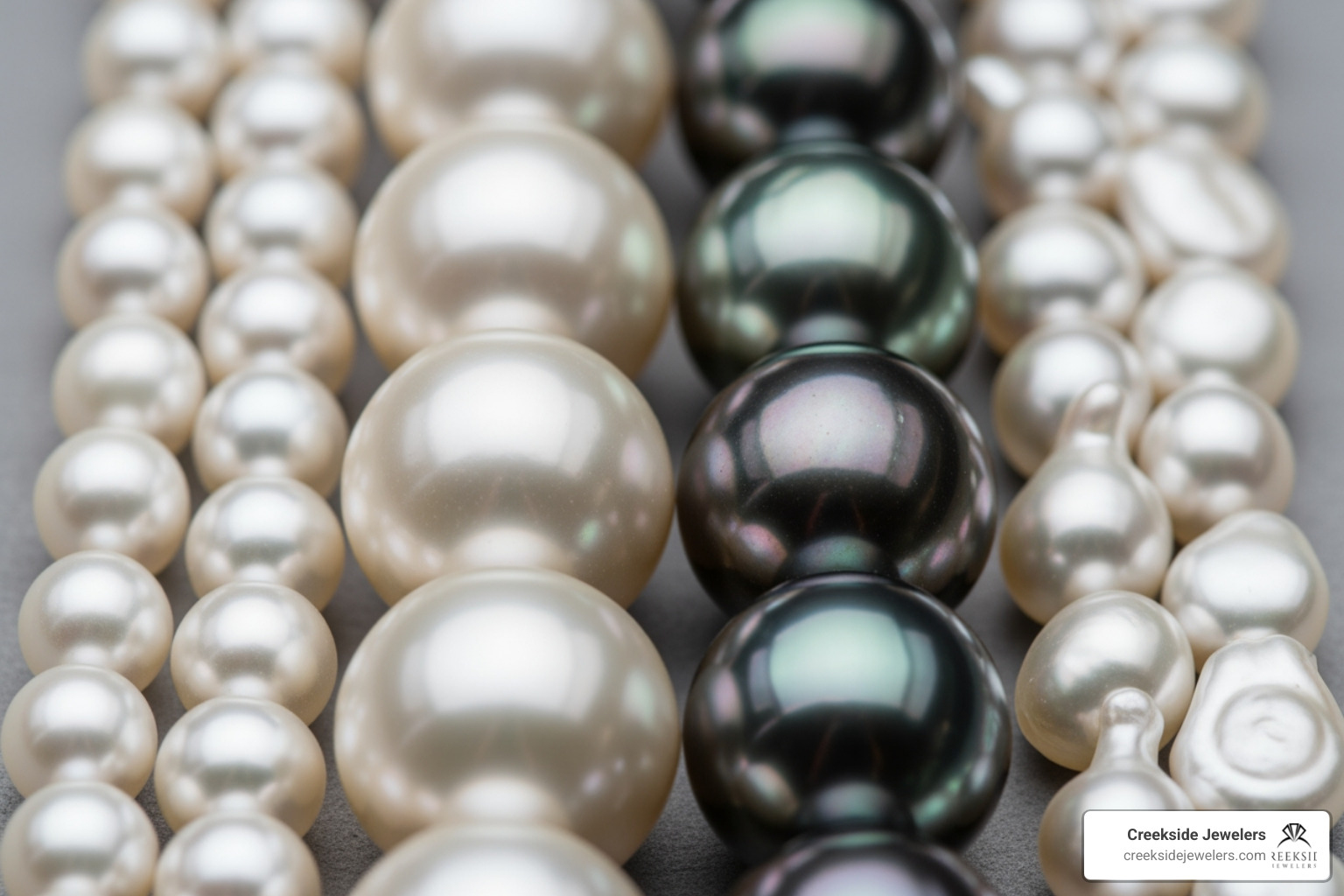
Estate pearl earrings: how pearl type changes style and price
- Akoya Pearls: These are the "classic" pearls. Known for their perfectly round shape and mirror-like luster, they were the staple of 1950s and 60s jewelry. If you find a pair of elegant, white-to-cream studs from the mid-century, they are likely Akoyas.
- South Sea Pearls: Often referred to as the "Queen of Pearls," these are the largest and rarest. They come in white, silver, and spectacular gold tones. Because of their size (often 9mm to 20mm), they are frequently found in high-end estate drop earrings.
- Tahitian Pearls: These "black" pearls offer exotic peacock, green, and silver-gray overtones. They became highly popular in the late 20th century and add a moody, modern edge to estate designs.
- Freshwater Pearls: Historically more affordable, freshwater pearls come in a variety of shapes (like "baroque" or "potato"). In estate jewelry, you might find them in multi-pearl "cluster" earrings or long, dangling "station" designs.
- Mabe Pearls: These are "half-pearls" grown against the inside of the shell, resulting in a flat back and a high-domed front. They were incredibly popular in the 1980s, often bezel-set in large 14K yellow gold frames for a bold, professional look.
How size, color, shape, and luster affect desirability
The value of estate pearl earrings is driven by several factors. Luster--the sharpness of the reflections on the pearl's surface--is arguably the most important. A pearl with high luster looks like it is glowing from within.
Size also plays a major role. While 1960s studs often emphasized compact forms under 1 inch, Victorian-era drops might measure 2 to 3 inches in length. In terms of color, while classic white remains the favorite, unique overtones like rose, silver, or cream can drastically change the "warmth" of the piece against your skin.
Natural pearls vs cultured pearls in older jewelry
Before the early 1900s, all pearls were "natural," meaning they formed in the wild without human intervention. These are incredibly rare and command a massive premium. By the 1920s, cultured pearls (like those pioneered by Mikimoto) began to dominate the market. When looking at antique Georgian or early Victorian earrings, there is a higher chance the pearls are natural, which adds significant intrinsic value as these materials become increasingly scarce.
Metals, Settings, and Era Signatures to Know
The metal cradling the pearl is just as important as the pearl itself. The choice of metal often acts as a "timestamp," helping us identify which era the earrings belong to.
Common metals found in estate pearl earrings
- 14K and 18K Yellow Gold: The gold standard for Victorian and Retro-era jewelry. 18K is softer and richer in color, while 14K offers better durability for everyday wear.
- Platinum: This became the metal of choice during the Edwardian and Art Deco periods. Its incredible strength allowed jewelers to create "lace-like" designs that could hold heavy pearls and diamonds securely.
- 14K White Gold: Gained massive popularity in the mid-20th century as a more affordable alternative to platinum.
- Sterling Silver: Often found in "Bohemian" or Arts and Crafts era estate pieces, offering a more accessible price point.
Design eras that define estate pearl earrings
Each era has a "signature" look that collectors look for:
| Era | Years | Signature Style | Metals Used |
|---|---|---|---|
| Victorian | 1837–1901 | Long drops, hand-engraved gold, romantic motifs | Yellow Gold, Silver-topped Gold |
| Edwardian | 1901–1915 | Garland style, "lace" patterns, delicate and feminine | Platinum, White Gold |
| Art Deco | 1920–1935 | Geometric shapes, bold symmetry, high contrast | Platinum, White Gold |
| Retro | 1935–1950 | Large, sculptural gold, "Hollywood" glamour | Rose Gold, Yellow Gold |
| Mid-Century | 1950–1965 | Simple studs, clusters, "atomic" designs | White Gold, Yellow Gold |
Popular earring formats and accent stones
Estate earrings aren't limited to just studs. You’ll find chandeliers (common in the Victorian era), huggies (a more modern estate find), and drops. Diamonds are the most frequent companions to pearls, providing a "sparkle" that contrasts beautifully with the pearl's soft glow. It’s also common to see pearls paired with "period-appropriate" gemstones like sapphires in Art Deco pieces or garnets in Victorian designs.
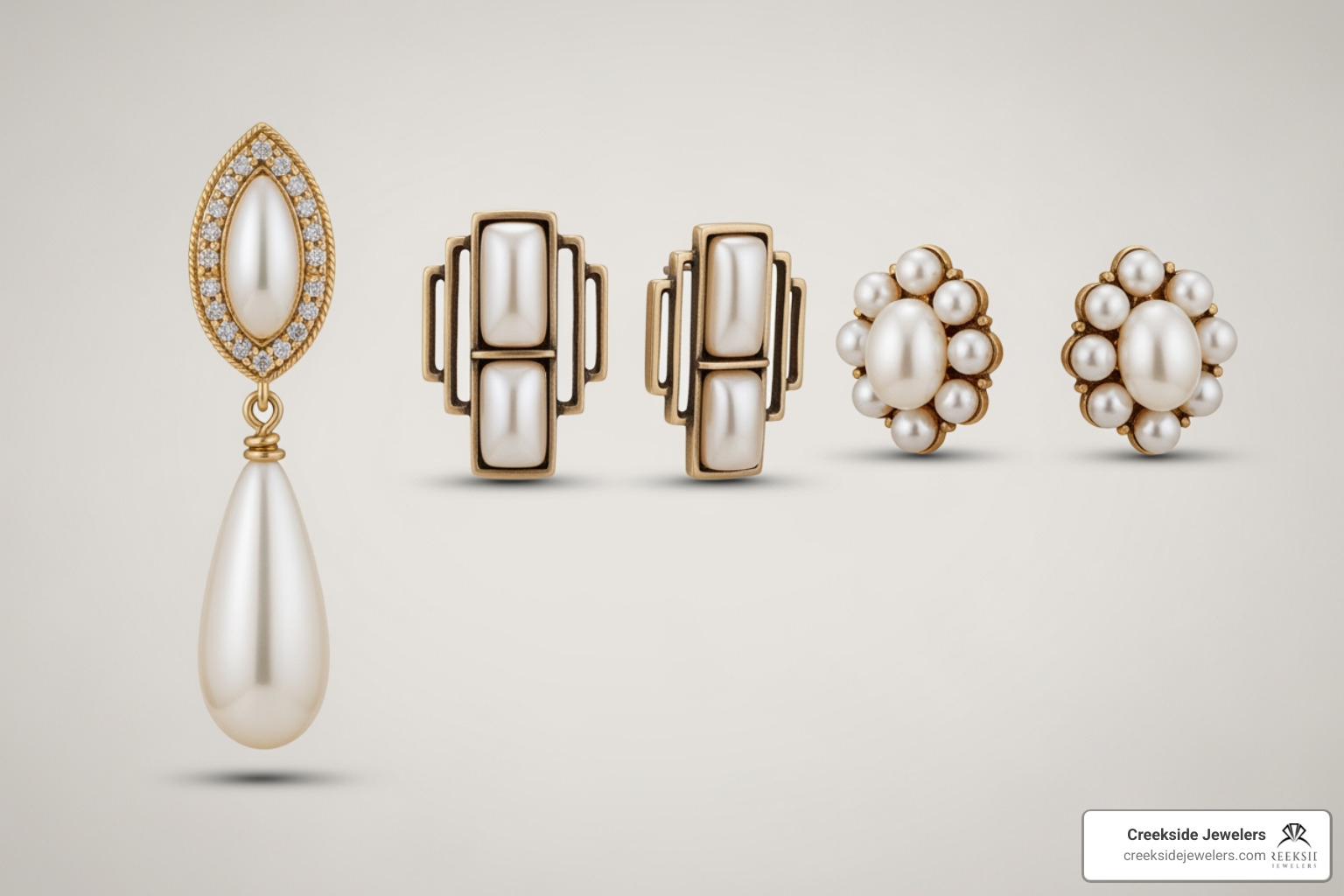
How to Judge Value, Rarity, and Investment Potential
At Creekside Jewelers, we often tell our clients that jewelry should be bought because you love it, but it doesn't hurt when that beauty is also a smart financial move.
What drives the price of estate pearl earrings
Price is determined by the "Four Cs" of pearls (Luster, Surface, Shape, and Color) plus the value of the mounting. A pair of South Sea pearl strands or high-end earrings can range up to $15,000, while simple freshwater or Akoya estate pieces can be found for as little as $150 to $450.
Signed and documented pieces vs unsigned examples
This is where the "big names" come in. Estate pearl earrings signed by prestigious makers like Mikimoto, Tiffany & Co., Cartier, or David Webb consistently outperform the market.
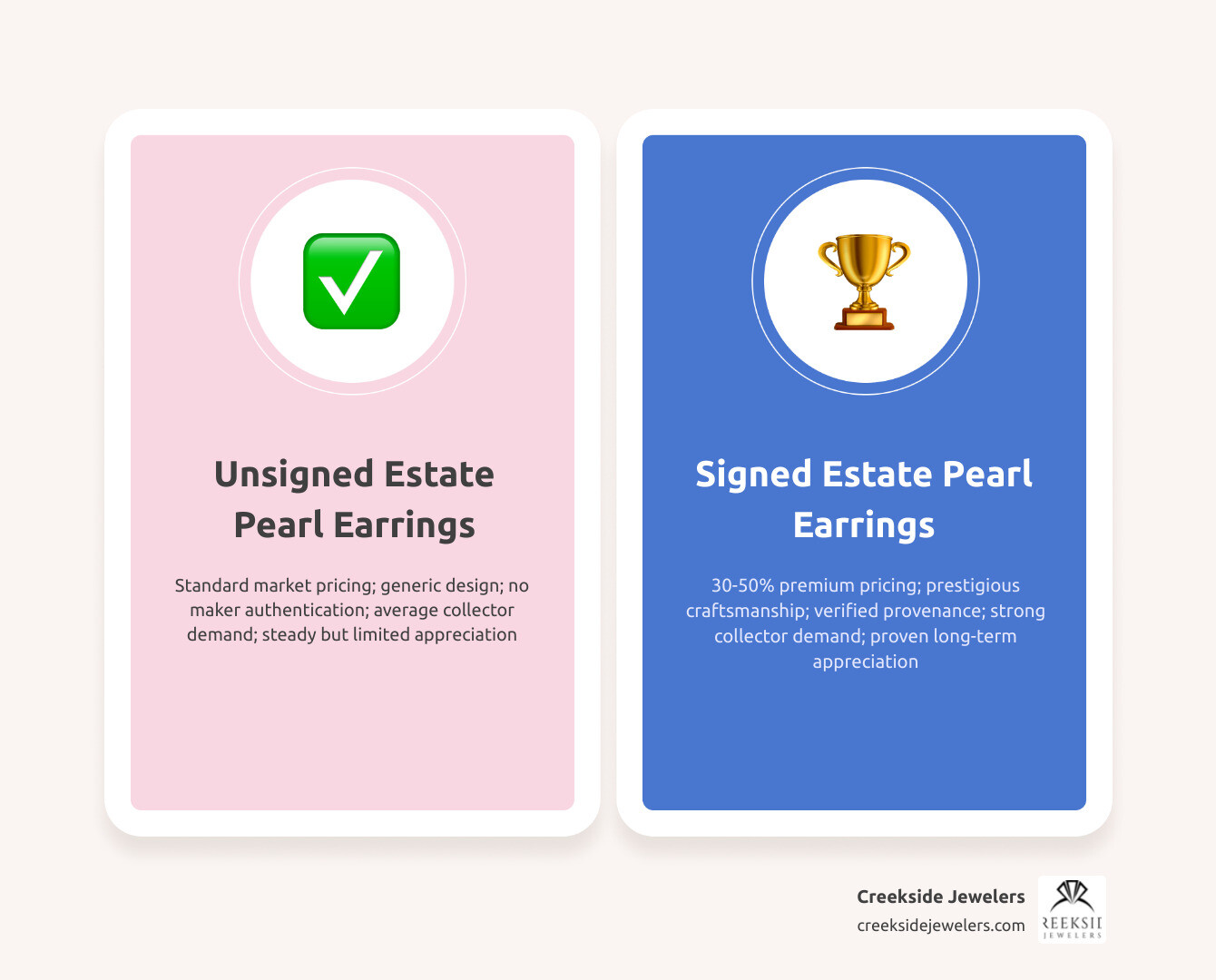
A signature is more than just a name; it’s a guarantee of a certain standard of pearl selection and metalwork. These pieces command a 30% to 50% premium over unsigned examples of similar quality.
Are estate pearl earrings a good investment?
While not as liquid as stocks, signed or rare period pieces are "wearable assets." As natural pearls and high-karat gold become rarer, these pieces tend to appreciate. Art Deco and Georgian examples are particularly sought after because so few have survived the intervening century in good condition.
How to Authenticate Estate Pearl Earrings and Shop Safely Online
The biggest fear for any buyer is accidentally purchasing a modern reproduction or a "fauxtique" piece.
Red flags that suggest reproductions or altered pieces
- Too-Perfect Surfaces: Pearls are organic gems. If they are 100% perfectly smooth under a 10x loupe, they might be glass or plastic "shell pearls."
- Incorrect Findings: If a "Victorian" earring has a modern tension-back post that looks brand new, it may be a reproduction or have been heavily modified.
- Fresh Cast Marks: Authentic estate pieces usually show "honest wear"—tiny scratches or a soft patina on the metal that indicates it has been worn over decades.
What to ask before you buy estate pearl earrings
When shopping, don't be shy! Ask the jeweler:
- "Are these cultured or natural pearls?"
- "Are there any signs of repair or post-conversion (e.g., were they originally clips?)"
- "Do you have a professional appraisal or a certificate of authenticity?"
Where to buy with confidence
The safest way to source authenticated estate pearl earrings is through a trusted local jeweler with a long-standing reputation. At Creekside Jewelers, we have been family-owned in our original Colorado location since 1902. We employ expert gemologists who rigorously examine every piece for period-correct construction and material integrity.
You can Shop Estate Pearl Earrings at Creekside Jewelers to see our current curated collection, or if you have pieces of your own you'd like to sell, learn more about Estate Jewelry Consignment at Creekside Jewelers.
Care, Storage, and Styling Tips for Long-Lasting Beauty
Pearls are "organic" gemstones, which means they are softer and more sensitive than diamonds or sapphires. They require a little extra love to keep their luster alive for another hundred years.
How to clean and store estate pearl earrings safely
- The "Last On, First Off" Rule: Always put your pearls on after you’ve applied hairspray, perfume, and makeup. The chemicals in these products can eat away at the pearl's nacre (the outer coating).
- Wipe Them Down: After wearing, wipe your earrings with a soft, lint-free cloth to remove skin oils.
- Gentle Cleaning: If they need a deeper clean, use lukewarm water and a tiny drop of mild, non-detergent soap. Never use bleach or ultrasonic cleaners.
- Separate Storage: Store your pearls in a soft pouch. If you toss them into a jewelry box with diamonds, the diamonds will scratch the pearls' surface.
When professional maintenance is needed
We recommend an annual professional inspection. Over time, the posts on estate pearl earrings can become loose, or the silk thread in dangling styles can weaken. A quick check-up ensures you don't lose a precious heirloom because of a worn-out clasp.
How to style estate pearl earrings today
The beauty of pearls is their versatility.
- Day Wear: Simple Akoya studs are the ultimate "power accessory" for a business suit.
- Evening: Large South Sea drops or Art Deco chandeliers provide a sophisticated focal point for a formal gown.
- Bridal: Estate pearls provide that "something old" that adds a layer of sentimental history to a wedding ensemble.
Frequently Asked Questions about Estate Pearl Earrings
How much do estate pearl earrings usually cost?
As mentioned, the range is wide. You can find beautiful 14K gold and freshwater pearl stations for around $450. High-end, signed Mikimoto sets or South Sea drops with significant diamond weight can reach $7,500 to $15,000.
Can estate pearl earrings be repaired or converted?
Yes! Many older earrings were originally "clip-ons." These can often be converted to posts by a skilled jeweler. However, we always aim to preserve the historical integrity of the piece whenever possible.
Are pearls in estate earrings durable enough for everyday wear?
Absolutely, provided you treat them with respect. Pearls were the "everyday" jewelry of our grandmothers and great-grandmothers. As long as you avoid harsh chemicals and store them properly, they are remarkably resilient.
Conclusion
Buying estate pearl earrings is about more than just acquiring jewelry; it’s about becoming the next guardian of a lustrous legacy. From the geometric precision of the Art Deco era to the soft romanticism of Victorian drops, these pieces offer a level of character and craftsmanship that modern retail simply cannot replicate.
By choosing estate, you are investing in a piece of history that is as sustainable as it is beautiful. Whether you are a seasoned collector or looking for your first pair of "real" pearls, we invite you to Explore Our Jewelry Education Blog to learn more about the fascinating world of vintage and antique treasures. At Creekside Jewelers, we’ve been helping Colorado families find their perfect heirlooms since 1902—and we’d love to help you find yours.