
Why Finding Expert Antique Brooch Repair in Golden Matters for Your Heirlo
If you need antique brooch repair in Golden, here's a quick overview of what's involved:
- Identify the metal - Determine if your brooch is solid gold (9ct, 14ct, 18ct), gold-plated, or mixed metal before any repair begins.
- Assess the damage - Common issues include bent or broken pins, damaged clasps, missing gemstones, cracked enamel, and loose hinges.
- Choose the right repair method - Laser soldering for precise metalwork; stone unsetting before any heat is applied to protect fragile gems.
- Decide: restore or convert - A brooch can be repaired as-is or transformed into a pendant for greater wearability and resale value.
- Find a qualified jeweler - For valuable antique pieces, always seek a jeweler experienced with historical jewelry, not a general repair shop.
Antique gold brooches are among the most personal pieces of jewelry a family can own. They carry history — a Victorian mourning piece, an Art Deco showstopper, an Edwardian gift passed down through generations. And when one arrives broken, whether inherited or discovered at auction, the stakes feel high.
The challenge is real. Antique brooches span wildly different eras, metals, and construction methods. A Georgian piece may contain foiled stones and lead solder. An Art Nouveau brooch may have fragile plique-à-jour enamel. A mid-century piece might mix solid gold leaves with silver wire. Each one demands a different approach.
Getting the repair wrong — too much heat, the wrong solder, a clumsy clasp replacement — can destroy both the beauty and the value of a piece worth hundreds or thousands of dollars.
This guide walks you through everything you need to know, from identifying your brooch's metal and era to choosing the right repair, finding the right jeweler, and protecting your investment long-term.
Assessing Your Heirloom: Karat Identification and Historical Dating
Before we ever touch a torch or a pair of pliers to a piece, we must understand exactly what we are holding. Repairing an 18th-century "aigrette" (a feathered hair ornament often converted to a brooch) is a world away from fixing a 1940s retro gold pin.
Identifying the Gold Karat
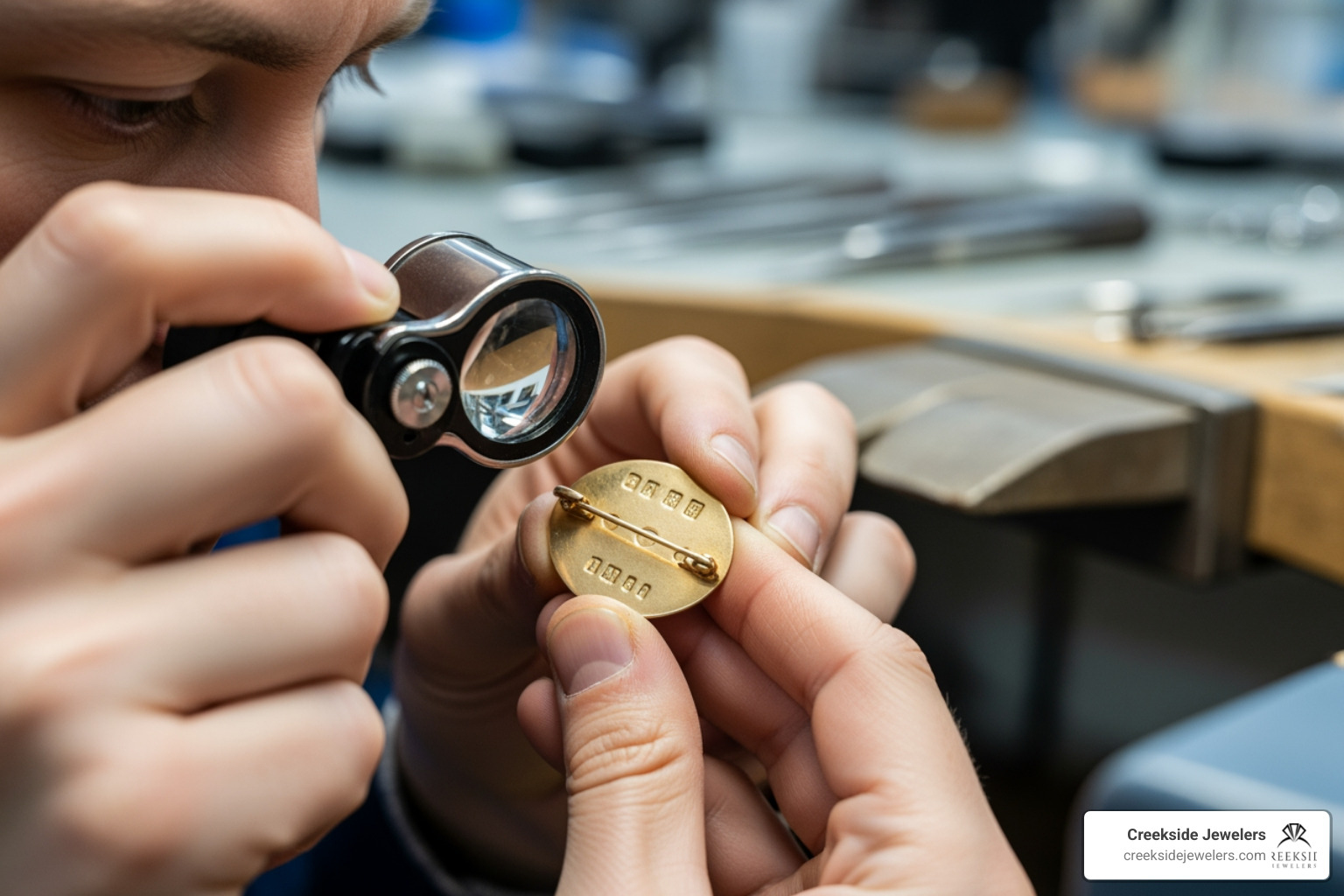
The first step in antique brooch repair in Golden is determining the metal composition. Antique gold isn't always marked with the modern "14K" or "18K" stamps we see today. In fact, many older pieces use hallmarks that indicate their origin and era. For example, a French gold brooch might feature an eagle's head hallmark, which has been in use since 1838 to signify 18-karat gold.
If hallmarks are worn or missing, we use non-destructive testing. Tools like the Niton XL2 can determine the exact karat and metal alloy without scratching the piece. This is vital because different karats of gold melt at different temperatures. Attempting to solder a 9ct gold pin onto an 18ct gold body without knowing the difference can result in a melted disaster.
Dating via Construction
The way a brooch is built tells us its age.
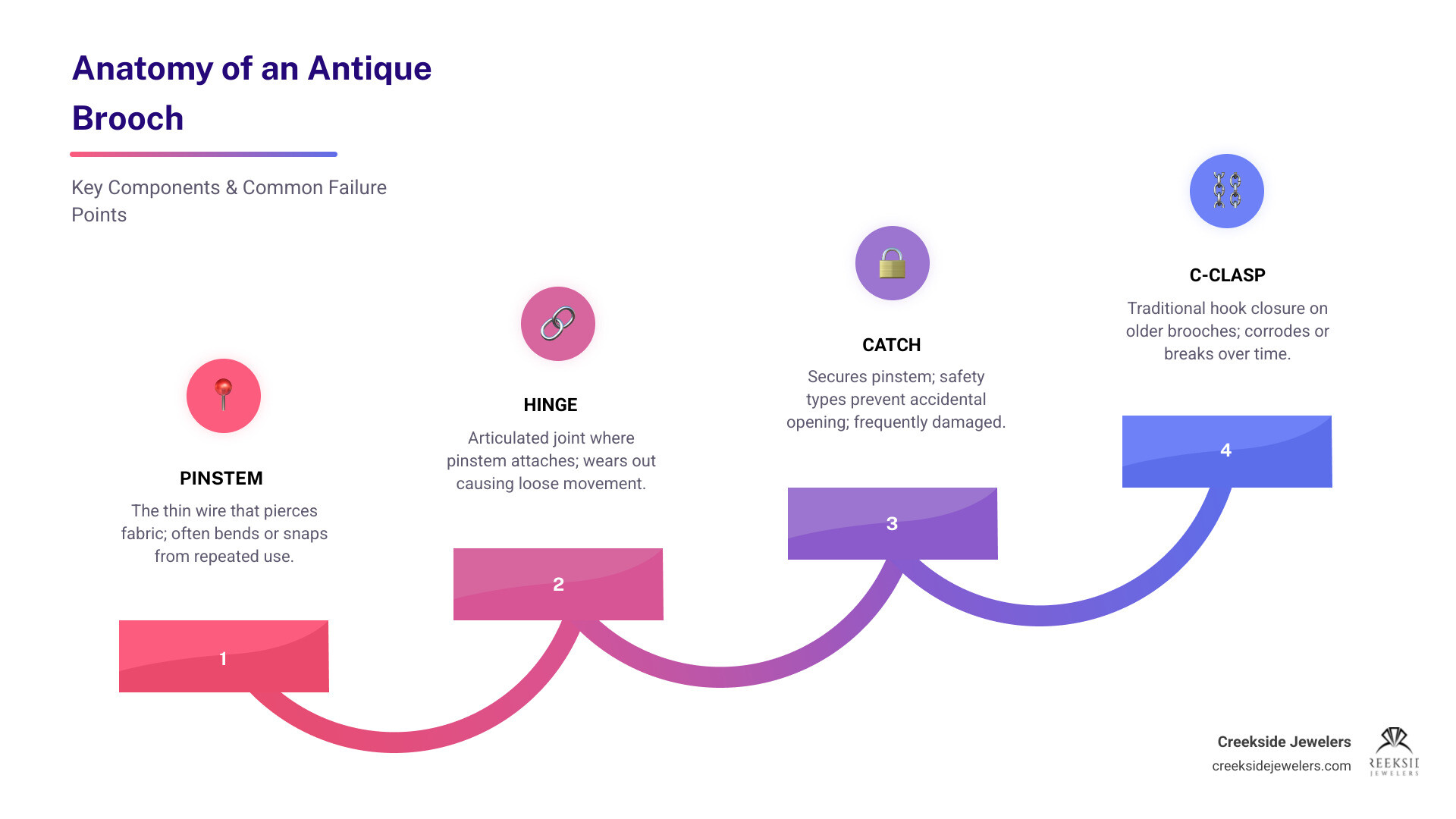
- Hinges and Pins: Early Victorian brooches often have "C-clasps" without a safety catch and pins that extend far beyond the edge of the brooch. If you see a safety catch (the little rotating lock), it’s likely a later addition or a piece from the late 19th century onwards.
- The Aigrette Origin: Many floral or butterfly brooches from the 1700s started life as hair ornaments. These often feature silver wires mixed with gold leaves. Identifying these "mixed metal" constructions is essential because silver and gold react differently to cleaning agents and heat.
- The Restoration Period: As seen in historical catalogs like Proantic: Gold Restoration Brooch, pieces from the 19th-century French Restoration often feature intricate basketwork patterns and chiseled gold that require a very delicate touch during cleaning.
Essential Techniques for Antique Brooch Repair Golden
Once we've identified the era and metal, we move into the actual restoration. The goal is always "invisible" repair—returning the piece to its original glory without leaving behind signs of modern intervention.
Pin and Clasp Restoration
The most common issue we see is a bent or broken pinstem. If the pin is just bent, we can often straighten it by laying it on a flat surface and tapping it ever-so-gently with a jeweler's hammer. However, if the rivet in the hinge is loose, it requires a "burnishing" technique to tighten the joint without snapping the delicate metal.
If the clasp is missing or broken beyond repair, we don't just "glue" a new one on. We source or create a period-appropriate replacement. For more on our general approach to these fixes, you can view our Repairs page.
The Power of Laser Soldering
In the old days, every repair required a jeweler's torch. The problem? Torches heat the entire brooch. This is dangerous for antiques with enamel or organic gems like pearls.
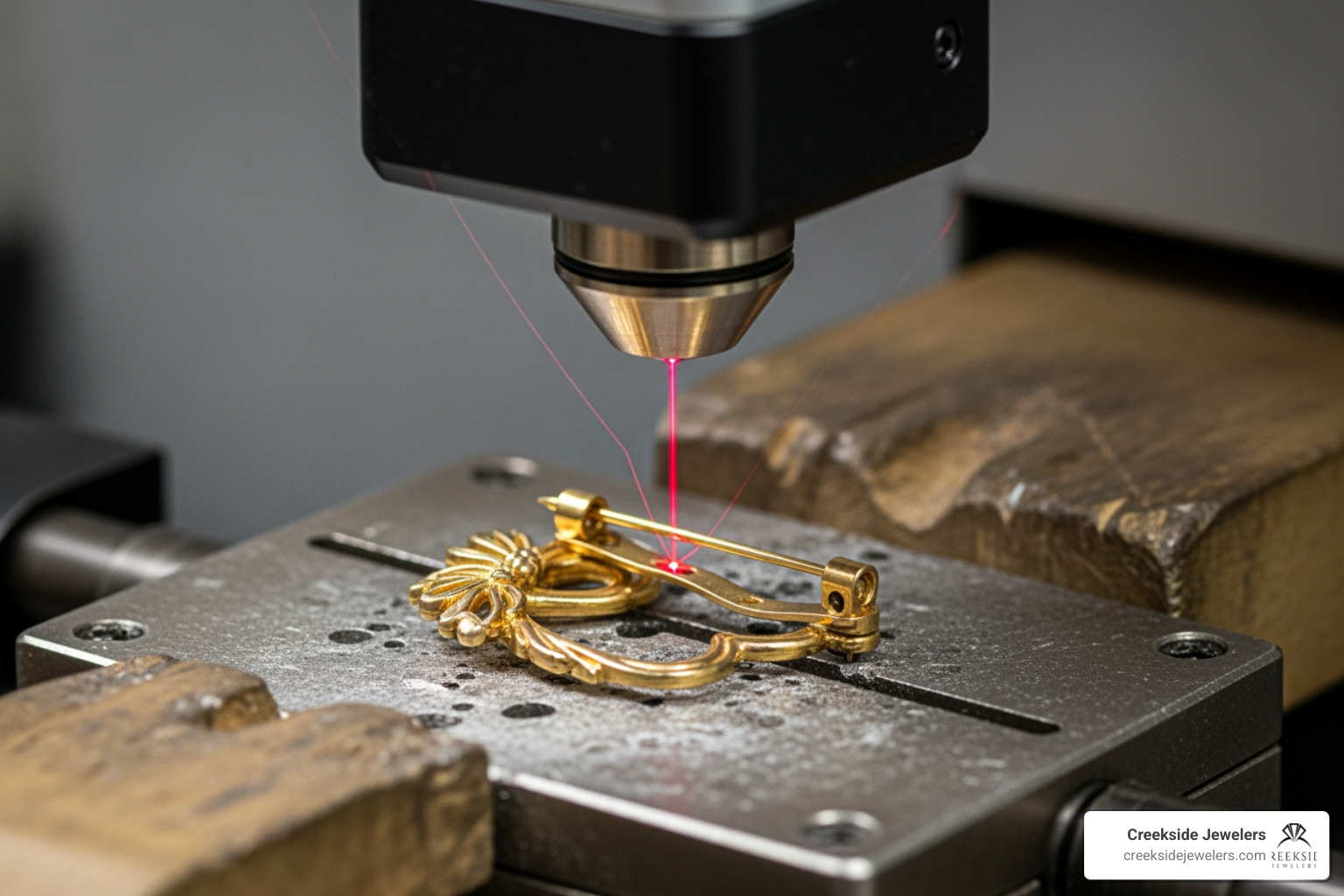
Today, we use laser soldering. This technology allows us to fire a concentrated beam of light at a specific spot—like a broken hinge—without heating the rest of the piece. This is the gold standard for expert jewellery restoration, ensuring that the historical patina and fragile elements remain untouched.
Handling Fragile Gemstones and Enamel in Antique Brooch Repair Golden
Antique brooches are often set with stones that require special care.
- Rose-Cut Diamonds: These are often "foiled" (backed with a thin layer of silver or colored foil to add brilliance). If water or heat gets behind that foil, the stone will turn dark or "dead."
- Red Spinels and Rubies: In many Georgian and Victorian pieces, what looks like a ruby might actually be a red spinel. While beautiful, spinels have different heat tolerances.
- Enamel: This is essentially glass fused to metal. It is incredibly brittle. If the gold underneath expands too much from heat, the enamel will crack.
When performing antique brooch repair in Golden, we often "unset" these stones before starting any major metalwork. This ensures the gems stay safe while we work on the gold structure. This level of care is similar to how we handle other precious items, which you can read about in our guide: Can You Repair Diamond Rings?.
When to Seek Professional Antique Brooch Repair Golden
It’s tempting to try a "quick fix" at home with pliers or even—heaven forbid—superglue. Please, don't! DIY repairs often lead to:
- Lead Solder Damage: Many hobbyists use lead solder, which actually eats into gold and creates a permanent "scar" that is very expensive for a professional to remove later.
- Structural Failure: A brooch pin holds the entire weight of the piece. If it’s not soldered correctly, you risk losing the heirloom entirely when it falls off your coat.
- Value Loss: An antique's value is tied to its original condition. Clumsy repairs can drop the resale value by 50% or more.
Restoration vs. Conversion: Maximizing ROI for Auction Finds
Sometimes, a brooch is so damaged—or the style is so "dated"—that the owner doesn't want to wear it as a pin. This is where conversion comes in.
Many of our clients in Golden find beautiful, broken gold brooches at auctions for a few hundred dollars. By converting these into pendants, they create a piece that is more wearable in 2026.
Common Conversion Steps:
- Removing the hardware: Carefully snipping off the pinstem and hinge.
- Adding a bale: Soldering a gold loop (bale) to the top so it can slide onto a chain.
- The "Versatile" Bale: We can often add a "fold-away" bale. This allows you to wear the piece as a pendant on a necklace, but still pin it to a lapel when you want that classic look.
ROI: Is it Worth the Investment?
If you bought a damaged gold brooch for $300 at auction, spending $150 on a professional repair or conversion can often result in a piece with a market value of $800 to $1,200.
| Project Type | Estimated Cost | Potential Value Increase |
|---|---|---|
| Simple Pin Straightening | $45 - $75 | Maintains original value |
| Laser Soldering Hinge | $100 - $180 | Restores 100% functionality |
| Pendant Conversion (14K Bale) | $120 - $250 | High (increases wearability) |
| Enamel Restoration | $300+ | High (essential for aesthetics) |
Safe Cleaning and Maintenance for Gold Brooches
Once your brooch is repaired, you want to keep it sparkling. But remember: "antique" means "fragile."
Pre-Repair and Post-Repair Cleaning
We always clean a brooch before repairing it to remove oils and dirt that can interfere with soldering. At home, you should avoid ultrasonic cleaners. The vibrations can shake loose old stones or shatter fragile enamel.
The Safe Method:
- Use lukewarm water and a drop of mild dish soap.
- Use a very soft-bristled toothbrush to gently clean behind the stones.
- Dry it immediately with a soft, lint-free cloth.
- Pro Tip: For gold-plated or "Pinchbeck" (a vintage gold-imitation alloy) pieces, avoid water entirely if possible, as it can seep under the plating and cause corrosion.
Storage and Documentation
Store your antique brooches in a soft-lined jewelry box, separate from other pieces so they don't scratch each other. We also recommend keeping a folder of documentation, including any receipts for antique brooch repair in Golden and a professional appraisal. This preserves the "provenance" of the piece and is essential for insurance purposes.
Frequently Asked Questions about Antique Brooch Repair
How do I identify if my antique brooch is solid gold or gold-plated?
Look for wear on the high points of the design. If you see a different colored metal (like brass or silver) peeping through the gold, it is likely plated. Solid gold will be the same color all the way through. We can also perform a professional acid or X-ray test to be 100% sure.
Is it better to restore an antique brooch or convert it to a pendant?
This depends on your goal. If the piece is a rare, museum-quality antique, restoration is better for preserving its historical value. If it’s a family heirloom that you find "clunky" as a brooch, converting it to a pendant ensures it actually gets worn rather than sitting in a drawer.
Can damaged enamel on a 19th-century brooch be repaired?
Yes, but it is a highly specialized skill. It involves removing the old, cracked enamel, cleaning the metal surface, and firing new glass enamel in a kiln. Because of the risk, this should only be done by experts.
Conclusion
At Creekside Jewelers, we understand that an antique brooch is more than just metal and stone—it’s a piece of history. As the oldest continuously run jewelry store in Colorado, operating in the same Golden location since 1902, we’ve seen every era of brooch design pass through our doors.
Whether you have a Victorian treasure that needs a new lease on life or an auction find you’d like to convert into a modern pendant, our family-owned expertise is here to help.
If you’re looking for antique brooch repair in Golden, visit us at: Creekside Jewelers, 1206 Washington Ave, Golden, CO 80401, US
Want to dive deeper into gems and history? Learn more about jewelry preservation and history on our blog. We look forward to helping you preserve your family’s legacy for the next hundred years.